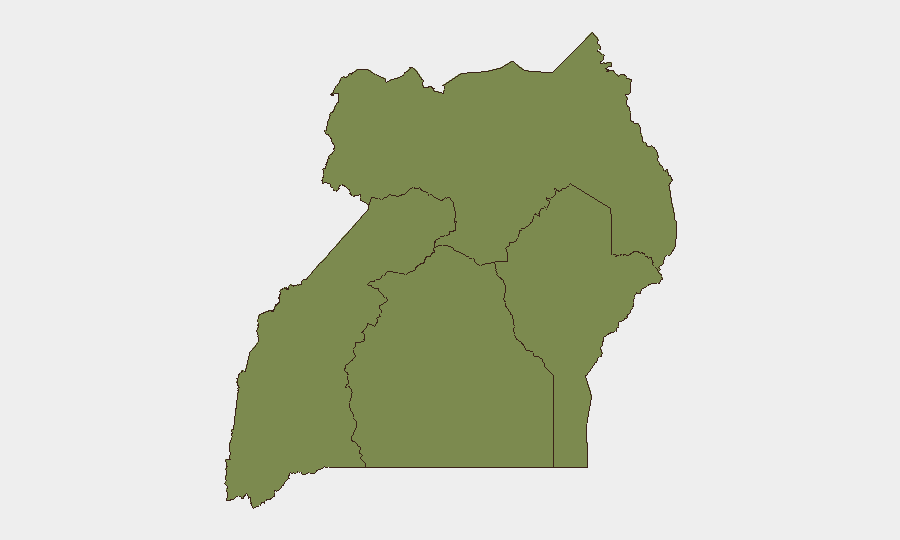
Situation Summary
Uganda remains at composite threat level 25 (global rank #56), with 389 tracked events reflecting elevated political and institutional tension rather than acute security breakdown. Recent days have seen multiple public statements and parliamentary–executive friction centred on education, health, and judicial oversight, alongside disapproval signals between the government and the High Court. While headline-level incidents remain limited to isolated locales (road crashes, border-area incidents dating to early July), the convergence of institutional friction and sub-national instability—particularly in the Central Region—warrants close monitoring for cascading risks.
Key Developments
- Parliamentary–Executive Friction (15–16 July). Multiple public statements on 15 July involving Parliament, the President's office, the Opposition, and the Ministries of Education and Health indicate unresolved budget, policy, or oversight disputes. Subsequent disapproval signals (16 July) between the Uganda government and the High Court, and between government and legal practitioners, suggest institutional deadlock over judicial independence or executive prerogative. No reports of street-level violence tied to these statements as of 18 July.
- Institutional Legitimacy Challenge (16–17 July). Disapproval signals from the High Court and legal community, combined with a 17 July Pan-African statement concerning Uganda, hint at international diplomatic or human-rights scrutiny. The exact substance is not detailed in available signals, but the timing suggests reputational or governance pressure on the Kampala administration.
- Data Integrity Note. Web research did not yield independently verified, time-stamped incidents from the last 24–48 hours (since 16 July 18:00 UTC) meeting publication standard. Older police operations (Cooper Complex phone-theft, Bugweri road crash) and early-July border incidents (Mpondwe, ~11 July, 10+ civilian deaths) fall outside the current reporting window and are listed here for context only; they do not represent active 48-hour developments.
Highest-Risk Areas
Central Region (risk 33.4) dominates the sub-national profile, roughly 1.4 times higher than Northern Region (23.4) and 1.8 times higher than Eastern Region (18.4). The Central Region's elevated score likely reflects Kampala's role as the political and administrative hub, where parliamentary–institutional friction, urban crime, and civil-unrest triggers cluster. Northern Region risk, while significantly lower, retains residual terrorism and armed-group activity signalling from earlier 2026. Western Region (3.4) remains substantially lower-risk. Corporate teams with Kampala-based operations or staff should treat Central Region political and street-level monitoring as routine; Northern Region travel or asset placement warrants conflict-monitoring protocols.
How GeoBit Would Assist
Security teams should deploy AOI Monitoring & Early Warning (persistent watch on Kampala CBD, Parliament, courts, and educational institutions) paired with Intel Sweep & OSINT Fusion to track parliamentary statements, court filings, and Opposition messaging in real time. Network & Actor Analysis can map institutional fault lines (executive, judiciary, parliament, legal bar) and predict escalation vectors. Sentiment & Temporal Analysis on X, Telegram, and local media will surface grassroots civil-unrest signals before street-level manifestation.
7-Day Outlook
Parliamentary and judicial tensions are unlikely to resolve within seven days; institutional friction typically extends over weeks. Risk of spontaneous student or civil-society protests tied to education/health policy remains moderate in Kampala and university towns. No intelligence suggests imminent violence, but sustained political gridlock increases the probability of localised demonstration activity by mid-to-late July.
Highest-Risk Areas — Ranked
| # | State / Region | Risk |
|---|---|---|
| 1 | Central Region | 33.4 |
| 2 | Northern Region | 23.4 |
| 3 | Eastern Region | 18.4 |
| 4 | Western Region | 3.4 |
Sources
Previous Daily Briefs
A new Uganda brief is written every day — each with its own risk map and downloadable CSV. Here's the last week; use the calendar to go further back.
📅 Browse every day by calendar →
Highlighted days have a brief. Tap a day for that day's map & analysis, or “csv” for that day's dataset ($5).
Atlas — our AI intelligence desk — emails them this snapshot personally. Nothing else, no list.