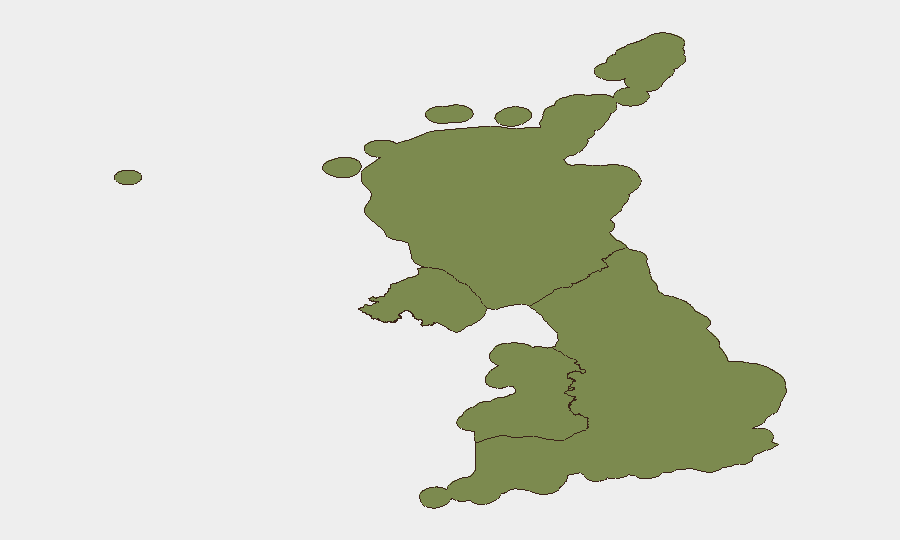
Situation Summary
The United Kingdom remains at moderate baseline threat (global rank #137, composite score 5), with England driving the vast majority of risk (31.6 of the composite score) owing to concurrent public-order incidents, violent crime, and active cyber threats. The past 48 hours have seen a cluster of street-level disorder in major English cities, coupled with confirmed ransomware and data-theft activity affecting education and defence sectors. Scotland and Northern Ireland report lower incident density, though both have recorded recent protest-related public-order activity. The threat trajectory is mixed: street violence and sports-related disorder appear episodic, while cyber-intrusions into public institutions and defence-linked leaks represent a persistent and escalating concern.
Key Developments
- Manchester city centre (20 June): Greater Manchester Police responded to violent disorder involving youths armed with knives and machetes near Piccadilly Gardens; at least one serious stabbing injury and multiple arrests for weapons offences and violent disorder recorded.
- Wembley Stadium/Brent, London (20 June): Multiple arrests and minor injuries reported after clashes between rival football supporters and police following Euro 2026 group match; police deployed public-order tactics to disperse disorderly crowds in surrounding streets.
- Nottingham education IT infrastructure (20 June): Local education authority confirmed ongoing disruption to school IT systems following suspected ransomware attack against the council's education network, affecting email, file access, and classroom systems; incident response in progress.
- UK higher-education sector nationwide (20 June confirmation): UK universities running Oracle PeopleSoft confirmed as victims of the ShinyHunters group's 10 June global data-theft campaign; student records and institutional data at risk across more than 100 organisations including multiple UK campuses.
- Glasgow city centre (20 June): Police Scotland confirmed arrests and road disruption after demonstrators blocked traffic near George Square during a pro-Palestine/ceasefire march; minor clashes with officers and brief closure of nearby routes.
- Belfast city centre (20 June): PSNI reported minor public-order incidents including bottle-throwing and verbal clashes on margins of a loyalist parade; one officer treated for minor injuries and several individuals detained.
- UK defence sector/online circulation (ongoing, tied to earlier Dodd Group incident): Russian-aligned actors continue circulating leaked Ministry of Defence files detailing RAF and Royal Navy bases and staff contact data; elevated doxxing and targeting risk for defence personnel.
Highest-Risk Areas
England accounts for nearly 95% of the UK composite risk score (31.6 of 33.2), driven by concentrated incidents in London, Manchester, and Nottingham spanning violent street disorder, weapons offences, and cyber-infrastructure compromise. Scotland (6.4) and Northern Ireland (2.6) register measurably lower risk, with recent activity limited to protest-related public-order management and margin incidents. The disparity reflects both England's larger population and asset concentration, and the current clustering of violent crime, sports-related disorder, and cyber-attack activity in English metropolitan zones.
How GeoBit Would Assist
Security teams monitoring UK exposure should deploy Intel Sweep and OSINT fusion (X/Twitter, Telegram, web monitoring) to track emerging street violence and protest activity in real time, with sentiment and temporal analysis to forecast high-risk event windows (sports fixtures, marches, parades). Parallel use of cyber threat monitoring and actor network analysis will identify ongoing ransomware and data-theft campaigns targeting UK education and defence sectors, permitting early tactical alerting. AOI monitoring and early warning for key corporate/operational sites in England, Scotland, and Northern Ireland will detect surface indicators of disorder or infrastructure compromise before escalation.
7-Day Outlook
Street-level public-order incidents are likely to remain episodic and event-driven (sports fixtures, organised protests), with localized but manageable police response. Cyber threats to UK education and defence networks will persist as Russian-aligned actors and data-extortion groups maintain operational tempo; credential-based and ransomware attacks should be anticipated. Defence personnel remain at elevated targeting risk from leaked contact data; physical security protocols should reflect ongoing doxxing risk.
Highest-Risk Areas — Ranked
| # | State / Region | Risk |
|---|---|---|
| 1 | England | 31.6 |
| 2 | Scotland | 6.4 |
| 3 | Northern Ireland | 2.6 |
| 4 | Wales | 1.6 |
Sources
Previous Daily Briefs
A new United Kingdom brief is written every day — each with its own risk map and downloadable CSV. Here's the last week; use the calendar to go further back.
📅 Browse every day by calendar →
Highlighted days have a brief. Tap a day for that day's map & analysis, or “csv” for that day's dataset ($5).