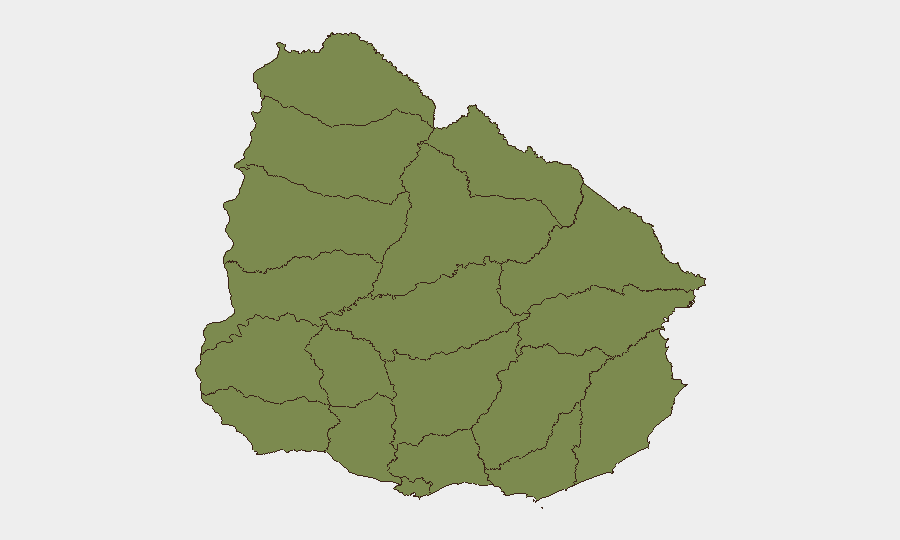
Situation Summary
Uruguay remains one of the world's most stable countries, ranking #185 globally with a composite threat score of 2. No significant security incidents, civil unrest, infrastructure disruptions, or political instability have been confirmed in the past 48 hours; routine urban crime (theft, robbery) persists at baseline levels in Montevideo and Canelones departments. Recent political investigations and diplomatic statements have not generated street protests or institutional disruption, and the overall security trajectory remains low and stable.
Key Developments
- Montevideo & Canelones – 15–16 June – Routine urban crime (theft/robbery) continues at normal baseline levels in high-density urban areas; no spike in gang violence or serious crime has been reported.
- National Level – 16 June – Authorities initiated a political-related investigation and a separate national-level investigation; open sources report no associated street protests, public-order disruptions, or operational impact.
- Diplomatic: Uruguay–Sweden – 16 June – Uruguay issued a public diplomatic statement relating to Sweden with no evidence of domestic protests, unrest, or operational disruption to date.
- Diplomatic: Uruguay–Saudi Arabia – 16 June – Uruguay issued a separate public statement relating to Saudi Arabia; current reporting shows no impact on internal security, travel corridors, or infrastructure.
- Ministry Statement – 17 June – A ministry-level public statement was issued; context and operational implications remain under assessment.
- Presidential Statement – 15 June – A presidential statement was released; no domestic security or civil-order consequences have been documented.
- International: Uruguay National Team – 16–17 June – FIFA World Cup 2026 security screening has been applied to the Uruguay national team in the United States (Miami and other locations); this affects Uruguayan travelers abroad, not security conditions within Uruguay.
Highest-Risk Areas
Durazno department is the sole outlier, with a composite risk score of 31.4—substantially higher than all other regions. Montevideo, despite hosting the capital and highest population density, scores 5.7. All other departments score 1.4. The Durazno anomaly warrants investigation via persistent AOI monitoring; it may reflect isolated criminal activity, localized infrastructure vulnerability, or data concentration in a specific sector (e.g., drug trafficking corridors or gang territory). Montevideo's elevated score reflects routine urban crime baseline rather than emerging instability. Corporate security should prioritize Durazno monitoring and maintain standard urban-crime awareness in Montevideo.
How GeoBit Would Assist
Intel Sweep & OSINT Fusion would consolidate news, social media (X, Telegram), and open-source feeds to detect early warning of political escalation, protest organization, or criminal activity spikes. AOI Monitoring & Early Warning applied to Durazno and Montevideo would generate automated alerts if event density, social-media sentiment, or security indicators shift beyond baseline, enabling rapid duty-of-care escalation. Routing & Network Analysis and Conflict & Military mapping support contingency planning for personnel or asset movement should political or criminal events suddenly escalate.
7-Day Outlook
No indicators suggest material deterioration in the near term. Diplomatic statements and domestic investigations are routine political business absent organized civil resistance. Routine crime will likely remain at baseline. Security teams should monitor Durazno via passive intelligence channels and maintain standard protocols in Montevideo; escalation to heightened alert posture is not currently warranted unless new developments emerge.
Highest-Risk Areas — Ranked
| # | State / Region | Risk |
|---|---|---|
| 1 | Durazno | 31.4 |
| 2 | Montevideo | 5.7 |
| 3 | Artigas | 1.4 |
| 4 | Salto | 1.4 |
| 5 | Paysandú | 1.4 |
| 6 | Rivera | 1.4 |
| 7 | Tacuarembó | 1.4 |
| 8 | Soriano | 1.4 |
| 9 | Colonia | 1.4 |
| 10 | Río Negro | 1.4 |
| 11 | Flores | 1.4 |
| 12 | San José | 1.4 |
Sources
Previous Daily Briefs
A new Uruguay brief is written every day — each with its own risk map and downloadable CSV. Here's the last week; use the calendar to go further back.
📅 Browse every day by calendar →
Highlighted days have a brief. Tap a day for that day's map & analysis, or “csv” for that day's dataset ($5).