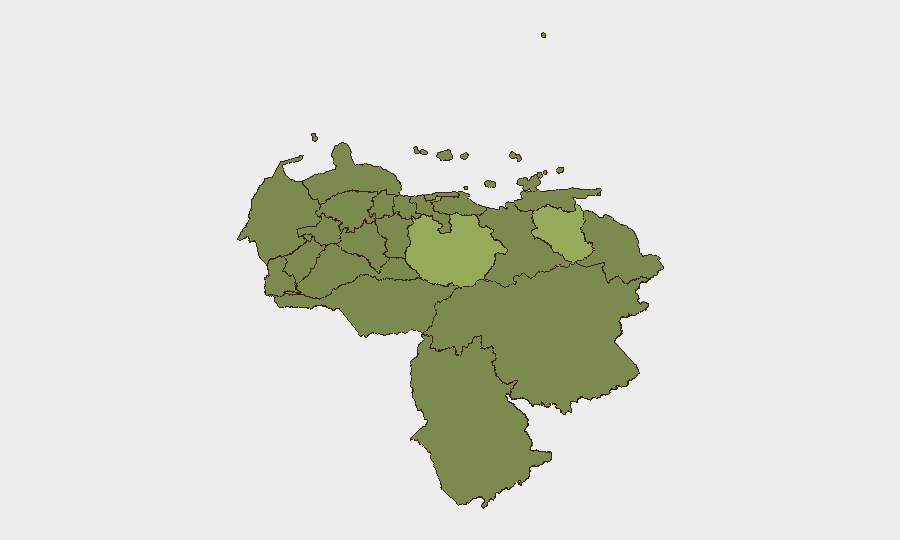
Situation Summary
Venezuela remains at composite threat level 40 globally, with 321 tracked events, reflecting sustained instability driven by criminal-armed-group activity, internal security operations, and escalating U.S.–Venezuelan diplomatic tension. The last 48 hours have seen a significant spike in high-stakes security operations in gold-mining regions, a reported U.S. military strike on a Venezuelan vessel with fatalities, and official Venezuelan claims of American "terrorist" involvement—creating immediate risk of retaliatory violence, widening protest activity in the capital, and potential disruption to travel and commerce. Checkpoint density and security force posture are elevated nationwide.
Key Developments
- Bolívar State, El Callao mining arc, 15 June 2026: Venezuelan security forces, reportedly supported by U.S. technological assets, conducted large-scale raids against Tren de Aragua positions, involving helicopter overflights, airstrikes, and insertion teams. Multiple casualties reported among gang members; operational tempo remains high.
- Caribbean waters north of Venezuela, night of 14–15 June 2026: A U.S. military strike killed at least 11 people aboard a vessel allegedly linked to Tren de Aragua, triggering immediate diplomatic escalation and public Venezuelan condemnation of "American aggression."
- Caracas, 15 June 2026: Venezuela's Information Ministry declared nationwide security-force heightened alert following what authorities characterized as an "attack and kidnapping" by alleged American operatives; tighter security perimeter established around government and military installations.
- Bolívar & Amazonas states, 15 June 2026: Armed forces expanded internal deployment across gold-producing regions, establishing new checkpoints and conducting sweeps in mining towns to counter criminal-group control and illegal mining activity.
- Nationwide, 15 June 2026: Following the reported death of Tren de Aragua leader Héctor "El Niño" Guerrero in joint operations, authorities increased patrols across multiple states to preempt retaliatory gang violence; checkpoint activity and travel delays expected on major routes.
- Caracas, 15 June 2026: Political tensions between Maduro government and Washington sharpened; senior officials issued public warnings of U.S. "aggression," raising short-term protest risk and political-instability indicators in the capital.
Highest-Risk Areas
Federal District (risk 58) dominates the ranking, driven by political sensitivity, government and military presence, and protest mobilization potential following the U.S.–Venezuela diplomatic escalation. Monagas, Guarico, and Aragua states (risk scores 43.6, 42.2, and 38.9 respectively) remain elevated due to ongoing criminal-armed-group activity and security-force operations in oil and mining regions. Bolívar State (risk 28.2), though lower-ranked, is currently the operational epicenter of the El Callao raids and the locus of transnational criminal-organization presence; personnel and supply chains dependent on routes through or near mining areas face immediate checkpoint congestion and potential armed-group activity.
How GeoBit Would Assist
Security teams should deploy AOI Monitoring & Early Warning on Federal District (capital, protest risk) and Bolívar State (mining-arc operations and gang-activity hot zones) to detect checkpoint expansion, force movements, and protest formation in real time. Conflict & Military battle mapping and Network & Actor Analysis would track Tren de Aragua fragmentation and retaliatory-violence vectors post-leadership loss. Routing & Network Analysis enables rapid identification of alternative supply and personnel routes avoiding high-checkpoint areas, while OSINT Sweep and multi-language X/Telegram monitoring provide early signals of government rhetoric shifts and informal violence warnings.
7-Day Outlook
The next week will likely see sustained security operations in Bolívar and adjacent mining states, continued checkpoint activity nationwide, and a period of elevated political rhetoric from Caracas as the government consolidates the narrative around U.S. involvement. Protest risk in the capital remains elevated but dependent on opposition mobilization response. Criminal-group retaliatory action is plausible within 7–14 days as gang structures adapt to leadership loss.
Highest-Risk Areas — Ranked
| # | State / Region | Risk |
|---|---|---|
| 1 | Federal District | 58 |
| 2 | Monagas State | 43.6 |
| 3 | Guarico State | 42.2 |
| 4 | Aragua State | 38.9 |
| 5 | Carabobo State | 37.3 |
| 6 | Zulia State | 33.8 |
| 7 | Sucre State | 33.6 |
| 8 | Barinas State | 30.8 |
| 9 | Merida State | 30.8 |
| 10 | Tachira State | 28.9 |
| 11 | Anzoategui State | 28.2 |
| 12 | Bolivar State | 28.2 |
Sources
Previous Daily Briefs
A new Venezuela brief is written every day — each with its own risk map and downloadable CSV. Here's the last week; use the calendar to go further back.
📅 Browse every day by calendar →
Highlighted days have a brief. Tap a day for that day's map & analysis, or “csv” for that day's dataset ($5).