Situation Summary
Malta remains a low-threat environment globally (rank #150) with no significant escalation in violence or organized instability during the reporting period. However, sub-national risk concentration in the capital and northern harbor regions (Valletta, Sliema, Saint Julian's) reflects persistent street-level crime, irregular migration pressures, and maritime hazards affecting urban centers. The arrest of an intoxicated driver following a police pursuit in Mġarr (13–14 October) and an earlier stabbing incident in Valletta (1 October) underscore intermittent personal-safety incidents in high-density areas. Bilateral security cooperation with Libya, formalized at ministerial level on 14 October, signals Malta's active engagement in migration control and maritime surveillance—a structural mitigation response to regional migration and trafficking networks.
Key Developments
- Mġarr (night of 13–14 October 2026): Police conducted a traffic stop and pursuit of an intoxicated driver; officers drew firearms during the arrest. The driver faces court charges related to dangerous driving and intoxication.
- Tripoli, Libya (14 October 2026): Malta's Home Affairs and Security Minister Glenn Bedingfield met Libyan Interior Minister Emad Al-Trabelsi to discuss irregular migration, human-trafficking networks, maritime surveillance, and search-and-rescue coordination affecting Malta's security environment.
- Tripoli, Libya (14 October 2026): Bedingfield held separate discussions with Libyan Prime Minister Abdul Hamid Dbeibah focused on bilateral security cooperation and prevention of irregular-migration journeys toward Malta and other European destinations.
- Valletta (1 October 2026, prior week but ongoing context): A 22-year-old UK national sustained light injuries after being stabbed by an assailant who exited a vehicle on Triq il-Wilġa; the alleged perpetrator remains under investigation.
- Maritime hazard (7 October 2026): Divers discovered a suspected unexploded World War II aerial bomb approximately 200 meters offshore at 37 meters depth beneath the Gozo ferry route, triggering safety protocols and potential navigation restrictions.
- Search-and-rescue operation (11 October 2026): Two foreign nationals were recovered near Wied Diegu; one male was pronounced dead on recovery and one female sustained minor injuries, indicating persistent maritime rescue activity in surrounding waters.
Highest-Risk Areas
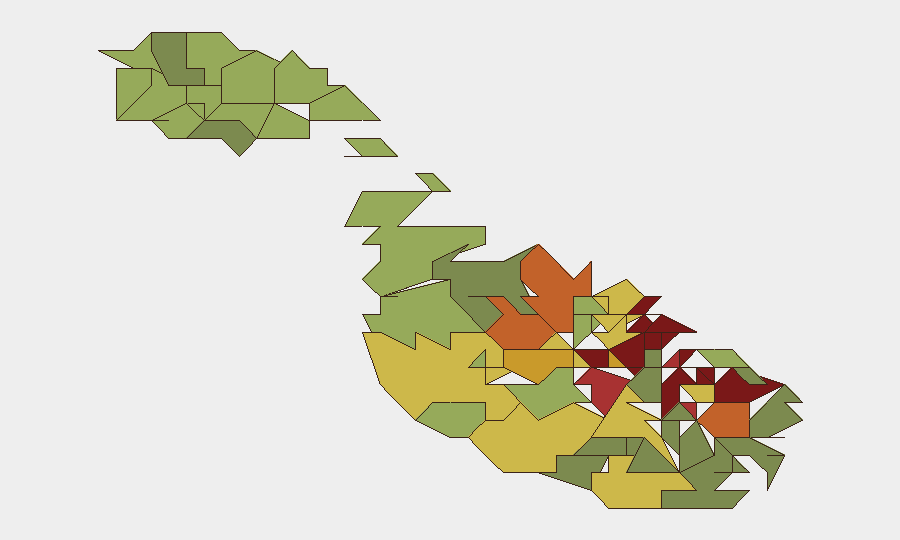
Valletta (risk 95), Sliema (92), and Saint Julian's (90) drive the national risk profile due to high foot traffic, nightlife density, and concentration of migrant and transient populations. These harbor-adjacent commercial and entertainment districts experience recurring street violence, petty crime, and organized trafficking activity. Secondary risk concentration in Hamrun, Paola, and Msida reflects spillover effects from irregular migration flows and associated criminal networks operating in port and transit corridors. Northern and harbor-region areas remain structurally vulnerable to maritime incidents, including maritime debris and unexploded ordnance from World War II, as evidenced by the Gozo ferry discovery on 7 October.
How GeoBit Would Assist
Security teams would employ AOI Monitoring & Early Warning to track crime patterns and incident clusters in Valletta, Sliema, and Saint Julian's with persistent alerting on new violence or trafficking signals. Intel Sweep and multi-source OSINT fusion (X/Twitter, Telegram, local news) would corroborate emerging street-level threats and maritime hazards in near-real time. GIS & Spatial Analysis combined with Maritime & Aviation tracking would map irregular-migration routes, maritime chokepoints (ferry corridors, landing sites), and hazard zones to support duty-of-care routing and personnel safety briefings.
7-Day Outlook
No major security escalation is anticipated. Ministerial-level security dialogue with Libya will likely sustain migration-control operations and maritime surveillance. Street-level crime in central urban areas will remain sporadic but persistent; organizations with personnel in Valletta, Sliema, and Saint Julian's should maintain heightened situational awareness and review evacuation protocols for high-risk venues.
Highest-Risk Areas — Ranked
| # | State / Region | Risk |
|---|---|---|
| 1 | Valletta | 95 |
| 2 | Sliema | 92 |
| 3 | Saint Julian's | 90 |
| 4 | Gżira | 88 |
| 5 | Hamrun | 87 |
| 6 | Paola | 86 |
| 7 | Msida | 85 |
| 8 | Birkirkara | 84 |
| 9 | Birgu | 83 |
| 10 | Senglea | 82 |
| 11 | Cospicua | 81 |
| 12 | Żabbar | 80 |
Sources
Previous Weekly Briefs
A new Malta brief is written every Monday, covering the week — each with its own risk map and downloadable CSV. Use the calendar to go further back.
- October 13, 2026
- October 6, 2026
- September 29, 2026
- September 22, 2026
- September 15, 2026
- September 8, 2026
- September 1, 2026
📅 Browse past briefs by calendar →
Highlighted days have a brief. Tap a day for that day's map & analysis, or “csv” for that day's dataset ($5).
Atlas — our AI intelligence desk — emails them this snapshot personally. Nothing else, no list.