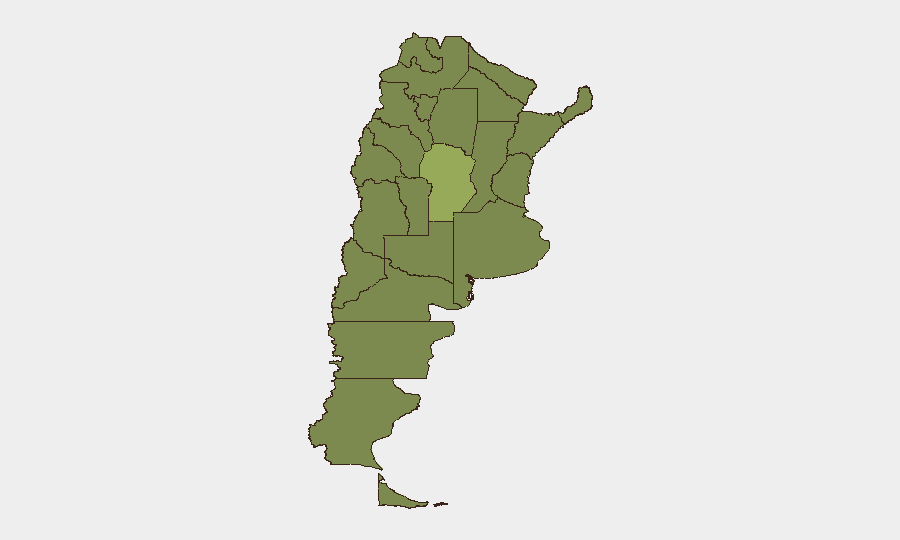
Situation Summary
Argentina remains at moderate composite threat level (#54 globally, score 36) with 241 tracked events, showing no evidence of major new nationwide unrest or political instability in the last 24–48 hours. Internal security signals reflect routine institutional friction—arrests, investigations, and public statements involving government, judicial, and law-enforcement bodies—rather than imminent systemic disruption. However, persistent organized-crime and narcotics-violence environments in key provinces, especially Córdoba and Rosario (Santa Fe), maintain elevated baseline risk for corporate operations and personnel in those zones. Argentine nationals and delegation abroad face heightened personal-safety risk around World Cup venues in the United States due to fan clashes and nearby violent crime incidents.
Key Developments
- Kansas City, Missouri, USA | 16 June 2026 evening – Multiple shootings along I-70/I-670 corridor killed at least two and injured nine; an Uber driver transporting Argentina fans to the team's first World Cup match was among casualties. Spanish-language media report described "very strong shootout" near the Argentina and England squads' base, raising security concern for Argentine delegation and fan travel.
- Times Square, New York City, USA | 17–18 June 2026 night – Social media documented clashes between Argentina and Algeria fans following Argentina's World Cup win, creating localized crowd-safety risk for Argentine travelers in the city.
- Nathan Phillips Square, Toronto, Canada | 16 June 2026 evening – City of Toronto terminated a public Argentina–Algeria World Cup viewing party early due to safety concerns linked to fan disturbances, fireworks, and smoke flares, indicating crowd-management volatility around Argentina-related gatherings.
- Kansas City, USA | ~17–18 June 2026 – Local U.S. reporting documented visibly reinforced security around Argentina team hotel and training facilities, reflecting heightened protective posture following violent crime and large fan turnouts near the squad's base.
- Argentina (domestic) | 17–18 June 2026 – Prison–Supreme Court arrest/detention incident, investigation into government conduct, prosecutor arrest, and deputy-level investigation into educational institution flagged in event signals; no major civil unrest or infrastructure disruption reported in indexed open-source material.
Highest-Risk Areas
Córdoba (risk score 55.4) significantly outpaces all other provinces and is the primary driver of Argentina's internal threat profile, likely reflecting organized-crime and narcotics-trafficking activity. Buenos Aires Province (29) and the Autonomous City of Buenos Aires (27.2) together represent the second-tier risk cluster, concentrated around the capital and its surrounding metropolitan zone where street crime, occasional kidnappings, and drug-related violence persist. Rosario (Santa Fe Province, not separately ranked but cited in current media as a high-concern zone) remains a recognized hotspot for narcotics-related organized crime. Northern provinces—San Juan, Neuquén, Misiones, Jujuy—cluster around risk scores of 26–27.5, suggesting distributed but lower-intensity conflict or criminal activity; south-central and southern regions show comparable or slightly lower scores.
How GeoBit Would Assist
Intel Sweep and multi-language OSINT (including Spanish-language web, X, and Telegram monitoring) enable early detection of emerging protests, labor actions, or institutional crises before they escalate to broad disruption. AOI Monitoring & Early Warning focused on Córdoba, Rosario, and Buenos Aires Province would provide persistent, time-stamped alerts when violence, trafficking indicators, or security incidents cross defined thresholds. Routing & Network Analysis helps security teams identify safer travel corridors and real-time alternative routes for personnel moving between high-risk zones and corporate sites.
7-Day Outlook
No imminent nationwide political or security crisis is signaled in current event data or available open-source material, though judicial and executive-branch tensions evident in the last 48 hours may generate additional investigative or political friction. International World Cup–related safety risks for Argentine nationals abroad will persist through the tournament's duration. Baseline organized-crime and narcotics-violence risk in Córdoba, Rosario, and Buenos Aires remains stable and endemic; localized incidents are possible but not predictable on a 7-day horizon without persistent field intelligence.
Highest-Risk Areas — Ranked
| # | State / Region | Risk |
|---|---|---|
| 1 | Córdoba | 55.4 |
| 2 | Buenos Aires Province | 29 |
| 3 | San Juan Province | 27.5 |
| 4 | Neuquén Province | 27.3 |
| 5 | Autonomous City of Buenos Aires | 27.2 |
| 6 | Misiones | 26.7 |
| 7 | Santiago del Estero Province | 26.4 |
| 8 | Jujuy Province | 26.2 |
| 9 | Río Negro Province | 26 |
| 10 | Mendoza Province | 25.9 |
| 11 | Corrientes Province | 25.9 |
| 12 | Chubut Province | 25.7 |
Sources
Previous Daily Briefs
A new Argentina brief is written every day — each with its own risk map and downloadable CSV. Here's the last week; use the calendar to go further back.
📅 Browse every day by calendar →
Highlighted days have a brief. Tap a day for that day's map & analysis, or “csv” for that day's dataset ($5).