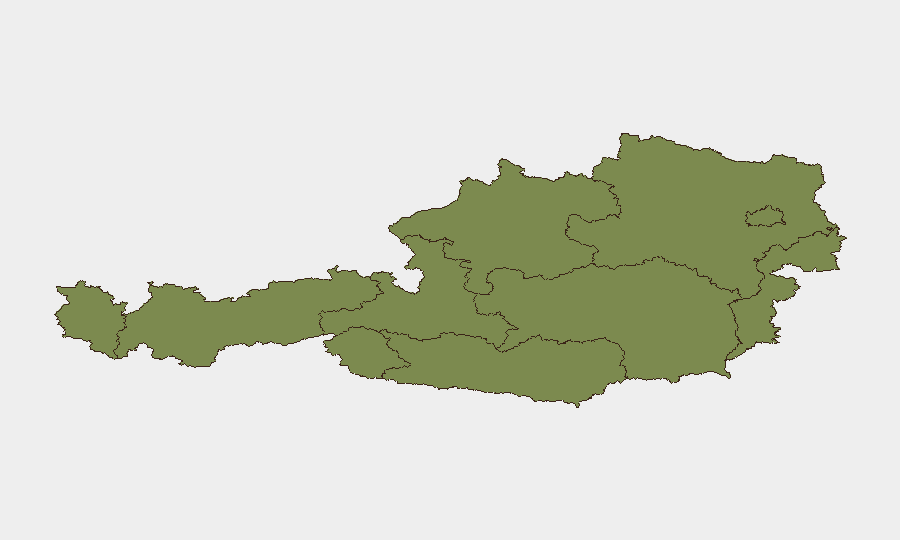
Situation Summary
Austria remains at moderate global risk (rank #104, composite score 9) with 21 tracked threat events. Vienna substantially outweighs all other regions, carrying a composite risk score of 31.5—more than double any other state. The national threat environment is stable, with no verified acute security incidents in the past 24–48 hours; however, Vienna's persistent elevated risk posture warrants continued monitoring of corporate operations and staff in the capital.
Key Developments
No verified acute incidents in the past 24–48 hours. Web research identified candidate signals (Vienna police activity notation on 2026-07-10; a rail disruption involving Polish tourists on an undated Warsaw–Rijeka service transiting Austria) but neither met independent corroboration or clear recency thresholds. Recent event signals tagged to 2026-07-13 (multiple "Reject" and "Public Statement" entries) lack sufficient geographic or sectoral specificity to assess operational impact on corporate assets or personnel. Recommend GeoBit Intel Sweep or X/Twitter OSINT focused on Vienna, Lower Austria, and Salzburg to clarify the nature and scope of those signals within the next 12 hours.
Highest-Risk Areas
Vienna dominates the sub-national risk picture, with a composite score of 31.5 compared to 1.5–16.5 across all other regions. Lower Austria, Salzburg, and Carinthia follow at 16.5 each, suggesting some distributed secondary risk; however, Vienna's concentration is exceptional and likely reflects higher population density, critical infrastructure, and political/diplomatic activity. The remaining five states (Vorarlberg, Tyrol, Upper Austria, Styria, Burgenland) register minimal tracked risk (1.5 each). For corporate duty-of-care purposes, Vienna should be treated as the primary monitoring priority, with secondary watch on the tri-state Lower Austria / Salzburg / Carinthia corridor.
How GeoBit Would Assist
Security teams should employ AOI Monitoring & Early Warning (persistent watch on Vienna and satellite cities) coupled with Intel Sweep and multi-language OSINT (X/Twitter, Telegram, local news feeds) to detect emerging threats before they mature. Entity extraction and sentiment analysis against Austrian political, transport, and business entities would clarify the 2026-07-13 signal cluster. For teams with mobile or distributed staff, Routing & Network Analysis can identify real-time alternative travel corridors if primary transport routes (rail, road) experience disruption; conflict and crime-search capabilities support rapid escalation protocols if incidents occur.
7-Day Outlook
No indicators suggest a material shift in Austria's near-term threat trajectory. Vienna will remain the focal point for corporate risk; monitor for any clarification of the 2026-07-13 events and any spillover into Lower Austria or Salzburg. Routine vigilance on transport, public gathering venues, and embassy/diplomatic sites is appropriate; no travel restrictions or asset relocations are warranted at present on the basis of available intelligence.
Highest-Risk Areas — Ranked
| # | State / Region | Risk |
|---|---|---|
| 1 | Vienna | 31.5 |
| 2 | Lower Austria | 16.5 |
| 3 | Salzburg | 16.5 |
| 4 | Carinthia | 16.5 |
| 5 | Vorarlberg | 1.5 |
| 6 | Tyrol | 1.5 |
| 7 | Upper Austria | 1.5 |
| 8 | Styria | 1.5 |
| 9 | Burgenland | 1.5 |
Sources
Previous Daily Briefs
A new Austria brief is written every day — each with its own risk map and downloadable CSV. Here's the last week; use the calendar to go further back.
📅 Browse every day by calendar →
Highlighted days have a brief. Tap a day for that day's map & analysis, or “csv” for that day's dataset ($5).
Atlas — our AI intelligence desk — emails them this snapshot personally. Nothing else, no list.