Situation Summary
Bulgaria faces an elevated composite threat score (7/100 globally, #116 ranking) driven principally by developments in Sofia and southwestern border regions. The past 48 hours have seen a convergence of geopolitical pressure—Iranian threats to Bulgaria over U.S. military deployments, parliamentary approval of U.S. tanker aircraft at Bezmer Air Base, and heightened domestic political opposition—alongside a spike in routine security incidents (fires, road accidents, elevated 112 emergency calls). The security posture remains stable but operationally stretched; no imminent mass-casualty threat is indicated, but the combination of cross-border congestion, infrastructure updates, and elevated incident volume warrants close monitoring of Sofia and transport corridors.
Key Developments
- Bezmer Air Base, southeastern Bulgaria — 22 Jul 2026: Parliament approved stationing of U.S. tanker aircraft in support of Middle East operations. The Defence Committee backed the proposal on 21–22 Jul, triggering public opposition and heightened parliamentary debate.
- Iran threat signal — 22 Jul 2026: Iranian authorities issued a threat statement directed at Bulgaria, directly linked to the U.S. aircraft deployment decision. Government responded with elevated security protocols at airports, railway stations, and critical infrastructure nationwide.
- Coastal security incident — 22 Jul 2026: Authorities neutralized a drone recovered from waters approximately 40 km off the Bulgarian coast, classified as a maritime-security incident.
- Emergency services volume — 23 Jul 2026: Bulgarian emergency number (112) received over 6,400 calls in a 24-hour period, reflecting elevated incident traffic across crime, fires, accidents, and missing-person reports.
- Road and fire incidents — 23 Jul 2026: Emergency services responded to 10 serious road crashes nationwide (one fatality, 13 injuries) and multiple localized fires in Logodazh and Belitsa.
- Cross-border transport disruption — 22 Jul 2026: Heavy traffic toward Türkiye persists during summer peak. Oryahovo–Bechet ferry crossing (Danube border) remains temporarily suspended due to low water levels.
- Activist arrests — 23 Jul 2026: Two separate activist arrest/detention incidents were recorded, signaling elevated law-enforcement response to public dissent or assembly activity.
Highest-Risk Areas
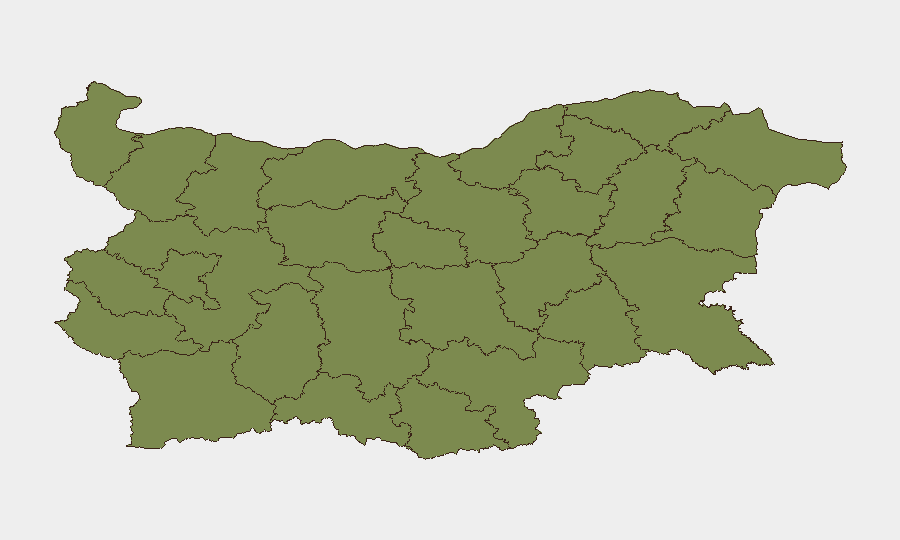
Sofia-City dominates the risk profile (31.4 composite score), reflecting geopolitical activity, critical infrastructure density, parliamentary proceedings, and routine urban crime concentration. Blagoevgrad (11.4) and Dobrich (8.9) follow as secondary hotspots, likely driven by southwestern border proximity to Türkiye and cross-border trafficking/smuggling corridors. All other tracked regions score below 2.0, indicating sharply concentrated rather than dispersed national risk.
How GeoBit Would Assist
Security teams operating in Bulgaria would prioritize Intel Sweep and global event feeds for real-time monitoring of geopolitical statements (Iran, NATO, EU) and their domestic echo in media and social platforms; AOI Monitoring & Early Warning applied to Sofia transport hubs, Bezmer Air Base, and border crossings (Oryahovo, Turkish corridor) to detect anomalies in movement, incident frequency, or security posture; and Routing & Network Analysis to identify and communicate safe alternatives during periods of cross-border congestion or infrastructure updates. Complementary OSINT fusion (X/Telegram, radio SIGINT) would track activist and opposition sentiment to anticipate further public dissent or assembly risk.
7-Day Outlook
The near-term outlook hinges on Iranian posture and domestic political response to the U.S. deployment. If Iranian rhetoric subsides or remains rhetorical, routine security operations and infrastructure updates will likely normalize by end-week. Conversely, any escalation (cyber, proxy, or direct action against Bulgarian or U.S. interests) would trigger sustained elevated protocols and congestion around critical infrastructure, particularly Sofia and Bezmer. Summer road and fire incidents will continue at elevated baseline absent significant weather change.
Highest-Risk Areas — Ranked
| # | State / Region | Risk |
|---|---|---|
| 1 | Sofia-City | 31.4 |
| 2 | Blagoevgrad | 11.4 |
| 3 | Dobrich | 8.9 |
| 4 | Burgas | 3.9 |
| 5 | Yambol | 1.4 |
| 6 | Kardzhali | 1.4 |
| 7 | Haskovo | 1.4 |
| 8 | Vidin | 1.4 |
| 9 | Pernik | 1.4 |
| 10 | Kyustendil | 1.4 |
| 11 | Montana | 1.4 |
| 12 | Vratsa | 1.4 |
Previous Daily Briefs
A new Bulgaria brief is written every day — each with its own risk map and downloadable CSV. Here's the last week; use the calendar to go further back.
📅 Browse every day by calendar →
Highlighted days have a brief. Tap a day for that day's map & analysis, or “csv” for that day's dataset ($5).
Atlas — our AI intelligence desk — emails them this snapshot personally. Nothing else, no list.