Situation Summary
Cape Verde remains stable with no verified security incidents, civil unrest, or infrastructure disruption reported in the last 24–48 hours. The composite threat score of 6 and zero tracked events reflect routine baseline conditions across the archipelago. Primary risk exposure for Cape Verde nationals is currently external—visa processing delays and travel-access friction affecting supporters and family members attempting to enter the United States for World Cup participation—rather than acute in-country threats.
Key Developments
- Location: United States (visa processing)
Date: 25 June 2026
Event: U.S. visa bond requirements (up to $15,000 for certain applicants) have created administrative barriers for Cape Verde nationals seeking entry for World Cup attendance. At least one high-profile case required political intervention before fees were waived and travel arranged.
Implication: Reflects logistical friction and potential financial/administrative burden on Cape Verde citizens engaging in international travel rather than domestic security risk.
- Geographic scope: Archipelago-wide
Period: Last 24–48 hours
Status: No corroborated reports of protests, civil unrest, terrorism, gang activity, infrastructure failures, political instability, or new travel advisories.
Highest-Risk Areas
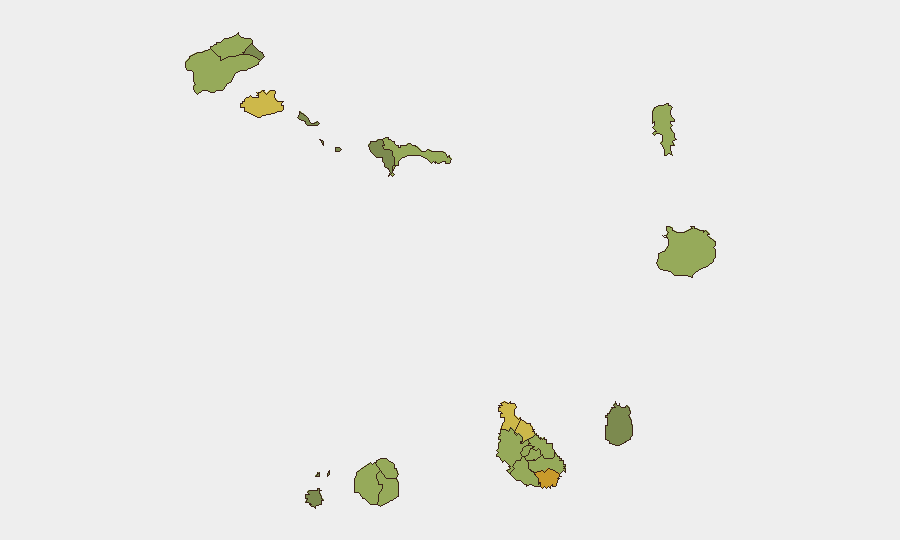
Praia (risk 72) and São Miguel (risk 68) drive the national composite risk ranking, followed by São Vicente (65) and Tarrafal (62). These rankings reflect historical and routine crime, socioeconomic vulnerabilities, and structural governance factors rather than acute current events. The concentration of risk in Praia—the capital and largest urban center—is consistent with typical urban crime patterns (petty theft, property crime, vehicle theft) affecting major population and commercial hubs. Intermediate-risk islands (São Vicente, Tarrafal, São Filipe) warrant standard corporate duty-of-care protocols but do not present escalated threat trajectories as of this reporting window.
How GeoBit Would Assist
Security teams with personnel or assets in Cape Verde should employ persistent Area-of-Interest (AOI) monitoring and early warning on Praia and secondary urban centers to detect emerging crime trends, civil unrest, or infrastructure disruption in real time. Multi-language OSINT fusion—combining X/Twitter, regional news, and local social-media sentiment analysis—enables early detection of political shifts, labor actions, or security incidents that may not reach international headlines. Routing and network analysis can optimize personnel movement in higher-risk districts and identify alternative transit corridors if primary infrastructure is disrupted, reducing exposure during routine business operations.
7-Day Outlook
No escalation drivers are visible in the near term; Cape Verde's security baseline is expected to remain stable through early July absent unforeseen political or criminal triggers. Continued monitoring of visa-processing developments and World Cup-related travel logistics should inform duty-of-care communication to affected nationals, though these remain external risks. Routine vigilance on property crime, street theft, and port-area security in Praia remains warranted for corporate operations.
Highest-Risk Areas — Ranked
| # | State / Region | Risk |
|---|---|---|
| 1 | Praia | 72 |
| 2 | São Miguel | 68 |
| 3 | São Vicente | 65 |
| 4 | Tarrafal | 62 |
| 5 | São Filipe | 58 |
| 6 | Santa Catarina | 58 |
| 7 | Santa Cruz | 55 |
| 8 | Mosteiros | 52 |
| 9 | São Salvador do Mundo | 52 |
| 10 | Ribeira Grande | 50 |
| 11 | Porto Novo | 48 |
| 12 | Sal | 48 |
Previous Daily Briefs
A new Cape Verde brief is written every day — each with its own risk map and downloadable CSV. Here's the last week; use the calendar to go further back.
📅 Browse every day by calendar →
Highlighted days have a brief. Tap a day for that day's map & analysis, or “csv” for that day's dataset ($5).