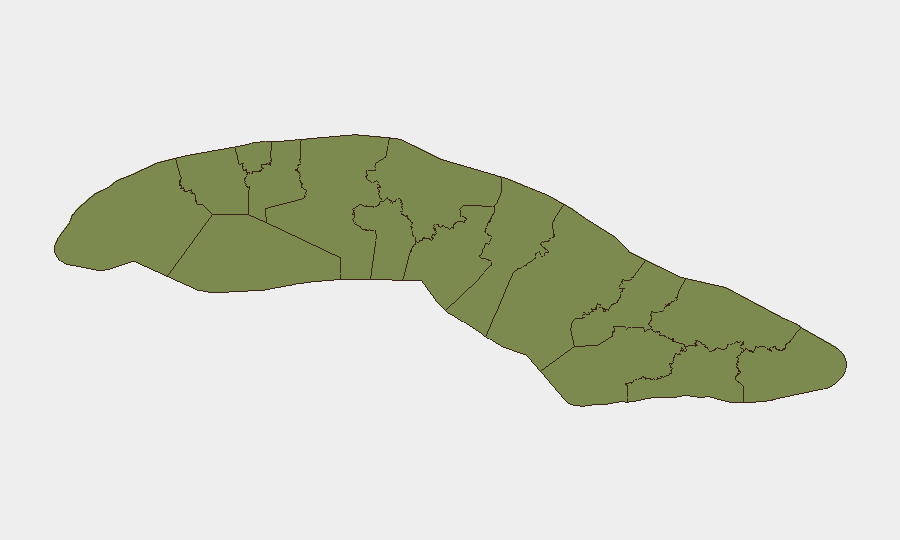
Situation Summary
Cuba is experiencing acute infrastructure stress centered on nationwide power outages and fuel shortages, which are driving localized street protests and politicized public discontent. Event activity over the past 48 hours shows a marked spike in civilian unrest linked to electricity cuts, combined with ongoing military training activity and cross-border diplomatic demands. At a composite threat score of 15 globally (rank #65), Cuba remains a moderate-risk operating environment, but the convergence of infrastructure failure, protest activity, and unresolved political messaging presents a near-term escalation risk for companies and personnel in urban centers.
Key Developments
- Santiago de Cuba, evening 16–17 June 2026: Cacerolazos (pot-banging protests) and vocal street gatherings documented on social media in response to prolonged blackouts affecting residential neighborhoods. Residents explicitly framing outages as the driver of public anger.
- Multiple provinces, 16–17 June 2026: Reports of thermoelectric plant failures ("nuevas averías") circulating on Instagram with users reporting 50–80 consecutive hours without electricity. Posts dated in last 24 hours, indicating ongoing grid instability rather than isolated incidents.
- Unspecified provincial location, within 48 hours: Video documentation of residents conducting protests after 48+ consecutive hours without power, with captions linking extended blackouts to breakdowns in multiple power plants nationwide.
- Nationwide urban areas, 16–17 June 2026: Social-media content showing civilians explicitly connecting current blackouts and economic hardship to demands for political change ("Este país necesita un cambio"), indicating politicization of infrastructure grievance.
- Coastal and military zones, likely 16–18 June 2026: Instagram-documented coastal defense and anti-ship training exercises described as recent, suggesting active military readiness posture in strategic areas.
- Administrative action, 17 June 2026: Government sanctions announced; concurrent arrest/detention of military personnel reported.
- Cross-border demands, 18 June 2026: Honduras and population-level demands issued toward Cuban authorities; Industry-level public statement against Premier; Estonia-level diplomatic statement.
Highest-Risk Areas
Sancti Spiritus province dominates the sub-national risk landscape with a composite score of 33.4—more than double Havana's 14.5—reflecting concentrated instability drivers. Havana, as the capital and largest urban center, carries elevated baseline risk from its population density and concentration of government/diplomatic presence. The ranking suggests that while Havana remains operationally significant, eastern and central provinces (Sancti Spiritus, Las Tunas, Holguín) are currently experiencing more acute stress, likely driven by infrastructure deficits and associated civil unrest. Personnel and assets in Sancti Spiritus and Santiago de Cuba (in eastern Cuba) should be treated as highest-priority monitoring zones.
How GeoBit Would Assist
Corporate security teams should deploy AOI (Area-of-Interest) Monitoring & Early Warning on Sancti Spiritus, Santiago de Cuba, and Havana to detect emerging street activity, protest clustering, and police/military response in real time. Multi-language social-media OSINT (X, Instagram, Telegram) combined with sentiment & temporal analysis will allow duty-of-care teams to distinguish between transient localized unrest and sustained politicized mobilization. Routing & Network Analysis tools can identify alternative transportation corridors and safe zones should blackout-triggered congestion or spontaneous road blockages emerge in high-risk provinces.
7-Day Outlook
Power-grid instability is expected to persist, sustaining daily-cycle protest risk in Santiago de Cuba and other eastern provinces through at least 20 June. If thermoelectric repairs are delayed or outages extend beyond 48 hours in urban zones, the risk of larger spontaneous gatherings and police intervention will rise markedly. Diplomatic and administrative friction signals (cross-border demands, internal arrests, government statements) suggest elevated state sensitivity; monitor for increased security-force visibility in protest zones and potential restrictions on movement or communications.
Highest-Risk Areas — Ranked
| # | State / Region | Risk |
|---|---|---|
| 1 | Sancti Spiritus | 33.4 |
| 2 | Havana | 14.5 |
| 3 | Las Tunas | 4.3 |
| 4 | Holguín | 4.3 |
| 5 | Artemisa | 4 |
| 6 | Villa Clara | 4 |
| 7 | Pinar del Rio | 3.7 |
| 8 | Matanzas | 3.7 |
| 9 | Mayabeque | 3.4 |
| 10 | Cienfuegos | 3.4 |
| 11 | Isle of Youth | 3.4 |
| 12 | Ciego de Avila | 3.4 |
Sources
Previous Daily Briefs
A new Cuba brief is written every day — each with its own risk map and downloadable CSV. Here's the last week; use the calendar to go further back.
📅 Browse every day by calendar →
Highlighted days have a brief. Tap a day for that day's map & analysis, or “csv” for that day's dataset ($5).