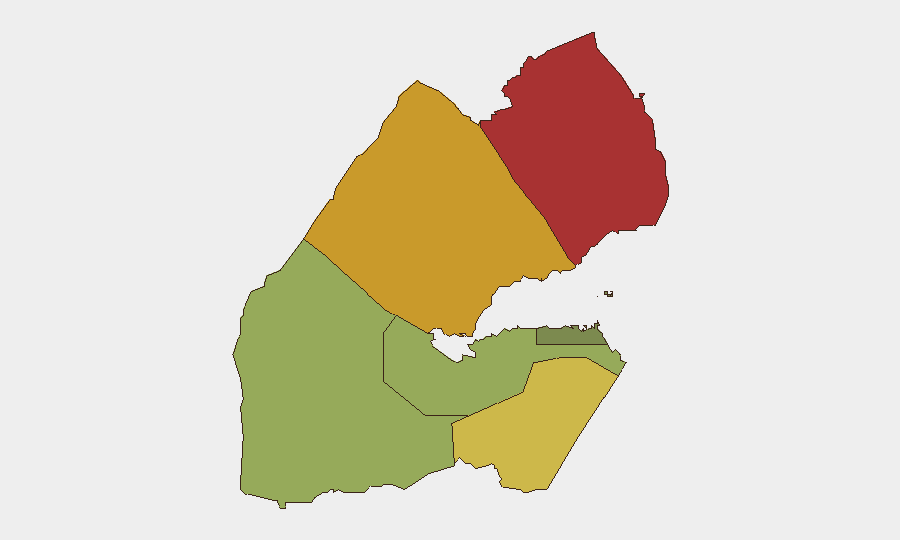
Situation Summary
Djibouti faces elevated regional security pressures following military confrontations with Iran and Israel on 9 July, compounded by a domestic arrest event on 10 July. The country ranks #91 globally with a composite threat score of 11 across seven tracked events, indicating manageable but non-trivial risk. However, northern regions—particularly Obock and Tadjourah—carry substantially higher threat profiles (risk scores 78 and 72 respectively) driven by proximity to Yemen, maritime piracy corridors, and ungoverned space. The trajectory suggests Djibouti remains a potential flashpoint in broader Red Sea and Horn of Africa tensions.
Key Developments
- 7 July 2026 – Arrest/Detention Event, Djibouti City (Djibouti region). One domestic arrest was recorded on 10 July; preliminary details remain limited. Assess motive, detainee profile, and official statements for signs of political instability or security-force overreach.
- 9 July 2026 – Military Exchanges, Djibouti-wide. Reciprocal conventional military force events between Djibouti and Iran, and separate artillery/tank incidents involving Djibouti, Israel, and unspecified Israeli forces, signaled escalation in Red Sea tensions. No casualty count or geographic specificity available; monitor for confirmation of engagement location (maritime vs. land-based) and intent.
- 9 July 2026 – International Response. NATO issued a public statement on 9 July in response to the above events; the International Maritime Organization disapproved Iran's conduct. These signals indicate international concern and potential coordination on Red Sea stability.
- 9 July 2026 – US Threat Signal vs. Iran. The US threatened Iran on 9 July in connection with the above incidents, suggesting potential for further escalation or deterrent messaging.
Highest-Risk Areas
Obock (risk 78) and Tadjourah (risk 72) represent Djibouti's critical vulnerability zones, driven by porous borders with Yemen, active maritime piracy networks, and limited state presence in hinterland areas. Ali Sabieh (risk 65) faces secondary threats from cross-border smuggling and irregular armed activity. By contrast, the capital region (Djibouti city, risk 35) and interior zones (Arta 48, Dikhil 42) carry significantly lower but non-negligible risk, primarily from spillover effects and political/security-force conduct. Northern regions require heightened monitoring and contingency planning for personnel and supply-chain disruptions.
How GeoBit Would Assist
A security team managing operations or personnel in Djibouti should deploy AOI Monitoring & Early Warning on Obock, Tadjourah, and the maritime approaches to flag port activity, armed-group movement, or naval incidents in near-real time. Conflict & Military tracking and Network & Actor Analysis would clarify the scale and intent of the 9 July exchanges with Iran and Israel, and identify risk to shipping or land transit. Maritime & Aviation tracking combined with Routing & Network Analysis enables alternative-route planning for staff movement and cargo shipment if Red Sea maritime corridors degrade.
7-Day Outlook
Djibouti faces a 7–14 day period of elevated regional volatility tied to Iran–Israel tensions and US signaling. Domestic security incidents (arrests, protests) may follow if political actors perceive international distraction or weakness. Northern border zones and maritime chokepoints require continuous watch; personnel in Obock and Tadjourah should maintain heightened situational awareness and contingency extraction plans.
Highest-Risk Areas — Ranked
| # | State / Region | Risk |
|---|---|---|
| 1 | Obock | 78 |
| 2 | Tadjourah | 72 |
| 3 | Ali Sabieh | 65 |
| 4 | Arta | 48 |
| 5 | Dikhil | 42 |
| 6 | Djibouti | 35 |
Previous Daily Briefs
A new Djibouti brief is written every day — each with its own risk map and downloadable CSV. Here's the last week; use the calendar to go further back.
📅 Browse every day by calendar →
Highlighted days have a brief. Tap a day for that day's map & analysis, or “csv” for that day's dataset ($5).
Atlas — our AI intelligence desk — emails them this snapshot personally. Nothing else, no list.