Situation Summary
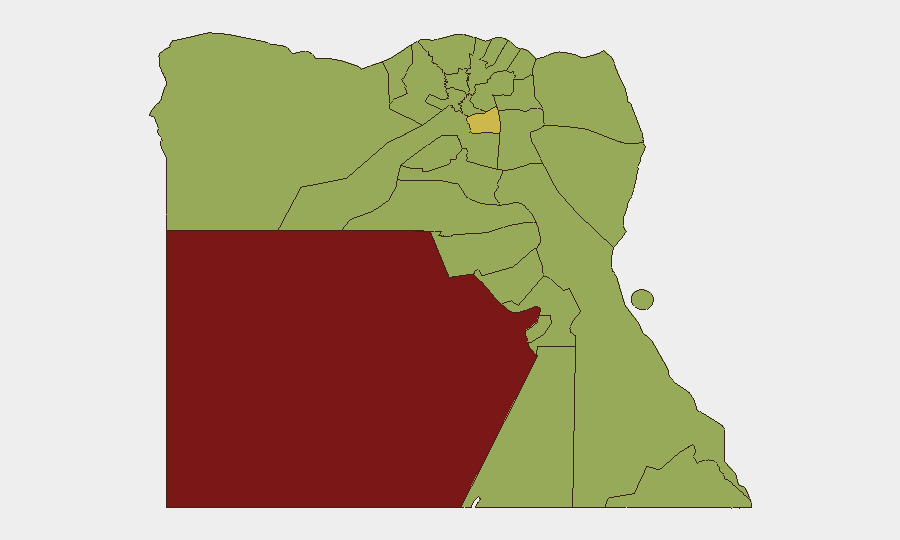
Egypt remains a complex operating environment with a composite threat score of 75 (rank #20 globally), reflecting persistent regional tensions, counterterrorism pressure, and diplomatic friction. Recent signals show elevated state-to-state friction with Israel, administrative sanctions from European sources, and corporate relationship withdrawals—suggesting a spike in diplomatic and reputational risk alongside persistent terrorism threats. The threat landscape is geographically concentrated, with New Valley, Cairo, and the Sinai Peninsula accounting for the highest sub-national risk scores. The trajectory indicates sustained tension rather than acute deterioration, though diplomatic incidents could rapidly change conditions.
Key Developments
- 2026-06-18 · Cairo region: Egypt rejected a position or proposal from Israel (nature and specific venue not yet clarified in available reporting). This diplomatic signal aligns with broader regional posturing on Palestine and regional security architecture.
- 2026-06-17 · Nationwide: An unnamed company publicly reduced business relations, citing unspecified risk or policy concerns. Timing coincides with broader corporate reassessment of Egypt exposure.
- 2026-06-17 · Istanbul–Cairo corridor: A major Istanbul-based entity (likely commercial or institutional) announced reduction of ties with Egyptian counterparts, signaling potential supply-chain or operational disruption for companies dependent on that corridor.
- 2026-06-16 · Unspecified location: Small-arms combat was reported involving Belgian nationals or Belgian-linked forces. Scope and location remain unclear; assess for contractor or military advisory presence.
- 2026-06-15 · Nationwide: A terrorist organization conducted an unconventional violence operation. No casualty count, location, or method released; heightens ambient terrorism risk across populated zones.
- 2026-06-15–16 · Unspecified detention: Arrest or detention orders were issued by Jerusalem-based and Egyptian authorities; also prison-related detention activity reported. Suggests transnational law-enforcement coordination or hostage/detainee issues.
Note: Live web research did not yield independently verifiable on-the-ground incident detail (specific location, time, casualty count, tactical method) for any of the above within the last 24–48 hours. Event signals are derived from GeoBit's multi-source feed; corporate teams should corroborate with embassy statements, NGO networks, and local correspondents for operational decision-making.
Highest-Risk Areas
New Valley (risk 82.7) is the single highest-risk sub-national zone, driven by remote geography, weak state presence, and historical extremist sanctuary. Cairo (68) concentrates political institutions, dense population, and demonstrator/protest activity, creating both attack surface and instability. The Sinai Peninsula (North and South both 52.7) and Canal zone (Port Said, Suez, Damietta; 53–54 range) reflect persistent ISIS-affiliated terrorism, military counter-operations, and critical infrastructure exposure. These clusters—New Valley, Cairo, and the Sinai–Canal arc—should anchor any sub-national risk prioritization; peripheral Red Sea and Halaib zones present lower but non-negligible risk.
How GeoBit Would Assist
Security teams should deploy Intel Sweep and multi-language OSINT (X/Twitter, Telegram, news feeds) to track diplomatic signals and corporate-relationship changes in real time. AOI Monitoring & Early Warning on Cairo, Port Said, and Sinai entry points will provide persistent alerting for protest activity, security force deployments, or terrorism indicators. Routing & Network Analysis can stress-test supply chains and personnel movement corridors against emerging sanctions, political friction, or infrastructure disruption.
7-Day Outlook
Diplomatic tension with Israel and European administrative action are likely to persist or harden over the next week, increasing reputational and regulatory risk for multinational operators. Terrorist activity in the Sinai and remote zones will likely continue at baseline levels; any mass-casualty incident would sharply elevate threat posture nationwide. Personnel and asset movements should assume elevated scrutiny at borders and checkpoints, and corporate liaison with local authorities is advisable to confirm status of ongoing operations.
Highest-Risk Areas — Ranked
| # | State / Region | Risk |
|---|---|---|
| 1 | New Valley | 82.7 |
| 2 | Cairo | 68 |
| 3 | Alexandria | 58.8 |
| 4 | Port Said | 53.7 |
| 5 | Damietta | 53.5 |
| 6 | The Lake | 53.2 |
| 7 | Suez | 53.2 |
| 8 | North Sinai | 52.7 |
| 9 | Qena | 52.7 |
| 10 | South Sinai | 52.7 |
| 11 | Red Sea | 52.7 |
| 12 | Halaib Triangle | 52.7 |
Sources
Previous Daily Briefs
A new Egypt brief is written every day — each with its own risk map and downloadable CSV. Here's the last week; use the calendar to go further back.
📅 Browse every day by calendar →
Highlighted days have a brief. Tap a day for that day's map & analysis, or “csv” for that day's dataset ($5).