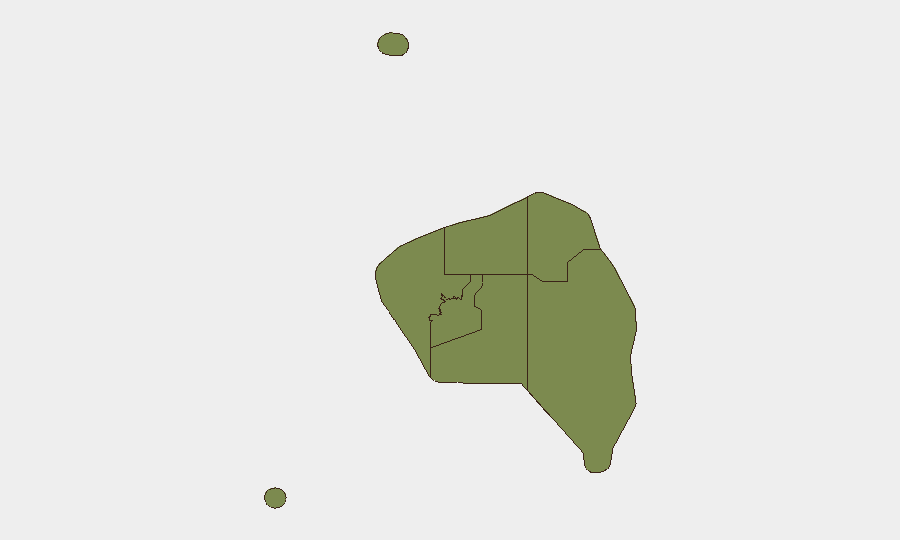
Situation Summary
Fiji remains a low-threat environment at the global level (rank #180, composite score 3), with minimal recent security incidents reported in open sources over the last 24–48 hours. Signal activity detected by GeoBit on 2–3 July centres on political rhetoric, government statements, and labour-related tensions rather than active violence or civil disorder. The security posture is stable but fragmented regionally, with Western and Central divisions carrying disproportionate risk relative to Eastern, Northern, and Rotuma zones.
Key Developments
No credible, cross-verified security incidents have been reported in Fiji during the last 24–48 hours (as of 2026-07-04 06:00 UTC). Open-source web research, social media monitoring, and government advisory channels show no timestamped reports of civil unrest, major crime incidents, infrastructure disruption, or significant travel-risk escalation. GeoBit's event signals from 2–3 July reference political statements, government-labour communication, and administrative actions (arrests/detentions in Suva), but open-source corroboration of specific incidents, casualty counts, or operational impact remains unavailable. Absence of verified reporting does not indicate absence of risk; rather, it reflects either genuine stability or limited real-time information flow from Fiji's media environment.
Highest-Risk Areas
Western and Central divisions dominate the risk profile (both composite risk 31.4), suggesting concentration of labour disputes, inter-communal tensions, or criminal activity in these zones—likely centred on Suva (capital, Western) and surrounding Central region. Eastern (5.7), Northern (1.4), and Rotuma (1.4) carry minimal tracked risk, indicating either lower incident density or reduced security reporting infrastructure. Organisations with personnel or assets in Suva and Western Viti Levu should maintain heightened situational awareness and confirmed communication protocols, particularly around labour and political gatherings.
How GeoBit Would Assist
Security teams operating in Fiji should deploy Intel Sweep and multi-language OSINT to monitor Fiji Government, Fiji Police Force, and regional media in real time, coupled with sentiment and temporal analysis of Fiji-based social media and news feeds to detect early escalation in labour or political rhetoric before incidents crystallise. AOI Monitoring & Early Warning configured for Suva and Western division would provide persistent watch-and-alert capability for gatherings, protests, or arrests, enabling duty-of-care teams to adjust travel and asset positioning. Network & Actor Analysis of government, labour union, and security-force statements would illuminate underlying tensions and forecast flashpoint timing.
7-Day Outlook
Near-term trajectory remains stable absent new catalysts. Continued monitoring of labour dialogue, government statements, and Suva-based political activity is warranted; any escalation in arrest/detention frequency or size of public gatherings should trigger immediate escalation review. Regional stability is not assured if labour negotiations stall or political messaging hardens, but current signal density does not indicate imminent crisis.
Next Update: 2026-07-05 06:00 UTC (or upon significant event trigger).
Highest-Risk Areas — Ranked
| # | State / Region | Risk |
|---|---|---|
| 1 | Western | 31.4 |
| 2 | Central | 31.4 |
| 3 | Eastern | 5.7 |
| 4 | Northern | 1.4 |
| 5 | Rotuma | 1.4 |
Sources
Previous Daily Briefs
A new Fiji brief is written every day — each with its own risk map and downloadable CSV. Here's the last week; use the calendar to go further back.
📅 Browse every day by calendar →
Highlighted days have a brief. Tap a day for that day's map & analysis, or “csv” for that day's dataset ($5).
Atlas — our AI intelligence desk — emails them this snapshot personally. Nothing else, no list.