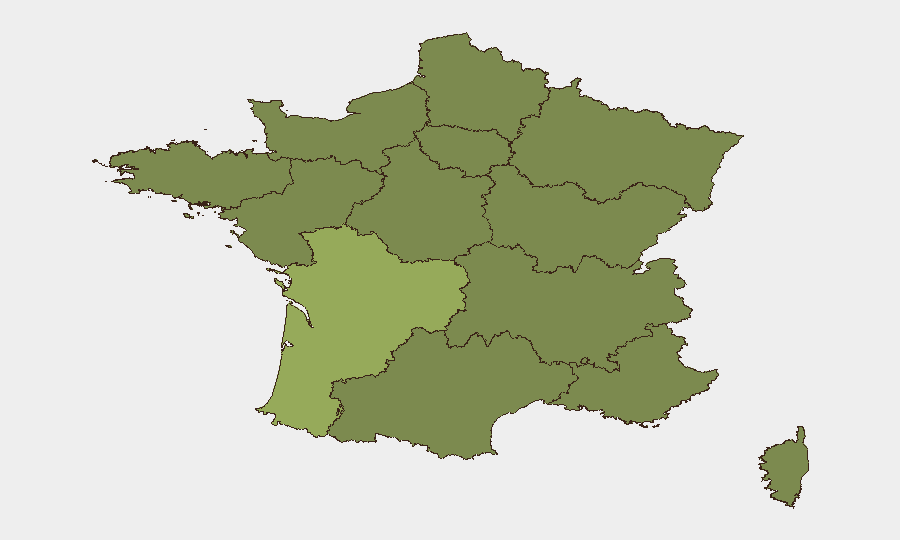
Situation Summary
France remains a moderate-risk jurisdiction (global rank #38, composite score 40) with 298 tracked threat events as of 18 June 2026. Recent signal activity reflects administrative and media friction, government statements, and isolated civil-service personnel action, but no indicators of imminent mass-casualty or critical-infrastructure disruption. The threat trajectory is stable; however, sub-national concentration in Nouvelle-Aquitaine and Auvergne-Rhône-Alpes warrants focused monitoring.
Key Developments
- 17 June, Administrative Sanctions (National). Media entities initiated administrative-sanctions actions against France's administration, signaling escalation in institutional or regulatory dispute. Scope and implications for corporate compliance or operational continuity remain unclear pending further reporting.
- 16 June, Government Rejection (National). Unnamed government entity issued a formal rejection statement; no geographic anchor or subject matter confirmed in available signals. Suggests policy or diplomatic friction but does not indicate domestic instability at this time.
- 18 June, Disapproval Statement (Versailles). A disapproval action was registered at Versailles, likely reflecting palace or parliamentary-level political posturing. Low operational impact for most corporate operations unless related to legislative or executive policy affecting specific sectors.
- 18 June, Civil-Service Arrest/Detention (Location TBD). One or more civil-service personnel were arrested or detained. Absence of sector, region, or charge details limits risk assessment; monitor for linkage to corruption, security breach, or labour action.
- 16–18 June, Multi-Actor Public Statements (National & International). President, French nationals, and administration issued public statements; statements to Geneva and internal positions suggest diplomatic or policy messaging unrelated to acute security threats.
- 15 June, Airline Disapproval (Germany-France Relations). A French airline registered disapproval toward Germany, indicating minor commercial or regulatory friction; no passenger safety or network disruption reported.
Note on 24–48 Hour Incident Coverage: GeoBit's event signals above are sourced from structured OSINT feeds and do not include real-time open-web or social-media incident reports from the last 24–48 hours. For detailed, minute-level incident mapping (protests, road closures, transport delays, arrests, crime clusters), corporate security teams should supplement this brief with live feeds from French regional prefectures (X/prefecture accounts), national police (Police Nationale, Gendarmerie), and outlets such as Franceinfo, France 3 regional, and Le Monde.
Highest-Risk Areas
Nouvelle-Aquitaine dominates the sub-national ranking (risk 57.9), significantly exceeding the national average and all other regions. This region warrants dedicated monitoring for labour, industrial, or security events. Auvergne-Rhône-Alpes (35.9) and Île-de-France (32.8) represent secondary foci; Île-de-France's risk is driven by concentration of government, media, and corporate assets around Paris. The remaining nine regions cluster between 27.9 and 29, indicating relatively uniform moderate baseline risk across provincial France.
How GeoBit Would Assist
Security teams should deploy AOI Monitoring & Early Warning on Nouvelle-Aquitaine and Île-de-France to capture emerging incidents (labour, protest, crime, accidents) with automated alerting. Multi-language OSINT fusion (X/Twitter, Telegram, regional news) will surface real-time incident reports, road/transport disruptions, and official prefecture statements. Network & Actor Analysis can map relationships among government, media, and administrative entities involved in the current friction to assess escalation risk and inform duty-of-care decisions for personnel in affected areas.
7-Day Outlook
Administrative and political friction is likely to persist but remain below threshold for major operational disruption. Monitor Nouvelle-Aquitaine for clustering of industrial action or labour events. No indicators suggest elevated threat to foreign nationals, supply chains, or critical infrastructure in the near term; standard corporate security protocols remain appropriate.
Highest-Risk Areas — Ranked
| # | State / Region | Risk |
|---|---|---|
| 1 | Nouvelle-Aquitaine | 57.9 |
| 2 | Auvergne-Rhône-Alpes | 35.9 |
| 3 | Ile-de-France | 32.8 |
| 4 | Hauts-de-France | 29 |
| 5 | Normandy | 28.9 |
| 6 | Provence-Alpes-Côte d'Azur | 28.7 |
| 7 | Occitania | 28.5 |
| 8 | Pays de la Loire | 28 |
| 9 | Brittany | 27.9 |
| 10 | Centre-Val de Loire | 27.9 |
| 11 | Grand Est | 27.9 |
| 12 | Bourgogne – Franche-Comté | 27.9 |
Sources
Previous Daily Briefs
A new France brief is written every day — each with its own risk map and downloadable CSV. Here's the last week; use the calendar to go further back.
📅 Browse every day by calendar →
Highlighted days have a brief. Tap a day for that day's map & analysis, or “csv” for that day's dataset ($5).