Situation Summary
Greece remains a low-threat environment globally (rank #136, composite score 6/100) with 47 tracked events in the monitoring period. Risk is heavily concentrated in Attica (Athens metro area), which accounts for the majority of recorded incidents and demonstrates a ~4× threat elevation relative to secondary regions. The broader country exhibits stable conditions, though recent signal activity across police statements, media investigations, and government communications suggests localized administrative or investigative activity rather than systemic instability.
Key Developments
Insufficient verified data for 24–48 hour development timeline. Live web research conducted on 2026-06-29 did not yield specific, dated security incidents, infrastructure disruptions, civil unrest, crime events, or travel-safety issues occurring in Greece between 2026-06-27 and 2026-06-29 with sufficient corroboration for inclusion in an operational brief.
Event signals in the GeoBit platform (police statements, investigations, sanctions on media, government public statements, and a small-arms combat indicator on 2026-06-28 involving a deputy) are present but lack sufficient granular detail—location, magnitude, casualties, operational impact, or confirmed status—to assess their relevance to duty-of-care or asset-protection decisions without risk of mischaracterization.
Recommended action: Security teams with presence in Greece should request supplementary real-time OSINT from GeoBit's Intel Sweep, X/Telegram monitoring, and local media search to corroborate signal activity and establish incident context before adjusting operational posture.
Highest-Risk Areas
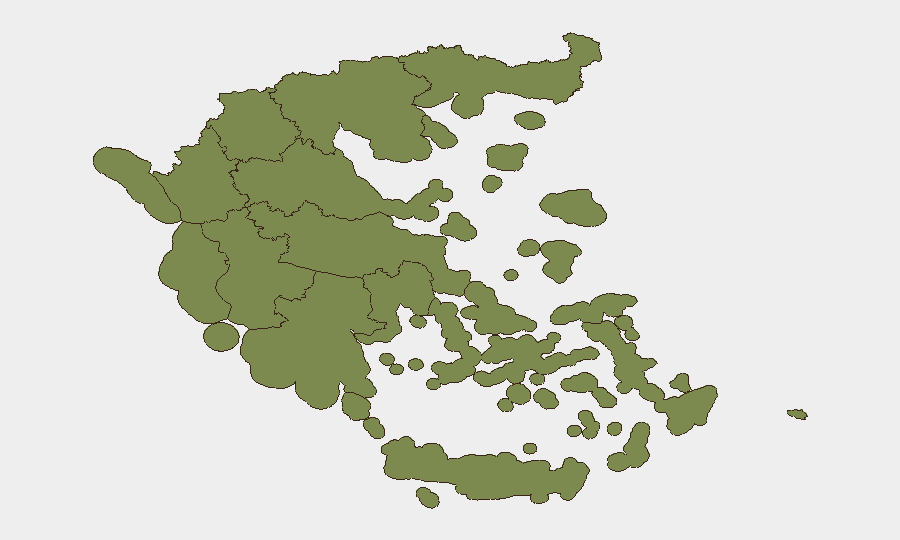
Attica (composite risk 31.5) drives Greece's national threat profile by a substantial margin, reflecting the concentration of political, administrative, media, and law-enforcement activity in the Athens metropolitan region. Secondary regions—Central Greece (7.3), Western Greece and Peloponnese (both 2.8)—remain minor contributors. The remaining nine regions cluster at 1.5, indicating baseline monitoring activity with no material differentiation.
Risk in Attica likely reflects routine investigative, administrative, and regulatory events rather than acute instability; however, the disparity warrants persistent monitoring via GeoBit's AOI (area-of-interest) alerting for Attica and Central Greece to capture early signals of policy, enforcement, or civil-order changes affecting corporate or personnel operations.
How GeoBit Would Assist
Corporate security teams should deploy GeoBit's AOI Monitoring & Early Warning capability on Attica and Central Greece to capture real-time signals from police, media, and government channels; pair this with Intel Sweep (multi-language, multi-source event feeds) and OSINT Fusion to corroborate platform signals against local media and official sources before escalating response. Routing & Network Analysis supports contingency planning for personnel or supply movements if localized disruptions emerge. Quarterly Risk & Threat Assessment updates will track sub-national shifts in composite scores and allow duty-of-care teams to calibrate travel policies and asset-protection resources proportionally.
7-Day Outlook
No acute threats are forecast for Greece in the near term. Attica will remain the focus area for monitoring; secondary regions show minimal risk trajectory change. Duty-of-care posture should remain standard, with emphasis on real-time alert configuration and local liaison to clarify the intent and scope of ongoing police and media investigations signaled in recent platform data.
Highest-Risk Areas — Ranked
| # | State / Region | Risk |
|---|---|---|
| 1 | Attica | 31.5 |
| 2 | Central Greece | 7.3 |
| 3 | Western Greece | 2.8 |
| 4 | Peloponnese Region | 2.8 |
| 5 | Western Macedonia | 2.2 |
| 6 | Central Macedonia | 1.5 |
| 7 | Eastern Macedonia and Thrace | 1.5 |
| 8 | Thessaly | 1.5 |
| 9 | Autonomous Monastic State of the Holy Mountain | 1.5 |
| 10 | Northern Aegean | 1.5 |
| 11 | South Aegean | 1.5 |
| 12 | Crete | 1.5 |
Sources
Previous Daily Briefs
A new Greece brief is written every day — each with its own risk map and downloadable CSV. Here's the last week; use the calendar to go further back.
📅 Browse every day by calendar →
Highlighted days have a brief. Tap a day for that day's map & analysis, or “csv” for that day's dataset ($5).