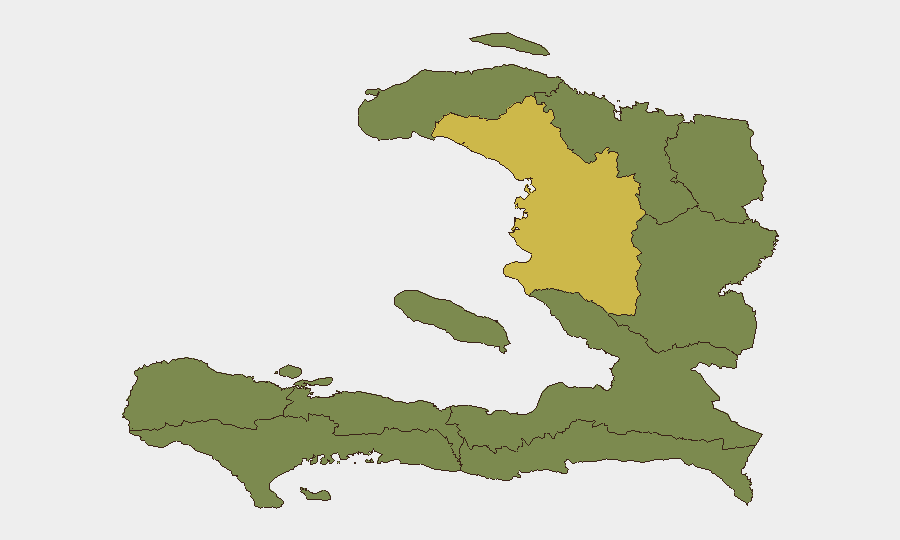
Situation Summary
Haiti remains a high-instability environment with composite threat ranking #36 globally (56/160). The country faces concurrent pressures: gang violence and territorial control remain endemic across multiple departments; migration flows and U.S. policy shifts are creating diplomatic friction; and recent signals indicate elevated tensions involving Venezuela and internal governance disputes. The overall trajectory is volatile but not sharply deteriorating within the last 48 hours, though downstream effects of U.S. legal decisions and regional military posturing may accelerate instability over the coming week.
Key Developments
- June 28, 2026 – U.S. deportation operations. American authorities began expelling individuals to Haiti, triggering domestic Haitian government responses and social commentary. Specific locations and casualty figures remain unclear from available reporting.
- June 27–28, 2026 – Haiti–Venezuela military posturing. Conventional military force signals were exchanged between Haiti and Venezuela over the 27th–28th period, with Haiti conducting counter-activity on June 28. Nature, location, and scale of activity are not detailed in current intelligence feeds.
- June 27, 2026 – U.S. Supreme Court TPS decision triggers Haitian government response. The U.S. Supreme Court ruling (June 25) terminating Temporary Protected Status for ~350,000 Haitians prompted Haitian officials to issue public statements and threats directed at the U.S. Supreme Court on June 27. This is a policy/legal event affecting diaspora populations rather than an on-the-ground security incident, but signals domestic political pressure on the Haitian government.
- June 26–27, 2026 – Migrant-related tensions. Signals indicate disapproval by Haitian actors toward migrants, conventional military force involving migrants vs. Haiti, and public Haitian statements toward Florida. These likely relate to maritime interdiction or coastal security activity but specific incidents are not yet localized.
- June 27, 2026 – Internal Haitian governance dispute. Haitian officials issued public statements directed at Haitian entities, and threats were made toward the Haitian Supreme Court. This suggests internal legal or executive tension unrelated to external threats.
- June 28, 2026 – Investigation activity. Haitian authorities initiated an investigation, likely related to one or more of the above developments. Scope and location unknown from current signals.
Note: Web research over the last 24–48 hours did not yield time-stamped, location-specific on-the-ground incidents (shootings, roadblocks, gang clashes, or airport disruptions) that could be cross-confirmed. The above reflect signal events (statements, formal actions, military postures) rather than discrete criminal or civil-unrest incidents. This may reflect reporting lag or a temporary reduction in localized violence reporting.
Highest-Risk Areas
Artibonite Department dominates the sub-national ranking at 64.5, nearly double the next-highest region (Ouest at 34.8). Gang territorial control, kidnapping networks, and limited state presence in Artibonite—particularly around the Artibonite River valley and Port-de-Paix approaches—make it the primary flashpoint. The remaining nine departments cluster at 34.5, indicating widespread but more diffuse gang presence and criminal activity across the country. Risk is not concentrated; it is distributed, meaning supply chains, personnel movement, and NGO operations face consistent threat across multiple regions rather than a single containable hotspot.
How GeoBit Would Assist
Security teams would employ AOI Monitoring & Early Warning to set persistent watches on Artibonite Department and key corridors (Port-au-Prince to Cap-Haïtien, coastal routes); OSINT fusion (X/Twitter, HaitiLibre, UN security feeds, local radio SIGINT) to corroborate gang activity, roadblock placement, and civil unrest in near-real time; and Routing & Network Analysis to calculate safe alternative routes for personnel and cargo movements. Conflict & Military mapping and Entity Network Analysis would clarify the Haiti–Venezuela posturing and its likely impact on coastal security.
7-Day Outlook
U.S. deportation operations and the TPS ruling fallout are likely to sustain domestic political pressure and may fuel migration surges over the next 7 days. Gang violence in Artibonite and other departments will likely persist at baseline levels absent major police or international intervention. The Venezuela–Haiti military signals warrant close monitoring; escalation risk is low but non-zero if maritime territorial disputes intensify.
Highest-Risk Areas — Ranked
| # | State / Region | Risk |
|---|---|---|
| 1 | Artibonite Department | 64.5 |
| 2 | de l'Ouest Department | 34.8 |
| 3 | Grande-Anse Department | 34.5 |
| 4 | Sud Department | 34.5 |
| 5 | Nippes Department | 34.5 |
| 6 | Nord-Ouest Department | 34.5 |
| 7 | Nord Department | 34.5 |
| 8 | Nord-Est Department | 34.5 |
| 9 | Centre Department | 34.5 |
| 10 | Sud-Est Department | 34.5 |
Sources
Previous Daily Briefs
A new Haiti brief is written every day — each with its own risk map and downloadable CSV. Here's the last week; use the calendar to go further back.
📅 Browse every day by calendar →
Highlighted days have a brief. Tap a day for that day's map & analysis, or “csv” for that day's dataset ($5).