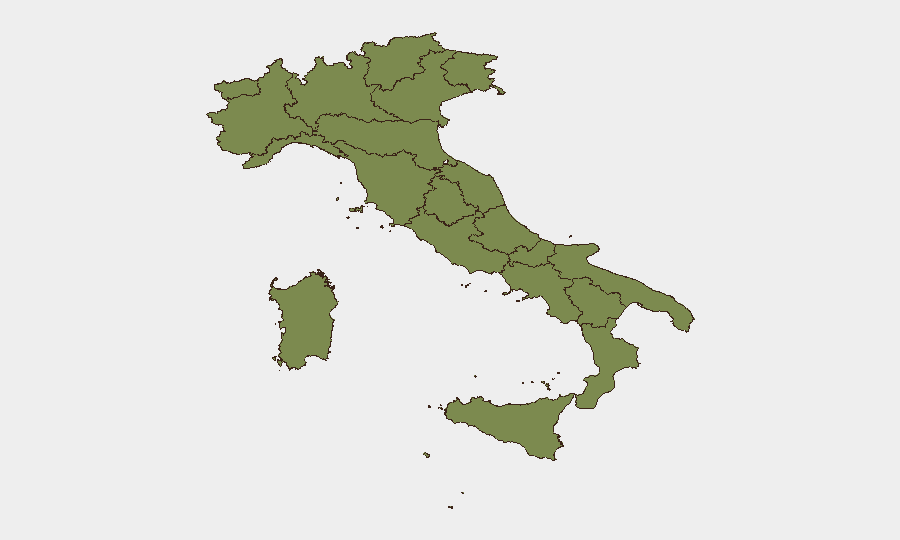
Situation Summary
Italy faces a composite threat score of 10 (rank #111 globally) driven primarily by criminal and security incidents concentrated in the north-central regions. The past 48 hours have surfaced high-profile incidents spanning organized-crime violence, pharmaceutical supply-chain compromise, and government-level security responses, indicating an active operational environment. The national government has initiated public statements and policy reviews, signalling elevated institutional attention to security governance. Overall trajectory is toward increased monitoring and enforcement activity rather than systemic instability.
Key Developments
- Rome (Lazio), 3 July – Fentanyl theft from Israelite Hospital: 80 vials stolen; Health Ministry ordered emergency inspection and assigned specialized police units; government publicly condemned hospital security lapses as a national public-health and security concern.
- Pomezia (Lazio), 3 July – Four arrests in mafia-linked bombing case: suspects detained in connection with prior car-bomb attack on investigative journalist Sigfrido Ranucci; Carabinieri assess group as strongly suspected of possessing and deploying explosives using organized-crime methods; three in pre-trial detention, one under house arrest.
- National level, 3 July – Government issued formal denunciation of "irresponsible conduct" in hospital security and opioid handling; ordered emergency inquiry into pharmaceutical safety procedures across healthcare sector.
- UK/Italy/Japan, 3 July – Joint award of £4.6 billion contract to Edgewing for Global Combat Air Programme (GCAP) fighter-jet advancement; marks significant long-term commitment to Italy's defence posture and industrial capacity.
- Southern Lebanon / Italy & France, 3 July – Policy reporting indicates Paris and Rome planning military force deployment to southern Lebanon following UNIFIL peacekeeping-mission departure; signals upcoming Italian military presence in high-risk external theatre.
- Italy/EU borders, early July – Prime Minister Giorgia Meloni announced plans to deploy military forces to strengthen border security in context of migration control; indicates use of armed forces for internal security and border management.
Highest-Risk Areas
Umbria (34.3) and Lombardy (28.2) account for the majority of tracked threat events and represent the primary geographic drivers of Italy's composite risk score. Umbria's elevated risk likely reflects organized-crime and trafficking activity in central Italy; Lombardy's reflects a combination of criminal networks, industrial-sector tensions (per 2 July rejection event involving employees), and infrastructure vulnerabilities. Lazio (13.7), centred on Rome, shows acute risk linked to the fentanyl theft, mafia bombing case, and institutional friction evident in recent rejections and disapprovals. All other tracked regions fall below 7.0, indicating that national risk is heavily concentrated in three zones.
How GeoBit Would Assist
Security teams with personnel or assets in Italy should deploy AOI (Area-of-Interest) Monitoring & Early Warning on Umbria, Lombardy, and Lazio to track emerging criminal, labour, and institutional events in real time. OSINT fusion & corroboration (X/Twitter, Telegram, local news sources, multi-language search) will enable rapid identification of organized-crime activity, supply-chain breaches, and policy announcements affecting operations. Network & Actor Analysis will help map relationships between the arrested mafia-linked suspects, hospital-security lapses, and broader criminal ecosystems in order to assess exposure and adjust operational security protocols.
7-Day Outlook
Expect continued elevated government scrutiny of hospital and pharmaceutical security, with potential new regulatory requirements or spot inspections affecting healthcare-sector operations. The mafia bombing investigation and fentanyl-theft probe will remain active, with possible further arrests or intelligence disclosures. Military and border deployments will proceed as announced, but internal political debate over migration policy may generate public tension and localized labour/civil-society friction, particularly in northern regions.
Highest-Risk Areas — Ranked
| # | State / Region | Risk |
|---|---|---|
| 1 | Umbria | 34.3 |
| 2 | Lombardy | 28.2 |
| 3 | Lazio | 13.7 |
| 4 | Sicily | 6.6 |
| 5 | Liguria | 6.3 |
| 6 | Campania | 4.9 |
| 7 | Tuscany | 4.6 |
| 8 | Veneto | 4.6 |
| 9 | Marche | 4.6 |
| 10 | Abruzzo | 4.6 |
| 11 | Molise | 4.6 |
| 12 | Apulia | 4.6 |
Sources
Previous Daily Briefs
A new Italy brief is written every day — each with its own risk map and downloadable CSV. Here's the last week; use the calendar to go further back.
📅 Browse every day by calendar →
Highlighted days have a brief. Tap a day for that day's map & analysis, or “csv” for that day's dataset ($5).