Situation Summary
Jordan remains ranked #76 globally (composite threat score 16) with 32 tracked events, reflecting a moderate security environment currently elevated by regional conflict spillover rather than domestic instability. The past 48 hours have seen confirmed Iranian missile and drone attacks on Jordan (119 total, 108 intercepted), a major drug-smuggling interdiction at the northern border, and Jordanian official condemnation of Iranian strikes on neighboring Bahrain and Kuwait. Armed forces and civil-defense posture remain on high alert nationwide, with 187 emergency reports and 19 minor injuries recorded from falling debris; the security environment is tense but manageable absent further regional escalation.
Key Developments
- Jaber Border Crossing (Jordan–Syria border), 3 July 2026, last 24 hours: Jordanian authorities foiled a major drug-smuggling attempt at the critical northern border crossing, signaling sustained organized-crime and smuggling risk on the Jordan–Syria frontier despite heightened security posture.
- Kingdom-wide (Amman, Irbid, Zarqa, Mafraq, Ma'an, Karak, Badia), 1–3 July 2026: Iranian forces fired 119 missiles and drones at Jordan over the past week; 108 were intercepted by Jordanian air defenses. The remaining impacts generated 187 emergency reports, 19 injuries (mostly minor), and localized property damage across multiple governorates.
- Amman (Ministry of Foreign Affairs), 2 July 2026: Jordan's Foreign Ministry publicly condemned Iranian missile and drone attacks on Bahrain and Kuwait as violations of sovereignty and threats to regional stability, declaring full solidarity with both nations and support for their defensive measures.
- Armed Forces Briefing (via Roya News), 1–3 July 2026: Jordanian Armed Forces and Public Security Directorate confirmed all units on immediate alert, with reinforced border deployments, air-defense readiness, and civil-defense activation. Emergency personnel nationwide remain positioned to respond to further threats or debris threats.
- US–Iran Strategic Talks (Doha, reported via Jordan News), 2 July 2026: Jordan-based media cited informed sources reporting that Washington conveyed to Tehran its rejection of any changes to Strait of Hormuz status quo following two days of technical talks; next round scheduled for 18 July. The reporting underscores Jordanian monitoring of maritime and energy-security developments affecting regional stability and trade flows.
- Regional Airspace Activity, last 24–48 hours: Jordanian and regional security commentators have circulated reports of continued US strikes on Iranian targets and Iranian statements halting attacks on Israel following intensive missile exchanges, contributing to elevated perceived regional conflict risk with potential knock-on effects for Jordanian aviation.
Highest-Risk Areas
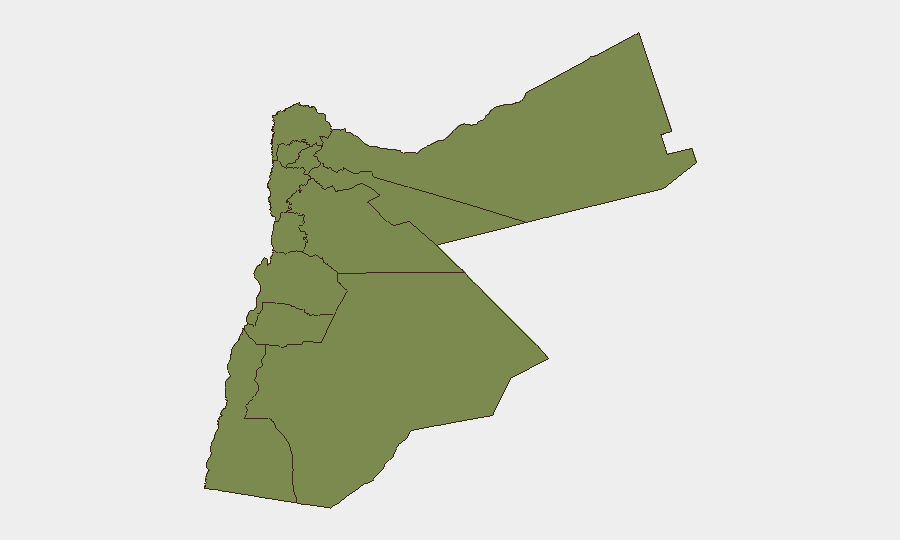
Karak governorate drives the sub-national risk ranking significantly (31.8), substantially above all other regions (which cluster at 1.8). This disparity likely reflects localized border-security, smuggling, or militant activity within or near Karak rather than incidents in the more populous Amman or Zarqa. The remaining governorates—including Amman, Irbid, Zarqa, and border regions—present uniform moderate risk, consistent with exposure to regional missile strikes, drug-trafficking networks, and sporadic security operations, but no current acute instability within urban centers.
How GeoBit Would Assist
Security teams would deploy AOI Monitoring & Early Warning on Karak and the Jordan–Syria border (Jaber crossing, Mafraq) to detect drug-trafficking and militant activity in real time. Intel Sweep and multi-language OSINT fusion would track Iranian and regional military statements, escalation signals, and debris-threat updates across Jordanian social media and official channels to anticipate civil-defense requirements. GIS & Spatial Analysis combined with Routing & Network Analysis would identify safe corridors and alternative supply-chain routes bypassing high-risk border zones.
7-Day Outlook
Regional missile and drone exchanges show signs of de-escalation (Iran stating intent to halt attacks on Israel), but US–Iran technical talks (next round 18 July) remain fragile; further Iranian strikes on Jordan or Gulf states cannot be ruled out. Domestic border security will remain strained by sustained smuggling activity. Overall, the next 7 days are likely to see stabilization of immediate air-defense alert levels while armed forces maintain reinforced posture and civil-defense readiness.
Highest-Risk Areas — Ranked
| # | State / Region | Risk |
|---|---|---|
| 1 | Karak | 31.8 |
| 2 | Irbid | 1.8 |
| 3 | Ajlun | 1.8 |
| 4 | Balqa | 1.8 |
| 5 | Jarash | 1.8 |
| 6 | Mafraq | 1.8 |
| 7 | Madaba | 1.8 |
| 8 | Amman | 1.8 |
| 9 | Zarqa | 1.8 |
| 10 | Tafilah | 1.8 |
| 11 | Aqaba | 1.8 |
| 12 | Maan | 1.8 |
Sources
Previous Daily Briefs
A new Jordan brief is written every day — each with its own risk map and downloadable CSV. Here's the last week; use the calendar to go further back.
📅 Browse every day by calendar →
Highlighted days have a brief. Tap a day for that day's map & analysis, or “csv” for that day's dataset ($5).