Situation Summary
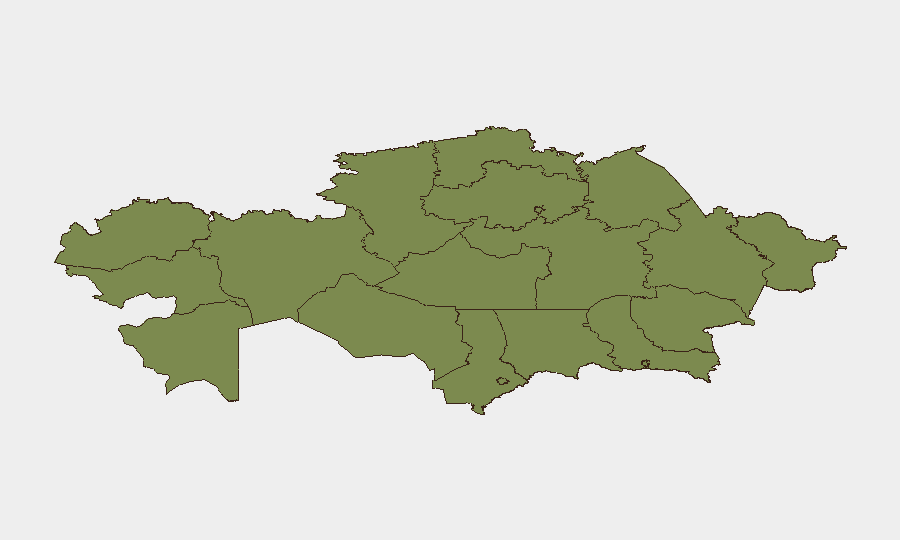
Kazakhstan maintains a stable security environment with no reported violent incidents, civil unrest, or infrastructure attacks in the last 24–48 hours. Recent developments are primarily regulatory and administrative—notably the Digital Code enforcement and an energy-sector fine—rather than physical security threats. The country ranks #134 globally on composite threat metrics, with concentrated risk in Ulytau Region (score 31.8), while most other regions remain at baseline risk levels (1.8–3.1).
Key Developments
- Astana, 13–14 July 2026: Gas-cylinder explosion at Sapa market bakery resulted in three to four injuries; confirmed as accidental hazard incident with no indicators of intentional violence or broader unrest.
- Nationwide, 12 July 2026: Digital Code entered into force, establishing new legal framework for digital infrastructure, data governance, and AI regulation; no associated protests or cyberattacks reported to date.
- Atyrau Region (Kashagan field), 13–16 July 2026: Ministry of Justice reiterated enforcement deadline of 20 July 2026 for North Caspian Operating Company to pay 2.3 trillion tenge (~USD 4.8 billion) environmental fine; represents major regulatory action with potential medium-term implications for energy-sector investor sentiment.
- Astana, 14 July 2026: Government allocated 34.3 billion tenge from reserve fund for Kurultai (new unicameral parliament) elections; governance development with no associated security incidents.
- Russian–Kazakh and Kazakhstan–Kyrgyzstan borders, ongoing through mid-July 2026: Tightened fuel-related controls remain in force following 11–12 July introduction; causing administrative delays for passenger and cargo traffic but no cross-border clashes or violent incidents reported.
- Nationwide, 14–16 July 2026: Cross-platform monitoring (social media, local-language sources, professional outlets) confirms absence of organized violence, large-scale arrest operations, or major protest activity.
Highest-Risk Areas
Ulytau Region substantially exceeds all other subnational areas, with a composite risk score of 31.8—approximately 10 times that of Astana and 17 times the baseline of most other regions. The concentration of risk in Ulytau warrants focused operational security protocols for personnel or assets in that area; the underlying drivers (conflict, organized crime, resource disputes, or administrative instability) should be cross-referenced with sector-specific intelligence. All remaining regions (Astana through Aqtöbe) cluster at 1.8–8.3, indicating dispersed, low-magnitude risk across the country.
How GeoBit Would Assist
Organizations with personnel or assets in Kazakhstan should employ AOI Monitoring & Early Warning on Ulytau Region and other high-traffic areas (Astana, Atyrau) to detect emerging protest, conflict, or operational disruptions in near-real-time. Multi-language OSINT fusion and sentiment analysis across local media, social platforms, and Telegram channels provides early signal of regulatory enforcement actions (such as the Kashagan fine) or governance shifts (parliament elections) that affect operational and compliance risk. Routing & Network Analysis can optimize supply-chain and personnel movement around tightened border controls and hazard zones, reducing administrative friction and physical exposure.
7-Day Outlook
No escalation is anticipated in the near term; the regulatory enforcement action on Kashagan carries low immediate physical-security risk but warrants monitoring for investor-sentiment spillover into political tensions. Border controls are expected to remain in force at least through late July pending resolution of regional fuel dynamics. Continued baseline monitoring of Ulytau Region and Astana is prudent given historical volatility.
Highest-Risk Areas — Ranked
| # | State / Region | Risk |
|---|---|---|
| 1 | Ulytau Region | 31.8 |
| 2 | Astana | 8.3 |
| 3 | Pavlodar Region | 3.1 |
| 4 | Turkistan Region | 1.8 |
| 5 | Almaty Region | 1.8 |
| 6 | East Kazakhstan Region | 1.8 |
| 7 | Abay Region | 1.8 |
| 8 | Jetisu Region | 1.8 |
| 9 | West Kazakhstan Region | 1.8 |
| 10 | Atyrau Region | 1.8 |
| 11 | Mangystau Region | 1.8 |
| 12 | Aqtöbe region | 1.8 |
Sources
Previous Daily Briefs
A new Kazakhstan brief is written every day — each with its own risk map and downloadable CSV. Here's the last week; use the calendar to go further back.
📅 Browse every day by calendar →
Highlighted days have a brief. Tap a day for that day's map & analysis, or “csv” for that day's dataset ($5).
Atlas — our AI intelligence desk — emails them this snapshot personally. Nothing else, no list.