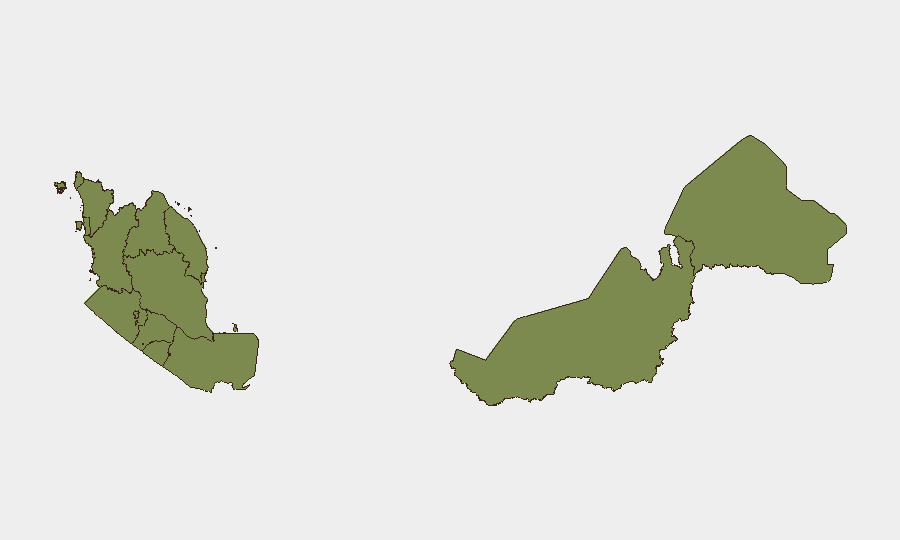
Situation Summary
Malaysia remains a stable, lower-risk destination globally (rank #139; composite threat score 5/10) with no major civil unrest, terrorism, or large-scale violence recorded in the last 24–48 hours. Risk is concentrated in Kuala Lumpur (composite score 31.8) and Negeri Sembilan (17.0), driven primarily by routine crime, trafficking, and localized legal proceedings rather than systemic instability. The national security environment is characterized by routine police activity, political campaigning, and persistent maritime-crime advisories in eastern Sabah, with indirect vulnerability to Middle East airspace disruptions affecting aviation routes.
Key Developments
- Kuala Terengganu, Terengganu – Sexual assault sentencing (18–19 July 2026). An ENT specialist at a private hospital was sentenced to 7 years' imprisonment and 7 strokes of the cane following conviction for sexual assault. Reflects active criminal justice system; no unrest or secondary incidents reported.
- National security posture (18–19 July 2026). Official assessments confirm absence of new verified civil unrest, terrorism incidents, or mass-casualty events in the 24–48-hour window. Cyber-threat elevation from earlier infrastructure incidents persists; physical security environment stable.
- Negeri Sembilan & Johor sub-national risk (18–19 July 2026). Both states continue to flag as highest second-tier risk clusters, driven by ongoing trafficking and routine crime patterns. No new acute incidents (riots, terror attacks) documented in the current reporting period.
- Eastern Sabah maritime advisory reaffirmed (mid-July 2026, in effect). Foreign-office advisories remain active for Semporna, Pom-Pom Island, and adjacent waters, citing persistent kidnapping and armed-attack risk linked to cross-border maritime crime. Advisory status unchanged but remains operationally relevant for travel planning.
- Political activity and public statements (17–19 July 2026). Multiple political and voter-oriented public statements recorded, including statements on government relations, religious issues, and international relations (Malaysia–UK). No associated street violence or unrest incidents reported; activity confined to rhetoric and campaigning.
- Judicial and government investigations (17–18 July 2026). Arrest/detention of a judge and ongoing government investigations noted; context and scope unclear from available signals. Monitor for escalation in coming days.
- Global airspace disruption (in effect through 29 July 2026). EU and international advisories direct airlines to avoid Gulf airspace due to Middle East conflict, causing indirect flight cancellations and reroutings affecting Malaysia routes. Not Malaysia-specific but materially impacts business continuity and travel logistics.
Highest-Risk Areas
Kuala Lumpur dominates the risk profile (31.8), reflecting capital-city concentration of crime, political activity, and institutional infrastructure. Negeri Sembilan (17.0) follows as a secondary cluster, driven by trafficking and routine criminality rather than organized conflict. Sarawak (6.0) and Johor (4.2) remain elevated due to cross-border vulnerabilities and trafficking corridors. All other states score below 2.5 and are assessed as low-risk; the concentration of threat in fewer areas allows more granular risk management for operations in lower-ranked regions.
How GeoBit Would Assist
Teams can deploy AOI Monitoring & Early Warning on Kuala Lumpur, Negeri Sembilan, and eastern Sabah to detect escalation in crime, protest, or maritime activity before broad impact. Intel Sweep, OSINT fusion, and multi-language sentiment analysis enable continuous scan of political rhetoric, judicial proceedings, and trafficking networks to identify secondary risks masked by routine reporting. Routing & Network Analysis supports alternative travel and supply-chain planning to mitigate airspace and maritime disruptions affecting personnel and assets.
7-Day Outlook
Malaysia is expected to remain stable through the near term, with political activity continuing without major unrest triggers. Maritime risks in Sabah and trafficking in Negeri Sembilan will persist at baseline; Middle East airspace disruptions should ease by late July if regional tensions subside. Monitor judicial outcomes and government investigations (17–18 July) for any secondary escalation signals.
Highest-Risk Areas — Ranked
| # | State / Region | Risk |
|---|---|---|
| 1 | Kuala Lumpur | 31.8 |
| 2 | Negeri Sembilan | 17 |
| 3 | Sarawak | 6 |
| 4 | Johor | 4.2 |
| 5 | Selangor | 2.6 |
| 6 | Penang | 2.3 |
| 7 | Pahang | 2.3 |
| 8 | Sabah | 2.1 |
| 9 | Malacca | 2.1 |
| 10 | Perlis | 1.8 |
| 11 | Kedah | 1.8 |
| 12 | Perak | 1.8 |
Previous Daily Briefs
A new Malaysia brief is written every day — each with its own risk map and downloadable CSV. Here's the last week; use the calendar to go further back.
📅 Browse every day by calendar →
Highlighted days have a brief. Tap a day for that day's map & analysis, or “csv” for that day's dataset ($5).
Atlas — our AI intelligence desk — emails them this snapshot personally. Nothing else, no list.