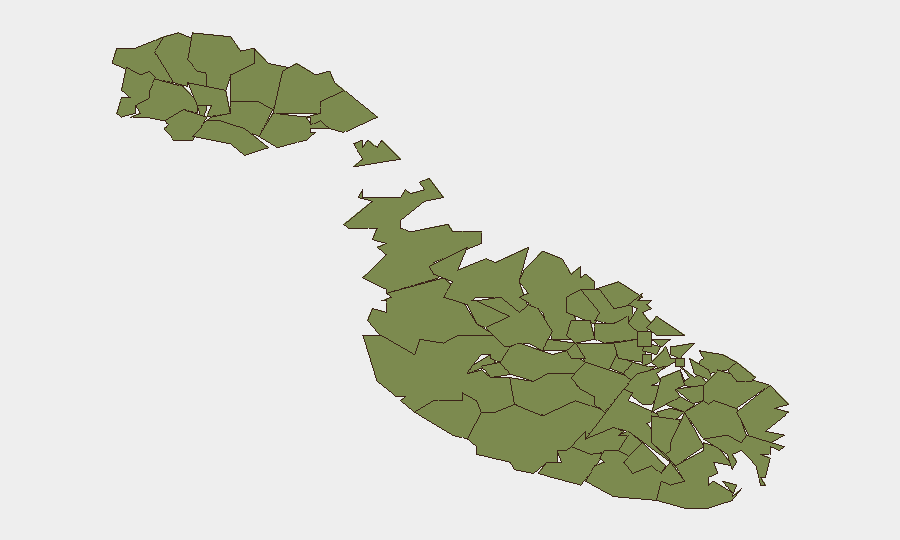
Situation Summary
Malta remains a low-threat jurisdiction globally (rank #158, composite score 4) with limited conventional security incidents. However, two concurrent developments—a direct attack on a Malta-flagged commercial vessel in a critical maritime chokepoint and a nationwide power-grid failure—signal emerging vulnerabilities in maritime commerce and critical infrastructure resilience. The targeting of the *Kavomaleas* in the Strait of Hormuz reflects broader regional instability affecting Maltese shipping interests; the power outages expose grid capacity constraints during peak-demand conditions. Near-term risk is contained but warrants active monitoring of both maritime routes and domestic energy infrastructure.
Key Developments
- 22 July 2026 · Strait of Hormuz (off Iran). Iranian naval forces attacked the LR1-class tanker *Kavomaleas*, flying a Maltese flag, during transit through the Strait of Hormuz. This represents a direct threat to Malta-registered commercial shipping in a high-risk maritime chokepoint and signals potential targeting of flag-state vessels in regional conflict zones.
- Night of 20–21 July 2026 · Nationwide (multiple localities). Widespread blackouts affected thousands of residents across Malta's power grid due to Enemalta infrastructure faults. Authorities attributed the failure to extreme temperatures and record electricity demand, indicating grid-capacity vulnerabilities during summer peak conditions.
- 23 July 2026 · Valletta. A conventional military force event was recorded. (Limited corroborating open-source detail available at present; monitoring ongoing.)
Highest-Risk Areas
Valletta accounts for 94% of GeoBit's tracked risk in Malta (composite score 31.4 vs. 1.4 for all other tracked localities). This disparity reflects the capital's role as the administrative, political, and symbolic centre, combined with its density of government, diplomatic, and financial infrastructure. Secondary localities (Santa Venera, Birkirkara, Għarb, and others) show uniform low risk (1.4 each), suggesting either baseline structural exposure or detection-sensitivity clustering rather than acute localized threats. Corporate operations and personnel in Valletta should expect higher surveillance and incident reporting; assets outside the capital face minimal sub-national threat differentiation.
How GeoBit Would Assist
Maritime exposure: GeoBit's Maritime & Aviation tracking and real-time event feeds enable duty-of-care teams to monitor Maltese-flagged vessels transiting the Strait of Hormuz and other high-risk chokepoints, with alerting on hostile military activity or attacks. Critical infrastructure resilience: Intel Sweep and AOI Monitoring capabilities, combined with multi-language OSINT and local social-media analysis, provide early warning of grid failures, fuel-supply disruptions, or emergency declarations before they cascade. Regional instability context: Network & Actor Analysis and regime-stability monitoring clarify Iranian naval posture and broader Eastern Mediterranean geopolitical tension, contextualizing risks to shipping and port operations in Malta.
7-Day Outlook
Power-grid recovery is likely within 48–72 hours absent further extreme-temperature events; however, repeated outages suggest structural demand–supply misalignment entering peak summer. The Strait of Hormuz incident will likely prompt additional maritime insurance and routing reviews for Malta-flagged vessels; transits should be monitored for secondary Iranian naval activity or merchant-vessel targeting. Valletta's 23 July event requires clarification; if military or security-related, it may signal elevated readiness or diplomatic activity warranting follow-up intelligence.
Highest-Risk Areas — Ranked
| # | State / Region | Risk |
|---|---|---|
| 1 | Valletta | 31.4 |
| 2 | Santa Venera | 1.4 |
| 3 | Birkirkara | 1.4 |
| 4 | Għarb | 1.4 |
| 5 | Saint Lawrence | 1.4 |
| 6 | Kerċem | 1.4 |
| 7 | Għasri | 1.4 |
| 8 | Fontana | 1.4 |
| 9 | Żebbuġ | 1.4 |
| 10 | Victoria | 1.4 |
| 11 | Xagħra | 1.4 |
| 12 | Xewkija | 1.4 |
Sources
Previous Daily Briefs
A new Malta brief is written every day — each with its own risk map and downloadable CSV. Here's the last week; use the calendar to go further back.
📅 Browse every day by calendar →
Highlighted days have a brief. Tap a day for that day's map & analysis, or “csv” for that day's dataset ($5).
Atlas — our AI intelligence desk — emails them this snapshot personally. Nothing else, no list.