Situation Summary
Mauritius remains a low-threat jurisdiction (global ranking #96, composite score 13) with no verified security incidents, civil unrest, or infrastructure disruptions reported in the last 24–48 hours. Recent event signals reflect regional geopolitical messaging around Middle Eastern affairs rather than domestic instability. The security environment is stable; routine petty crime and pickpocketing remain baseline risks in Port Louis and tourist zones, but no acute threat escalation is evident.
Key Developments
No verified security incidents, protests, civil unrest, armed conflict, terrorism, or major infrastructure failures were identified in Mauritius during 2026-07-02 to 2026-07-04. Open-source reporting (news, social media, government statements) returned no credible, time-stamped events meeting corporate security criteria for this period. Event signals captured in the platform reflect regional diplomatic and rhetorical activity (statements and disapprovals regarding Middle Eastern actors and Palestinian–Israeli tensions) rather than domestic Mauritian incidents. No new travel warnings or alerts from major foreign governments were issued for Mauritius in this window.
Highest-Risk Areas
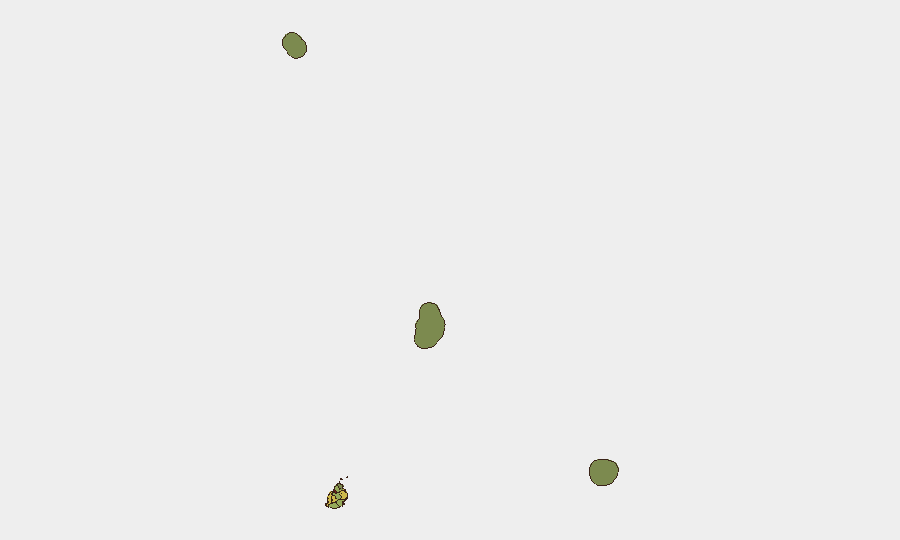
Port Louis (risk 92) dominates the sub-national ranking and warrants primary focus; as the capital and commercial hub, it concentrates financial infrastructure, government institutions, and crowds vulnerable to opportunistic crime and political expression. Secondary concern attaches to Plaines Wilhems (68) and Black River (68), which include residential and industrial zones where localized petty theft and informal-sector crime occur. Eastern districts (Flacq, Grand Port) present moderate elevation (62, 58) linked to port activity and maritime interfaces; western and outer islands (Rodrigues, Saint Brandon, Agaléga) remain very low-risk (22, 8, 5). Risk concentration in the western corridor reflects urban density, transient populations, and economic activity rather than organized violence or political instability.
How GeoBit Would Assist
Corporate teams should deploy AOI Monitoring & Early Warning on Port Louis and Plaines Wilhems to capture emerging civil unrest, labor action, or security incidents in real time; Intel Sweep and multi-language OSINT (X/Twitter, news feeds, Telegram) to track diplomatic messaging and sentiment shifts that might precede localized tension; and Network & Actor Analysis to identify organized crime or protest networks operating in high-risk commercial and residential corridors. GIS & Spatial Analysis overlaid with crime reporting and event timelines can refine duty-of-care routing and safe-zone protocols for personnel in Port Louis. Election Monitoring capabilities are available if electoral cycles or referendum activity emerge in the coming months.
7-Day Outlook
No escalation indicators are present. Regional geopolitical messaging (Middle East affairs, Palestinian–Israeli tensions) is unlikely to trigger domestic unrest in Mauritius in the near term, though monitoring of community sentiment and official statements remains prudent. Baseline crime risk (theft, assault in crowded areas) will persist; personnel should maintain routine precautions in Port Louis and tourist districts. Trajectory remains stable unless unforeseen regional spillover or domestic political events emerge.
Highest-Risk Areas — Ranked
| # | State / Region | Risk |
|---|---|---|
| 1 | Port Louis | 92 |
| 2 | Plaines Wilhems | 68 |
| 3 | Black River | 65 |
| 4 | Flacq | 62 |
| 5 | Grand Port | 58 |
| 6 | Moka | 52 |
| 7 | Savanne | 48 |
| 8 | Pamplemousses | 45 |
| 9 | Rivière du Rempart District | 38 |
| 10 | Rodrigues | 22 |
| 11 | Saint Brandon | 8 |
| 12 | Agaléga | 5 |
Previous Daily Briefs
A new Mauritius brief is written every day — each with its own risk map and downloadable CSV. Here's the last week; use the calendar to go further back.
📅 Browse every day by calendar →
Highlighted days have a brief. Tap a day for that day's map & analysis, or “csv” for that day's dataset ($5).