Situation Summary
Morocco faces elevated security pressure in the north, driven by a sharp surge in irregular migration attempts to the Spanish enclave of Ceuta and coordinated border clashes on 30 July 2026. Spanish military reinforcements and Moroccan security operations are now active at the frontier, with both governments citing smuggling-network involvement. Concurrently, isolated criminal incidents (stabbing, vehicle recklessness) in Tangier underscore baseline urban crime risk, though the northern migration crisis dominates the current threat profile and diplomatic agenda.
Key Developments
- Ceuta border crossing (Fnideq/Castillejos, Morocco–Spain) – 30 July 2026: Coordinated clashes erupted as Moroccan security forces reinforced frontier controls following large irregular migration surges; vehicles were set alight and police dispersed groups near the crossing. Spanish Civil Guard and armed forces units were simultaneously deployed to the Spanish side, marking partial militarization of the enclave's approach.
- Maritime crossing attempts, Castillejos waterfront – 30 July 2026: Moroccan patrol boats and Spanish Maritime Rescue documented a fresh wave of hundreds of migrants attempting to swim from Moroccan shores to Ceuta; at least two bodies were recovered and several rescued, with organized nightly departure attempts continuing through the week.
- Mass entry attempt (Moroccan side, Ceuta sector) – Late 29–30 July 2026: Over 500 people coordinated an attempt to breach Ceuta; Moroccan security and auxiliary forces intervened, detaining at least one suspected organizer and confirming ongoing risk of large-scale crowd control operations along the northern coastline.
- Bilateral border coordination (Morocco–Spain) – 30 July 2026: Interior ministries in Rabat and Madrid agreed to intensified joint patrols and migrant returns, with both governments attributing the surge to criminal smuggling networks rather than organic migration pressure.
- Criminal homicide, Tangier city – 30 July 2026: A young man was fatally stabbed in multiple locations; specialized security teams secured the crime scene and initiated investigation, reflecting ongoing violent crime in the city.
- Vehicle incident, Sidi Kacem beach, Tangier – 30 July 2026: A motorist was arrested after driving recklessly on a crowded beach; police responded to the public-safety threat with no wider unrest reported.
Highest-Risk Areas
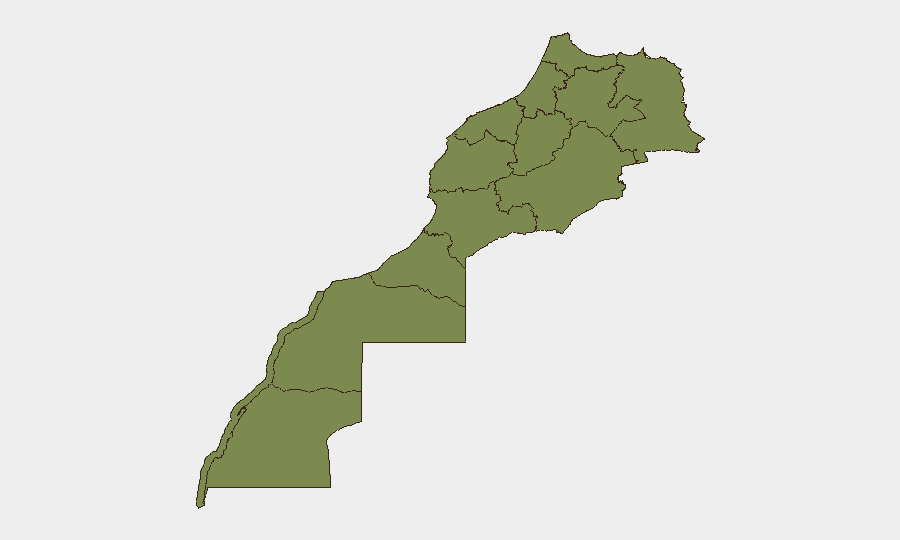
Tangier-Tetouan-Al Hoceima dominates Morocco's risk profile (score 31.3), accounting for the vast majority of tracked events and reflecting the current migration and border crisis. The Ceuta crossing zone, coastal smuggling routes, and Tangier urban centers are the primary drivers. Casablanca-Settat presents secondary but meaningful risk (11.7), while Rabat-Salé-Kénitra and remaining regions show substantially lower scores. The concentration of events in the northern corridor is atypical and directly linked to the current surge in irregular crossings and Spanish–Moroccan border militarization.
How GeoBit Would Assist
Security teams managing personnel or assets in northern Morocco should deploy AOI Monitoring & Early Warning for the Ceuta frontier zone and Tangier's urban districts to detect escalation in crowd activity, security operations, or criminal incidents in real time. OSINT fusion (X/Telegram, regional news feeds, maritime AIS tracking) provides continuous visibility on migration flows and Spanish military positioning. Routing & Network Analysis enables alternative journey planning for staff traveling between Tangier, Casablanca, and other hubs if northern border conditions deteriorate further.
7-Day Outlook
The northern migration crisis will likely persist through early August as smuggling networks adjust to reinforced border controls; additional Spanish deployments and Moroccan operations are probable. Criminal incidents in Tangier may spike as urban pressure mounts alongside border tensions. Escalation beyond current levels (e.g., armed clashes, mass casualty events) remains low-probability if bilateral coordination holds, but monitoring the Ceuta corridor intensively is warranted through the weekend.
Highest-Risk Areas — Ranked
| # | State / Region | Risk |
|---|---|---|
| 1 | Tangier-Tetouan-Al Hoceima | 31.3 |
| 2 | Casablanca-Settat | 11.7 |
| 3 | Rabat-Salé-Kénitra | 2.1 |
| 4 | Drâa-Tafilalet | 2.1 |
| 5 | Western Sahara | 1.3 |
| 6 | Laâyoune-Sakia El Hamra | 1.3 |
| 7 | Guelmim-Oued Noun | 1.3 |
| 8 | Dakhla-Oued Ed-Dahab | 1.3 |
| 9 | Béni Mellal-Khénifra | 1.3 |
| 10 | Fez-Meknes | 1.3 |
| 11 | Oriental | 1.3 |
| 12 | Marrakech-Safi | 1.3 |
Sources
Previous Daily Briefs
A new Morocco brief is written every day — each with its own risk map and downloadable CSV. Here's the last week; use the calendar to go further back.
📅 Browse every day by calendar →
Highlighted days have a brief. Tap a day for that day's map & analysis, or “csv” for that day's dataset ($5).
Atlas — our AI intelligence desk — emails them this snapshot personally. Nothing else, no list.