Situation Summary
Namibia remains a low-threat environment globally (rank #118), but experiences persistent localized violent crime, particularly in northern and eastern regions. The past week saw a cluster of violent incidents—including a fatal stabbing in Swakopmund, a hotel robbery targeting foreign tourists in Otjiwarongo, and at least two additional weekend homicides—alongside a national high-level political response to gender-based violence (GBV) and road safety. No organized extremist, militant, or large-scale security events have been reported; risk is concentrated in street crime, interpersonal violence, and GBV in specific sub-national zones.
Key Developments
- Otjiwarongo, Otjozondjupa Region – 14 September 2026
Three suspects (aged 25, 33, 34, allegedly from Windhoek) arrested within hours of robbing two foreign tourists at a hotel; getaway vehicle impounded. Indicates organized opportunistic crime targeting non-resident travelers in regional centers.
- Swakopmund, Erongo Region – Night of 12 September 2026 (reported 13 Sep)
A 16-year-old fatally stabbed by a 17-year-old during an altercation on Si !Gobs Street (~19:00). Part of a broader weekend violent-crime spike; underscores street-level youth violence in coastal urban areas.
- Rehoboth, Hardap Region & Ongha, Ohangwena Region – Weekend of 12–13 September 2026 (reported 13 Sep)
Two separate fatal incidents recorded in national police weekend briefing, indicating violent crime extending beyond major metropolitan centers into secondary towns and rural areas.
- Windhoek, Khomas Region – 12 September 2026 (Independence Arena)
National Day of Prayer held with President, Vice President, and Prime Minister in attendance; event focused on GBV, violent crime, and road-safety crises. Reflects high-level official concern over social violence and indicates sustained institutional anxiety over these issues.
- Windhoek, Khomas Region – 12 September 2026 (Presidential Address)
President Nandi-Ndaitwah called for urgent institutional and behavioral action against GBV, violent crime, and fatal road crashes. Signals presidential-level recognition of endemic security challenges.
- Ohangwena Region – Data cited 8 September 2026
Official statistics confirm Ohangwena as Namibia's highest-burden GBV region (654 cases, ~10% of national total of 6,304 in 2025/26 reporting cycle). Underscores severe and concentrated domestic-violence risk in the far north.
- Walvis Bay, Erongo Region – Diplomatic incident (active 8 September 2026)
Ongoing media coverage of alleged denial of access to U.S. Ambassador at fisheries indaba while President was present. State House clarified President did not control access; U.S. Embassy declined substantive comment. No violence or unrest reported, but mild diplomatic tension persists.
Highest-Risk Areas
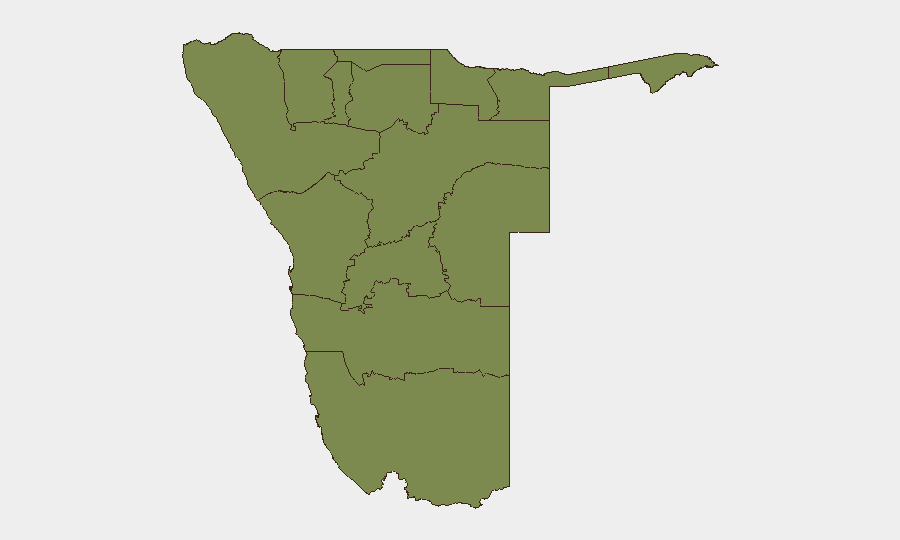
Zambezi (score 68), Kavango East (62), and Kavango West (58) comprise the highest-risk tier, driven by cross-border mobility, resource-competition dynamics, and limited state presence in remote northern zones. Kunene and Oshikoto regions (scores 52 and 48) extend this northern arc of elevated threat. Critically, Ohangwena (score 45) and Oshana (score 40) show significant GBV and violent-crime burden despite lower overall composite rankings—reflecting that headline scores may underweight gender-based and interpersonal violence. Erongo and coastal centers show lower formal rankings but recorded acute violent incidents this week, suggesting localized crime spikes warrant tactical monitoring despite moderate baseline risk.
How GeoBit Would Assist
Security teams operating in Namibia should employ AOI Monitoring & Early Warning to track Zambezi, Kavango, and Ohangwena regions for emerging crime and violence signals; Intel Sweep and OSINT fusion (including local media and police briefing analysis) to detect patterns in tourist-targeting robbery, GBV surges, and regional crime clusters; and Routing & Network Analysis to identify alternative travel corridors and safe transit windows for personnel in Otjozondjupa, Erongo, and Hardap zones where recent incidents have been concentrated.
7-Day Outlook
No immediate escalation is anticipated; the current environment reflects endemic rather than acute instability. However, the convergence of high-profile GBV discourse, weekend violent-crime clusters, and persistent northern-region threats suggests sustained vigilance is warranted, particularly around secondary urban centers and during evening/night hours. Monitoring should continue on presidential-level crime-response initiatives and any policy or enforcement announcements in the coming 2–3 weeks.
Highest-Risk Areas — Ranked
| # | State / Region | Risk |
|---|---|---|
| 1 | Zambezi | 68 |
| 2 | Kavango East | 62 |
| 3 | Kavango West | 58 |
| 4 | Kunene Region | 52 |
| 5 | Oshikoto | 48 |
| 6 | Ohangwena | 45 |
| 7 | Omusati | 42 |
| 8 | Oshana | 40 |
| 9 | Otjozondjupa | 35 |
| 10 | Erongo Region | 32 |
| 11 | Hardap | 28 |
| 12 | Omaheke | 25 |
Sources
Previous Weekly Briefs
A new Namibia brief is written every Monday, covering the week — each with its own risk map and downloadable CSV. Use the calendar to go further back.
- September 7, 2026
- September 1, 2026
- August 30, 2026
- August 28, 2026
- August 25, 2026
- August 23, 2026
- August 21, 2026
📅 Browse past briefs by calendar →
Highlighted days have a brief. Tap a day for that day's map & analysis, or “csv” for that day's dataset ($5).
Atlas — our AI intelligence desk — emails them this snapshot personally. Nothing else, no list.