Situation Summary
Nicaragua remains at moderate composite global threat rank (#66, score 16) with no acute physical security incidents reported in the last 24–48 hours. Political developments—chiefly President Ortega's formal abolition of national elections and international condemnation—have raised structural governance and human-rights risk without triggering documented street unrest or violence. The security environment remains characterized by persistent state repression and detention of political opponents, rather than active conflict or organized crime surges in the immediate term.
Key Developments
- National level – Political system, July 21–22, 2026: President Daniel Ortega declared Nicaragua will "never again" hold elections, formalizing executive consolidation of power. No concurrent protests, clashes, or security-force mobilizations were reported in the last 24–48 hours.
- National level – International human-rights statement, July 22, 2026: UN High Commissioner for Human Rights Volker Türk publicly condemned the election abolition, citing deepened restrictions on civic space and rule of law. Statement is diplomatic pressure; does not reflect new on-the-ground incidents.
- National level – Detention of political figures, July 21, 2026 (reported): Arrest of a presidential candidate was documented; ongoing detention of ~46 political prisoners (including an 80-year-old bishop detained June 29) continues under state authority. No new mass arrests or extrajudicial incidents reported in the last 24–48 hours beyond this baseline.
- National level – Professional licensing restrictions, pre-July 22, 2026: Revocation of credentials for multiple lawyers reflects sustained repression of legal opposition; cited by UN as part of civic-space contraction but not a new discrete event within 24–48 hours.
- National/International – U.S. sanctions posture, July 22, 2026: CNN analysis noted U.S. policy response to election abolition; existing sanctions on Nicaraguan officials remain in place with no announced immediate escalation. Affects medium-term sanctions and diplomatic exposure.
- National level – Diplomatic tensions, July 23, 2026: Public statements from Managua toward República Dominicana and reported arrest/detention actions involving Dominican nationals suggest bilateral friction; operational details and scale remain limited in open sources.
Highest-Risk Areas
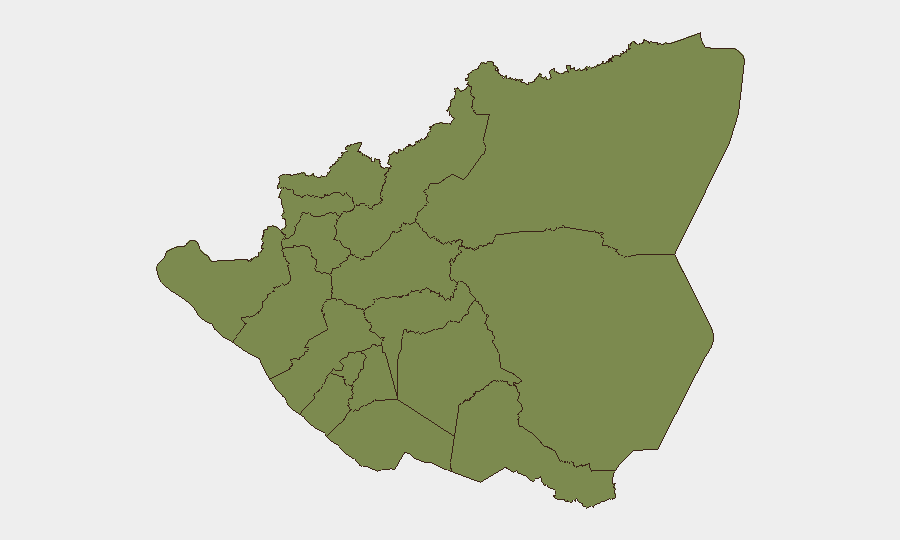
Managua Department (composite score 31.4) dominates the national risk profile, driven by political concentration, state-security apparatus presence, and protest-mobilization history. All other tracked departments score 1.4, reflecting highly centralized political risk rather than geographically dispersed threats. The capital remains the focal point for civil-unrest potential, opposition activity, and government response; however, the absence of large-scale demonstrations in the last 24–48 hours suggests current mass mobilization risk is contained but structurally elevated by authoritarian consolidation.
How GeoBit Would Assist
Corporate security teams should use Intel Sweep (global event feeds, multi-language OSINT, sentiment analysis) and AOI Monitoring & Early Warning to track Managua-based political developments, detention announcements, and protest signals in real time. Election monitoring capabilities and regime-stability search functions enable systematic assessment of governance trajectories and sanctions-environment shifts. Network & Actor Analysis of government, opposition, and security-force leadership supports duty-of-care decisions for staff presence and movement within high-risk political zones.
7-Day Outlook
Political tension will likely remain elevated as international responses to the election abolition continue; however, street unrest is not yet documented as an immediate consequence. Risk trajectory hinges on whether domestic or international pressure triggers new protests or government crackdowns; absent such catalysts, the environment is expected to remain repressive but operationally stable in the near term.
Highest-Risk Areas — Ranked
| # | State / Region | Risk |
|---|---|---|
| 1 | Managua Department | 31.4 |
| 2 | Carazo Department | 1.4 |
| 3 | Chontales Department | 1.4 |
| 4 | Rivas Department | 1.4 |
| 5 | Río San Juan Department | 1.4 |
| 6 | South Caribbean Coast | 1.4 |
| 7 | Chinandega Department | 1.4 |
| 8 | Nueva Segovia Department | 1.4 |
| 9 | Madriz Department | 1.4 |
| 10 | Estelí Department | 1.4 |
| 11 | León Department | 1.4 |
| 12 | Masaya Department | 1.4 |
Sources
Previous Daily Briefs
A new Nicaragua brief is written every day — each with its own risk map and downloadable CSV. Here's the last week; use the calendar to go further back.
📅 Browse every day by calendar →
Highlighted days have a brief. Tap a day for that day's map & analysis, or “csv” for that day's dataset ($5).
Atlas — our AI intelligence desk — emails them this snapshot personally. Nothing else, no list.