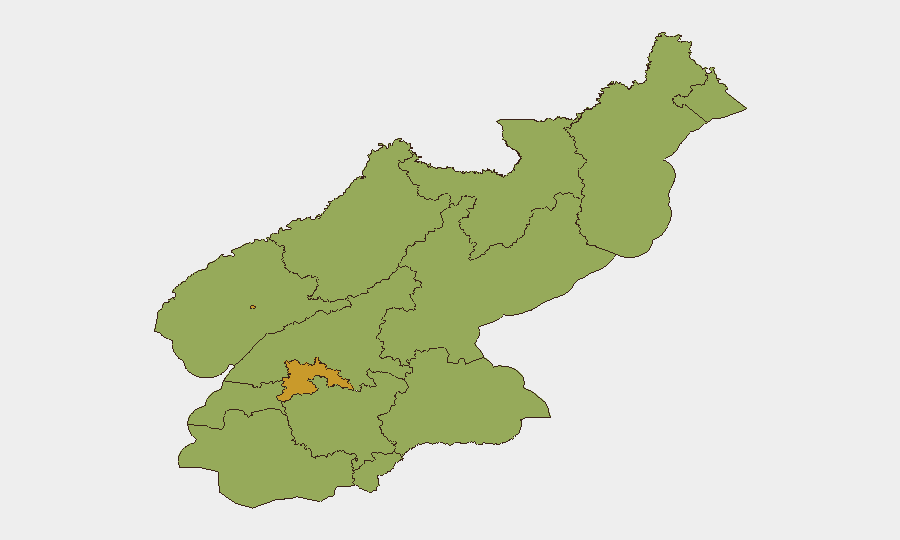
Situation Summary
North Korea remains at composite threat rank #34 globally (60.8 score) with 71 tracked events, driven primarily by weapons-program acceleration and escalating diplomatic friction with major powers. Recent signals indicate elevated state-level tension—including public statements directed at the U.S. President, rejection of international pressure, and a Security Council sanctions action on 2026-06-07—rather than imminent civil unrest or internal security collapse. P'yŏngyang poses the highest sub-national risk (72.6), while most provincial areas cluster at moderate-baseline threat (42.6). The threat trajectory remains stable but assertive: military modernization and diplomatic confrontation continue without indication of regime instability or mass civil disorder.
Key Developments
- 2026-06-08 · Pyongyang / State Media: Xi Jinping arrived for a two-day overnight visit, signaling continued Chinese-North Korean alignment despite recent public statements between Beijing and Pyongyang on 2026-06-08 (specific friction points not independently confirmed in available reporting).
- 2026-06-07 · UN/Diplomatic: UN Security Council took administrative sanctions action against North Korea; the same date saw North Korea issue a public statement directed at the U.S. President and reject international community demands.
- 2026-06-06–2026-06-07 · Pyongyang / State Media: Kim Yo-jong publicly reiterated that North Korea's nuclear-armed status is "absolute and irreversible," reinforcing deterrent messaging ahead of the Chinese leadership visit.
- 2026-06-06 · Industrial / Weapons Production: Kim Jong-un visited a munitions factory and ordered a 2.5× expansion in ballistic and cruise missile production over five years, indicating sustained weapons-industrial acceleration.
- 2026-06-03–2026-06-06 · Pyongyang / Nuclear Facilities: Kim Jong-un inspected a new uranium enrichment facility containing hundreds of centrifuges and made continued high-profile visits to military sites, reinforcing active nuclear expansion.
- 2026-06-04 · Coastal Operations / Naval: Kim Jong-un observed sea trials of the destroyer Ganggeonho; state media reported discussions of "underwater secret weapons" and a planned 10,000-ton destroyer, indicating naval modernization activity.
- 2026-06-08 · Diplomatic Signal: North Korea issued a disapproval statement toward the United States; intelligence services and international media made statements or investigations related to North Korea on 2026-06-07, though specific operational impact is unconfirmed.
Note: Available reporting does not support incident-level confirmation of civil unrest, worker displacement, security incidents affecting Western nationals, or travel disruptions in the last 24–48 hours.
Highest-Risk Areas
P'yŏngyang dominates the risk landscape (72.6), reflecting its status as the political and administrative center where state activity, diplomatic events, and security apparatus concentration create highest exposure. South Pyongan (53.7) shows elevated secondary risk, likely reflecting proximity to the DMZ and economic-corridor activity. All other provinces cluster at 42.6, suggesting uniform baseline operational risk outside the capital and main southern industrial belt. For duty-of-care teams, P'yŏngyang warrants heightened monitoring during high-level diplomatic visits and military announcements; South Pyongan requires attention to cross-border economic and illicit activity.
How GeoBit Would Assist
Intel Sweep and multi-language search capabilities enable rapid daily monitoring of state media, official statements, and sanctions developments. AOI (Area-of-Interest) Monitoring & Early Warning with persistent satellite and OSINT tracking of P'yŏngyang's military and diplomatic facilities would provide advance notice of regime crisis, leadership health events, or mass mobilization. Network & Actor Analysis combined with Telegram/X OSINT would flag emerging factional tension or elite defection signals that precede broader instability.
7-Day Outlook
State-level military signaling and diplomatic confrontation will likely continue; Xi Jinping's visit may produce a joint statement reinforcing the Beijing–Pyongyang axis and complicating U.S.–allied response options. No imminent indicators of internal collapse or rapid escalation to armed conflict are evident in current reporting. Expatriate and corporate security teams should maintain standard P'yŏngyang protocols and monitor official travel advisories for changes linked to diplomatic or sanctions activity.
Highest-Risk Areas — Ranked
| # | State / Region | Risk |
|---|---|---|
| 1 | P'yŏngyang | 72.6 |
| 2 | South Pyongan | 53.7 |
| 3 | North Hamgyong | 42.9 |
| 4 | Ryanggang | 42.6 |
| 5 | North Pyongan | 42.6 |
| 6 | Chagang | 42.6 |
| 7 | Nampo | 42.6 |
| 8 | South Hwanghae | 42.6 |
| 9 | North Hwanghae | 42.6 |
| 10 | South Hamgyong | 42.6 |
| 11 | Kaesong | 42.6 |
| 12 | Kangwon | 42.6 |
Previous Daily Briefs
A new North Korea brief is written every day — each with its own risk map and downloadable CSV. Here's the last week; use the calendar to go further back.
📅 Browse every day by calendar →
Highlighted days have a brief. Tap a day for that day's map & analysis, or “csv” for that day's dataset ($5).