Situation Summary
Paraguay remains a mid-range composite threat environment (rank #81 globally, score 15) driven primarily by organized cargo crime in border departments, ongoing EPP guerrilla activity, and newly surfaced state-level cybersecurity intrusions attributed to China-linked actors. The last 24–48 hours have seen intensified political and institutional focus on cyberattacks against government systems, with criminal investigations and parliamentary scrutiny now active. While Paraguay's overall stability has not been destabilized by these developments, the combination of cyber-attribution friction, cross-border organized crime, and persistent paramilitary presence in northern departments creates compound operational risk for corporate assets and personnel, particularly in logistics and border zones.
Key Developments
- Asunción – Cybercrime investigation formally active (14 July, amplified last 48h). The Public Prosecutor's Office opened a criminal investigation into alleged China-linked cyberattacks against Paraguayan state systems following a formal complaint from the Ministry of Information and Communication Technologies; prosecutor Irma Llano appointed to lead the probe. This represents a formal state-level institutional response and has been flagged in threat feeds as a near-term political-risk driver.
- Asunción – Parliamentary pressure on cyber attribution and executive accountability (18–19 July). The Chamber of Deputies and other political actors renewed demands for executive and MITIC briefings on the scope and attribution basis of intrusions, as well as U.S. agency cooperation. Current reporting identifies this parliamentary scrutiny as a source of institutional stress and political-risk concern.
- Paraguay-wide – Joint U.S.–Paraguay cyber review confirms multiple state-network intrusions (24–48h reporting window). A joint cybersecurity review identified multiple intrusions in government systems attributed to China-linked actors; China has publicly rejected the allegations. Both governments' findings are now cited as basis for ongoing investigations and diplomatic friction.
- Ciudad del Este, Alto Paraná – Organized cargo robbery pattern ongoing (last 24–48h briefing). National Police investigations into cross-border robberies targeting visitors and cargo in the San Rafael neighborhood remain active, with reinforced policing deployed. This pattern is flagged as an active risk for cross-border travelers and logistics.
- Route PY06, Itapúa – Armed cargo hijacking (9 July incident; cited in current threat assessments). Four armed assailants intercepted a cargo truck at km 80 (Manduviju area), forced workers out at gunpoint, and stole vehicle spare parts. Although the incident occurred over a week ago, it is being actively cited in 24–48-hour threat assessments as representative of organized cargo-hijacking risk on southern logistics corridors.
- Border regions – Foreign travel advisories reiterating caution (mid-July guidance, reflected in current monitoring). German Foreign Office advisory continues to recommend against non-essential travel to border areas with Brazil in Amambay, Canindeyú, Alto Paraná, northern San Pedro, and southern Concepción, citing organized crime, EPP activity, and protest/blockade risk.
Highest-Risk Areas
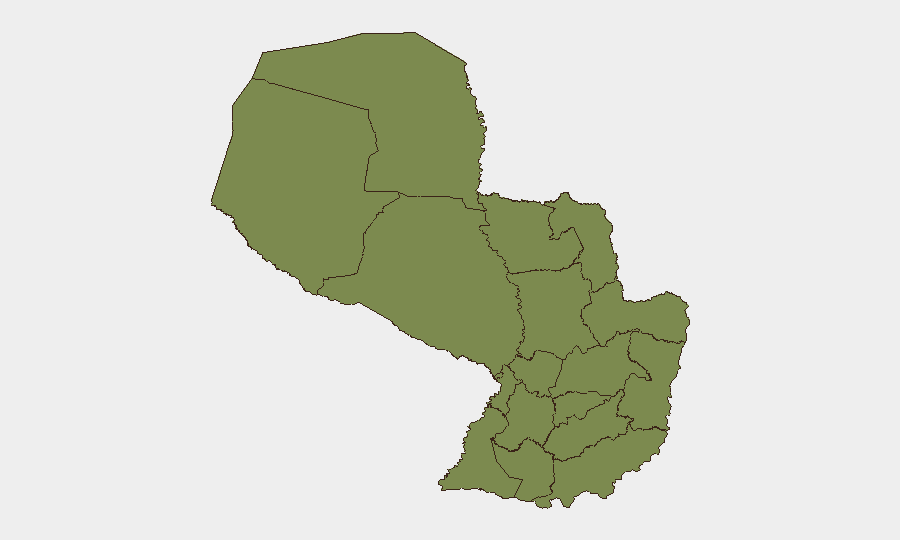
Presidente Hayes Department dominates the sub-national ranking (score 31.8), accounting for approximately 67% of Paraguay's composite threat score. Alto Paraguay (5.1) is the only other department with materially elevated risk; all remaining departments cluster at or near 1.8. The concentration reflects ongoing organized-crime and paramilitary activity in the Chaco region and western border zones. For corporate operations, Alto Paraná (Ciudad del Este area) and border departments in the north and south represent the most actionable risk despite lower composite scores, given the prevalence of cargo crime, EPP presence, and cross-border criminal networks.
How GeoBit Would Assist
Intel Sweep and OSINT fusion enable real-time tracking of cyber-incident attribution and parliamentary responses, while AOI Monitoring & Early Warning can maintain persistent watch on Presidente Hayes, Alto Paraguay, and cross-border logistics corridors for organized-crime activity. Routing & Network Analysis identifies safer alternative routes for supply chains and personnel movement, and conflict and actor analysis can distinguish EPP activity from general organized crime to sharpen risk assessment and duty-of-care protocols.
7-Day Outlook
Cybersecurity investigation activity will likely intensify as Paraguay and U.S. agencies coordinate technical and diplomatic responses; diplomatic friction with China may escalate. Organized cargo crime and cross-border robbery patterns are expected to remain elevated, particularly in Alto Paraná and southern departments, with seasonal summer activity potentially increasing logistics vulnerability. No immediate instability is forecast, but institutional distraction and operational complexity in border zones will persist.
Highest-Risk Areas — Ranked
| # | State / Region | Risk |
|---|---|---|
| 1 | Presidente Hayes Department | 31.8 |
| 2 | Alto Paraguay Department | 5.1 |
| 3 | Concepción Department | 1.8 |
| 4 | San Pedro Department | 1.8 |
| 5 | Guairá Department | 1.8 |
| 6 | Amambay Department | 1.8 |
| 7 | Canindeyú Department | 1.8 |
| 8 | Caaguazú Department | 1.8 |
| 9 | Alto Paraná Department | 1.8 |
| 10 | Caazapá Department | 1.8 |
| 11 | Itapúa Department | 1.8 |
| 12 | Boquerón | 1.8 |
Sources
Previous Daily Briefs
A new Paraguay brief is written every day — each with its own risk map and downloadable CSV. Here's the last week; use the calendar to go further back.
📅 Browse every day by calendar →
Highlighted days have a brief. Tap a day for that day's map & analysis, or “csv” for that day's dataset ($5).
Atlas — our AI intelligence desk — emails them this snapshot personally. Nothing else, no list.