Situation Summary
Poland faces an elevated threat environment driven by credible US intelligence warnings of potential Russian military provocation, including drone/missile strikes on critical infrastructure and possible limited border incursions. Prime Minister Tusk publicly confirmed intensified security preparations on July 3, positioning the coming months as "critical" for regional stability. Recent low-level activity—including a confirmed Russian drone shoot-down in eastern Poland and attempted infrastructure sabotage attributed to Russian intelligence networks—reinforces assessment that hybrid operations are ongoing. Overall national threat ranking remains moderate (score 7, #132 globally), but concentration of risk in two voivodeships and critical infrastructure exposure warrant heightened operational vigilance.
Key Developments
- Warsaw – July 3, 2026 – Prime Minister Donald Tusk issued public statement that Poland is "very intensively preparing for various scenarios" of Russian armed provocation, explicitly naming drone/missile strikes on critical infrastructure and limited border incursions as scenarios under active planning.
- Eastern Poland (border region) – early July, reported July 2–3, 2026 – Polish air defense shot down Russian drone that entered or approached Polish airspace; incident cited as part of ongoing pattern of low-level Russian drone probing of Polish territory.
- Warsaw / NATO channels – July 2–3, 2026 – US intelligence provided formal warning to Polish authorities of possible Russian military provocation aimed at testing NATO response; scenarios include infrastructure attack or small-scale ground crossing into NATO territory along eastern flank.
- Poland (nationwide, infrastructure domain) – July 2–3, 2026 – Polish security services publicly linked recent attempted sabotage of critical infrastructure to networks tied to Russian intelligence, framing it as part of broader hybrid-operation threat to energy and transport systems.
- Poland–Belarus border area – July 3, 2026 – Polish security officials stated they do not rule out intentional Russian or Belarusian troop crossing of the border, including possible use of unmarked personnel, framed as a provocation or "mistake" scenario under active study by Foreign Intelligence Agency.
Highest-Risk Areas
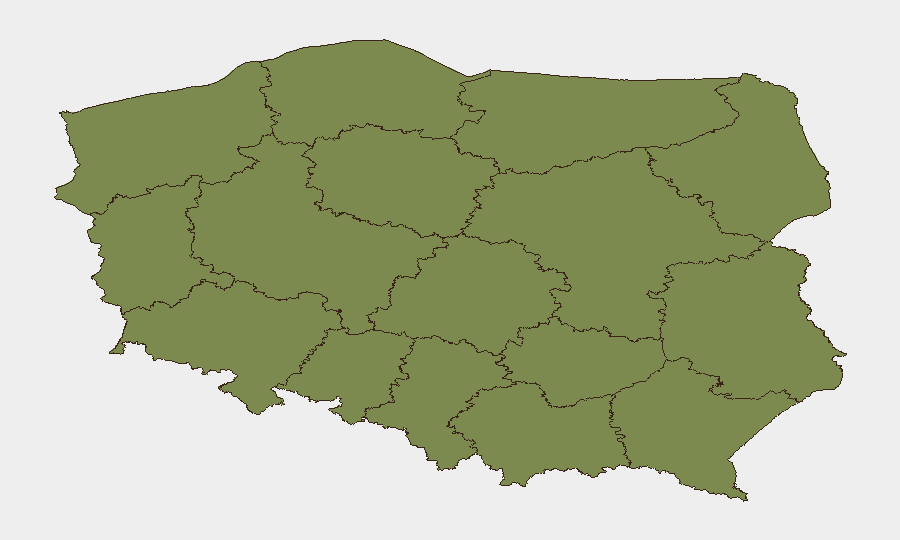
Łódź and Masovian voivodeships (composite scores 31.8 and 29.2 respectively) account for the vast majority of tracked risk in Poland and drive the national threat ranking. Both regions encompass or adjoin major population centers, critical infrastructure hubs, and transport corridors; Masovian includes Warsaw and its power/logistics infrastructure, likely a primary target set under the current threat scenario. All other voivodeships show markedly lower scores (1.8–4), suggesting threat concentration in central Poland rather than distributed national risk. Corporate and humanitarian assets in these two regions should assume elevated exposure to infrastructure disruption, movement restriction, and potential civil-contingency response.
How GeoBit Would Assist
A security team protecting operations or personnel in Poland should deploy persistent Area-of-Interest (AOI) monitoring on Łódź and Masovian critical infrastructure sites (power, transport, communications) with real-time alerting for activity anomalies or incident onset. Intel Sweep and multi-language OSINT fusion (X/Telegram/YouTube, Polish-language source monitoring, entity extraction) would provide early warning of escalation signals, official statements, or claims of attack before mainstream reporting confirms incidents. Routing & Network Analysis capabilities enable pre-planned alternative journey and supply-chain routes to bypass infrastructure nodes under threat or confirmed disruption, supporting duty-of-care continuity for mobile staff and logistics.
7-Day Outlook
Threat posture is expected to remain elevated through mid-July absent major deescalation signals. Polish security services will maintain visible readiness and public communication of preparedness; any new drone incursion, sabotage attempt, or border incident will trigger immediate NATO consultation and potential temporary restrictions on movement or infrastructure access in affected areas. Risk of large-scale military action remains low, but hybrid operations and infrastructure-focused incidents are credible within the 7-day window.
Highest-Risk Areas — Ranked
| # | State / Region | Risk |
|---|---|---|
| 1 | Łódź Voivodeship | 31.8 |
| 2 | Masovian Voivodeship | 29.2 |
| 3 | Lublin Voivodeship | 4 |
| 4 | Greater Poland Voivodeship | 4 |
| 5 | Opole Voivodeship | 1.9 |
| 6 | Warmian-Masurian Voivodeship | 1.8 |
| 7 | Subcarpathian Voivodeship | 1.8 |
| 8 | Podlaskie Voivodeship | 1.8 |
| 9 | West Pomeranian Voivodeship | 1.8 |
| 10 | Lubusz Voivodeship | 1.8 |
| 11 | Lower Silesian Voivodeship | 1.8 |
| 12 | Pomeranian Voivodeship | 1.8 |
Sources
Previous Daily Briefs
A new Poland brief is written every day — each with its own risk map and downloadable CSV. Here's the last week; use the calendar to go further back.
📅 Browse every day by calendar →
Highlighted days have a brief. Tap a day for that day's map & analysis, or “csv” for that day's dataset ($5).