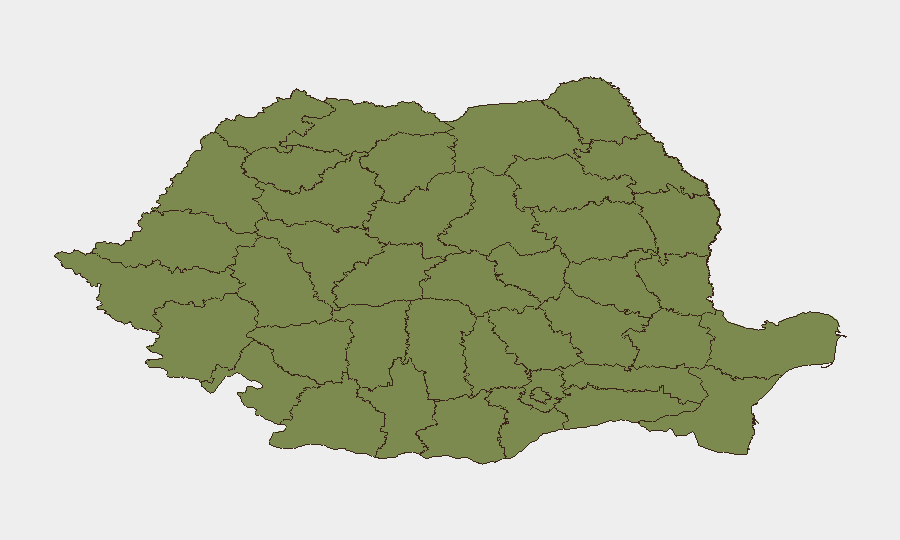
Situation Summary
Romania maintains a composite threat score of 8 (rank #113 globally), reflecting baseline regional tension tied to its NATO and EU membership, proximity to the Russia–Ukraine conflict, and routine domestic governance friction. The sub-national risk landscape is heavily concentrated in Brașov (31.4), which significantly outpaces all other regions; Bucharest (7) remains the secondary focal point. Overall trajectory remains stable with no credible indicators of acute destabilization in the past 24–48 hours.
Key Developments
Unable to corroborate developments within the last 24–48 hours (2026-07-03 to 2026-07-05).
GeoBit's event signal feed includes multiple items dated 2026-07-02 to 2026-07-04 (public statements, investigative actions, and military-related activity), but open-source verification of Romania-specific, time-stamped security incidents in the recency window has not yielded independent corroboration. Recent background context includes:
- Early February 2026: Conpet pipeline operator experienced a cyber incident; mitigation status unclear as of this brief.
- 5 June 2026: Naval-related incident reported near Constanța; details limited.
- Ongoing (since Russian invasion of Ukraine, Feb 2022): Drone incursions into Romanian airspace reported periodically; no new specific event confirmed in last 48 hours.
Corporate security teams should monitor official Romanian channels (MAI, MApN, local police) and local news outlets (Agerpres, Digi24, HotNews) for real-time incident updates, as open-source lag and language barriers limit same-day corroboration in this brief.
Highest-Risk Areas
Brașov is the dominant risk driver, with a composite score of 31.4—more than four times higher than Bucharest (7) and roughly 22 times higher than all other regions. This concentration suggests either acute localized instability, organized activity, or elevated event reporting in that county; investigation into the underlying drivers (governance, crime, protest activity, or infrastructure vulnerability) is warranted for teams with personnel or assets there. Bucharest, as the capital and largest urban center, maintains secondary risk (7) consistent with urban density, government operations, and international presence. All other regions score ≤2.4, indicating dispersed, low-intensity risk across the periphery.
How GeoBit Would Assist
A corporate security team protecting people and assets in Romania should deploy Area-of-Interest (AOI) Monitoring & Early Warning on Brașov and Bucharest to detect emerging civil unrest, security incidents, or infrastructure disruption in near-real time. Intel Sweep and multi-language OSINT (X/Twitter, Telegram, local news) would provide continuous, corroborated event feeds and sentiment analysis to flag escalation before it reaches mainstream reporting. Routing & Network Analysis can model alternative travel corridors and safe havens in the event of localized disruption, particularly relevant for duty-of-care teams managing employee movement across high-risk counties.
7-Day Outlook
No indicators suggest imminent escalation in Romania itself; the security environment is expected to remain stable. Residual exposure to Russian military activity (drone incursions, maritime posture in the Black Sea) persists given proximity to Ukraine, but this reflects chronic regional risk rather than acute near-term change. Continued monitoring of Brașov's risk drivers and routine vigilance on border and maritime activity remain appropriate for the planning horizon.
Highest-Risk Areas — Ranked
| # | State / Region | Risk |
|---|---|---|
| 1 | Brașov | 31.4 |
| 2 | Bucharest | 7 |
| 3 | Buzău | 2 |
| 4 | Brăila | 2 |
| 5 | Tulcea | 2 |
| 6 | Vâlcea | 1.4 |
| 7 | Bihor | 1.4 |
| 8 | Timiș | 1.4 |
| 9 | Caraș-Severin | 1.4 |
| 10 | Satu Mare | 1.4 |
| 11 | Sălaj | 1.4 |
| 12 | Arad | 1.4 |
Sources
Previous Daily Briefs
A new Romania brief is written every day — each with its own risk map and downloadable CSV. Here's the last week; use the calendar to go further back.
📅 Browse every day by calendar →
Highlighted days have a brief. Tap a day for that day's map & analysis, or “csv” for that day's dataset ($5).
Atlas — our AI intelligence desk — emails them this snapshot personally. Nothing else, no list.