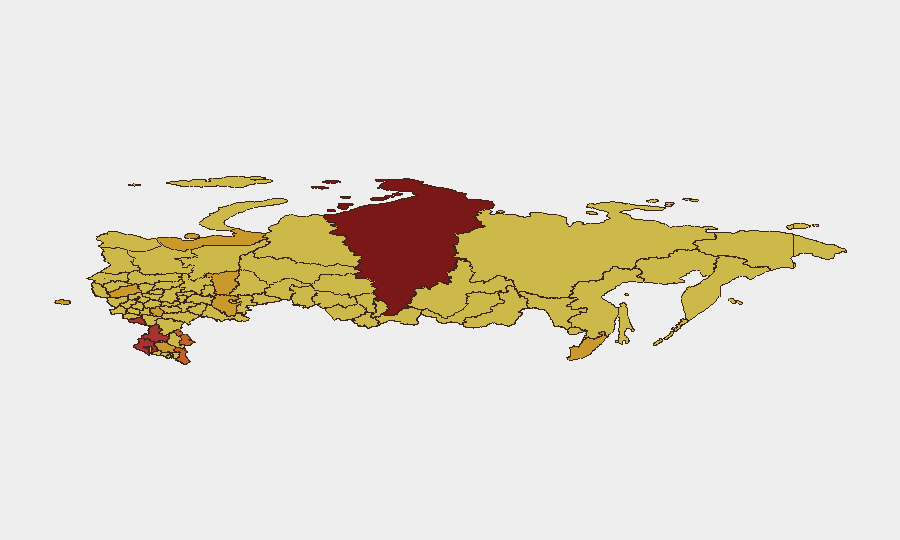
Situation Summary
Russia remains the third-highest global threat environment, driven by active large-scale military operations and sustained drone warfare against Ukraine that generates significant spillover risk across Russian territory. Domestic political repression is intensifying through new asset-seizure legislation and property confiscation powers, expanding the threat surface for individuals and organizations with Russian exposure. Critical energy infrastructure—particularly oil refineries and power generation—faces regular targeting by long-range drones, creating supply-chain and operational disruption risks. The combination of military activity, infrastructure vulnerability, and tightening legal constraints on dissent creates a high and volatile risk landscape through mid-June 2026.
Key Developments
- Afimall City, Moscow (11 June): Bomb threat during Russia Day rehearsals forced evacuation of central shopping district and cordoned multiple streets; no device found, but incident caused several hours of business and traffic disruption in Moscow City.
- Yaroslavl Oblast (10–11 June, night): Long-range drone strike on oil facility near Yaroslavl city ignited fire and partial shutdown; regional emergency services reported injuries from smoke inhalation.
- Syzran oil refinery, Samara Oblast (10–11 June, night): Major Volga-region refinery attacked by drones; storage tanks ignited and operations disrupted; regional officials acknowledged "incident" at fuel facility.
- Multi-region power outages (9–10 June, night; reported 10–11 June): Russian forces launched 207 Shahed-type and decoy drones from Bryansk, Kursk, Oryol, Rostov, Krasnodar, and Crimea toward Ukraine; debris and strikes caused damage to Ukrainian civilian and rail infrastructure and widespread power disruptions.
- Property seizure law (10 June, signed; reported 10–11 June): Putin signed amendments enabling confiscation of property for "offenses against Russia's interests abroad," including alleged military discrediting and territorial-integrity threats; expands asset risk for political opponents and exiles.
- Finnish border military expansion (through 10–11 June): Satellite imagery and reports indicate Russia expanding bases and military infrastructure in Karelia/Murmansk region; NATO-linked analysis frames this as early-stage buildup affecting border-area security and travel risk.
- Russia–Belarus nuclear-related exercises (10–11 June): Joint forces conducting drills with nuclear components; presented domestically as NATO deterrent; no incident reported but adds regional security concern.
Highest-Risk Areas
Moscow (100) and Krasnoyarsk Krai (93.6) drive the overall ranking, with Moscow combining bomb-threat exposure, major infrastructure concentration, and Russia Day event preparation disruptions. The southern and southwestern tier—Rostov (77.7), Belgorod (77.6), Krasnodar (77.5)—reflects proximity to active military operations and drone-launch zones targeting Ukraine. Saint Petersburg (79.4) and Astrakhan (74.1) face secondary risk from energy-infrastructure targeting and regional instability; northwestern regions (Nenets, 71.8) show emerging risk from military buildup near Finland. Energy and transportation hubs across the ranked regions face repeated drone targeting, creating cascading supply-chain and operational risk for corporate presence.
How GeoBit Would Assist
Security teams would deploy AOI Monitoring & Early Warning on key facilities in Moscow, Krasnoyarsk, and southern regions to track drone activity and infrastructure threats in real time. OSINT fusion combining Telegram, X, and independent outlets would enable rapid detection of threats (bomb threats, attacks, legal/seizure announcements) before they escalate. Routing & Network Analysis and Economic & Trade modules would help identify alternative supply chains and logistics corridors to bypass compromised refineries and power infrastructure in high-risk oblasts.
7-Day Outlook
Drone operations against Ukrainian targets and Russian energy facilities are expected to remain at current intensity; collateral damage and secondary effects (power outages, traffic disruption, civilian casualties) will continue to create unpredictable business and travel disruptions across key Russian regions. New property-seizure legislation will likely accelerate enforcement actions against perceived opponents, increasing asset and personnel risk for firms with political exposure or dissident-associated ties. Moscow and southern military-adjacent regions should be monitored for escalation in both military activity and security incidents through mid-June.
Highest-Risk Areas — Ranked
| # | State / Region | Risk |
|---|---|---|
| 1 | Moscow | 100 |
| 2 | Krasnoyarsk Krai | 93.6 |
| 3 | Saint Petersburg | 79.4 |
| 4 | Rostov Oblast | 77.7 |
| 5 | Belgorod Oblast | 77.6 |
| 6 | Krasnodar Krai | 77.5 |
| 7 | Astrakhan Oblast | 74.1 |
| 8 | Dagestan | 73.6 |
| 9 | Stavropol Krai | 72.8 |
| 10 | Bashkortostan | 72.4 |
| 11 | Nenets Autonomous Okrug | 71.8 |
| 12 | Tambov Oblast | 71.8 |
Sources
Previous Daily Briefs
A new Russia brief is written every day — each with its own risk map and downloadable CSV. Here's the last week; use the calendar to go further back.
📅 Browse every day by calendar →
Highlighted days have a brief. Tap a day for that day's map & analysis, or “csv” for that day's dataset ($5).