Situation Summary
Rwanda maintains a composite threat score of 15 (rank #77 globally), reflecting moderate baseline security risk with concentrated vulnerabilities in the Southern Province. The country's security posture is shaped by three concurrent stressors: confirmed Marburg virus disease cases requiring health-system monitoring, a July 11 public statement exchange between Uganda and Rwanda signaling diplomatic friction, and persistent regional instability tied to Rwanda-backed armed movements in eastern Democratic Republic of Congo. Domestic incident frequency remains low, but cross-border spillover and disease outbreak dynamics warrant close tracking.
Key Developments
- 2026-07-11 · Uganda–Rwanda Public Statement — A formal diplomatic exchange occurred; specific content and nature of the statement (protest, accusation, or policy clarification) require verification. Monitor for escalation patterns or border-related claims in follow-up communications over the next 48–72 hours.
- Recent · Marburg Virus Disease Confirmed Cases — Multiple confirmed cases reported within Rwanda; specific location(s), case count, and transmission trajectory not yet detailed in available signals. Health authorities and border-health screening procedures are critical monitoring points for corporate medical and movement protocols.
- Regional · Eastern DRC Conflict Context (date unconfirmed) — UN reporting indicates intensified fighting between Congolese army and Rwanda-backed M23 in South Kivu, with diplomatic calls for Rwandan withdrawal. This is a standing regional factor affecting Rwanda's diplomatic posture and potential for cross-border spillover; confirmation of fresh escalation or force movements required.
Highest-Risk Areas
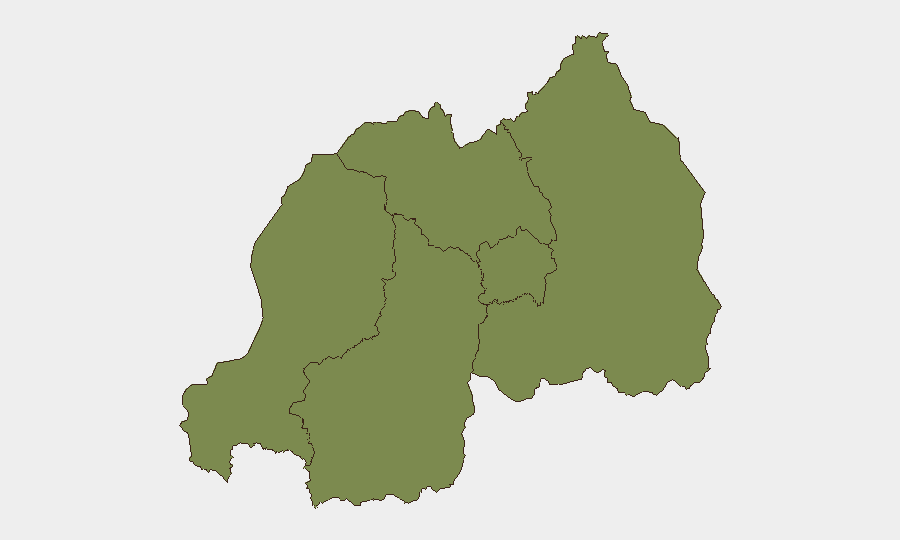
Southern Province dominates the risk ranking (32.2), a significant outlier against all other regions (2.2 each). The disparity suggests either a recent localized incident cluster, a disease outbreak concentration, or border-adjacent instability not yet fully reflected in city-level reporting. Western, Northern, and Eastern Provinces show equivalent moderate risk, while Kigali City registers at baseline—consistent with the capital's typical security infrastructure. Teams with personnel or assets in Southern Province should implement heightened situational awareness, verify local partner status, and confirm supply-chain continuity; the fourfold differential warrants immediate clarification of drivers.
How GeoBit Would Assist
Intel Sweep & OSINT Fusion would consolidate Marburg epidemiology (health ministry statements, WHO updates, clinic reports) and Uganda–Rwanda diplomatic signals (official statements, media response, border-agency alerts) into a coherent 72-hour timeline. AOI Monitoring & Early Warning on Southern Province and eastern border zones (Rusizi, Nyungwe areas) would flag incident clusters, roadblocks, or disease-screening changes in near-real time. Routing & Network Analysis would support alternative journey planning and supply routes if Southern Province incidents worsen. Conflict & Military capability would contextualize M23/DRC developments and assess Rwanda force posture for corporate exposure in border-adjacent operations.
7-Day Outlook
The Marburg outbreak is the most time-sensitive variable; if case counts rise or geographic spread accelerates, Rwanda may implement enhanced health screening or localized movement restrictions. The Uganda–Rwanda diplomatic exchange suggests friction but does not yet signal acute border closure or military mobilization; watch for secondary statements or opposition party commentary. Southern Province risk trajectory depends on incident-cluster confirmation—if the 32.2 score reflects a single event or data anomaly, risk may normalize; if it signals persistent instability, escalation protocols should activate for operations in that zone.
Highest-Risk Areas — Ranked
| # | State / Region | Risk |
|---|---|---|
| 1 | Southern Province | 32.2 |
| 2 | Western Province | 2.2 |
| 3 | Northern Province | 2.2 |
| 4 | Kigali City | 2.2 |
| 5 | Eastern Province | 2.2 |
Previous Daily Briefs
A new Rwanda brief is written every day — each with its own risk map and downloadable CSV. Here's the last week; use the calendar to go further back.
📅 Browse every day by calendar →
Highlighted days have a brief. Tap a day for that day's map & analysis, or “csv” for that day's dataset ($5).
Atlas — our AI intelligence desk — emails them this snapshot personally. Nothing else, no list.