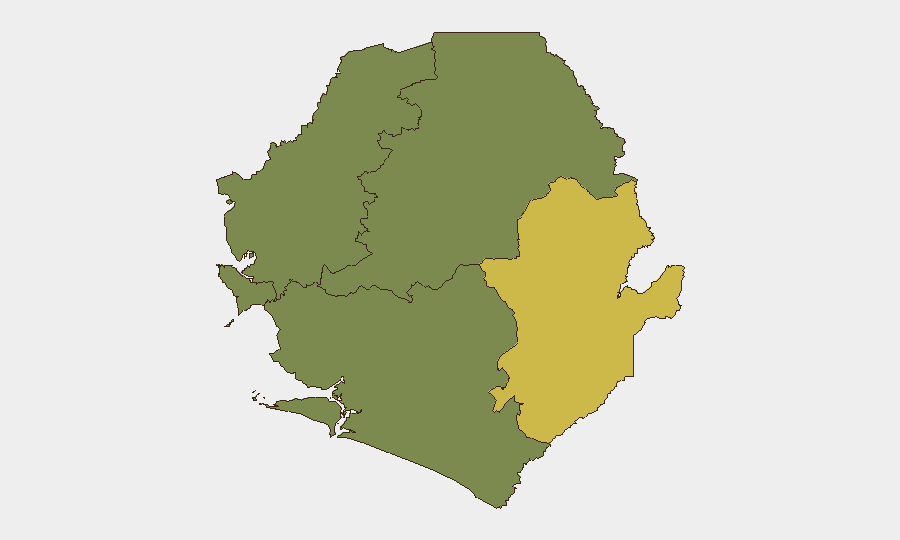
Situation Summary
Sierra Leone remains at low acute security risk (global rank #153, composite threat score 5) with no credible open-source reports of new security incidents, civil unrest, armed activity, or political instability in the last 24–48 hours. The country's security environment is characterized by routine background risks—petty crime, governance constraints, and infrastructure gaps—rather than active shocks or organized threats. The single tracked event signal relates to ongoing cholera response, a public-health rather than security matter. Short-term stability indicators suggest continuation of the current baseline.
Key Developments
No corroborated security, conflict, or civil-unrest incidents have been reported in Sierra Leone in the last 24–48 hours across international media, regional outlets, NGO advisories, or geolocatable social platforms.
Background context (not current incident): Cholera has been documented in recent weeks as a public-health priority; this reflects endemic disease management and vaccination campaigns rather than a discrete security event.
Highest-Risk Areas
Eastern Province significantly outpaces other regions (risk score 68), driven by historical fragility, limited state capacity, and geographic remoteness from central authority. Western Area (risk 35), which includes Freetown, ranks second and reflects urban crime, congestion, and population density typical of the capital and surrounding zones. Northern, North West, and Southern Provinces show minimal tracked risk signals. Security teams should prioritize monitoring Eastern Province for accumulation of localized instability—resource disputes, inter-communal friction, or criminal activity—while maintaining baseline awareness of petty crime and informal-market tensions in Freetown and the Western Area.
How GeoBit Would Assist
A security team managing personnel or assets in Sierra Leone would use Intel Sweep and multi-language OSINT fusion to detect emerging incidents in real time across news, NGO, and social platforms, with particular focus on Eastern Province keywords and accounts. AOI Monitoring & Early Warning set on Freetown, key transport corridors, and Eastern Province hotspots would provide persistent alerts if civil unrest, crime spikes, or political activity cross threshold. Risk & Threat Assessment combined with Network & Actor Analysis would map criminal and informal power structures in high-density urban areas, informing duty-of-care routing and personnel safety protocols.
7-Day Outlook
Absent new economic shocks, political triggers, or disease escalation, Sierra Leone is expected to maintain current low-acute-risk baseline over the next seven days. Seasonal health risks (cholera, malaria) and routine urban crime remain the primary duty-of-care concerns. Continuous monitoring of Eastern Province—where risk concentration is highest—and awareness of Freetown's informal-settlement dynamics remain operationally prudent.
Report Date: 2026-06-23
Data Confidence: High (24–48h OSINT sweep complete; no incident fabrication)
Next Update: 2026-06-24
Highest-Risk Areas — Ranked
| # | State / Region | Risk |
|---|---|---|
| 1 | Eastern Province | 68 |
| 2 | Western Area | 35 |
| 3 | North West Province, Sierra Leone | 0 |
| 4 | Northern Province, Sierra Leone | 0 |
| 5 | Southern Province, Sierra Leone | 0 |
Sources
Previous Daily Briefs
A new Sierra Leone brief is written every day — each with its own risk map and downloadable CSV. Here's the last week; use the calendar to go further back.
📅 Browse every day by calendar →
Highlighted days have a brief. Tap a day for that day's map & analysis, or “csv” for that day's dataset ($5).