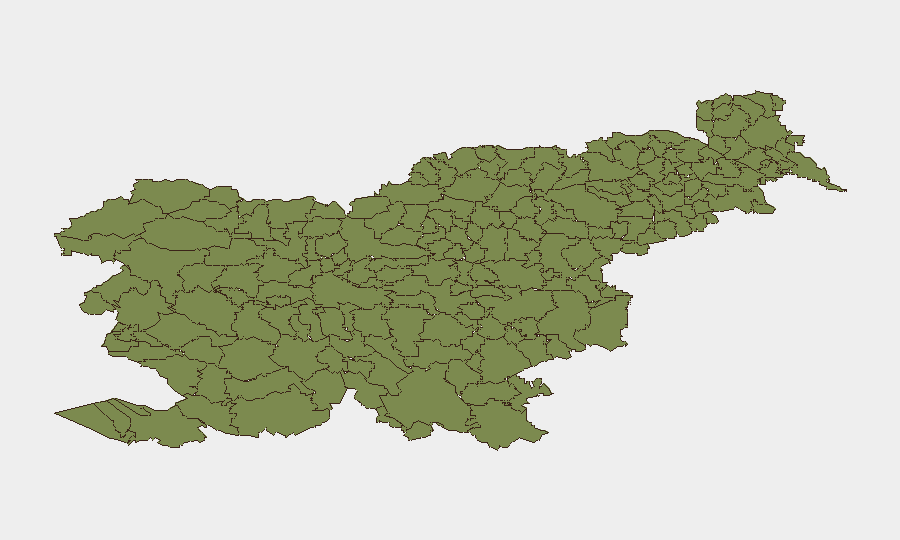
Situation Summary
Slovenia remains a low-threat environment with a composite threat score of 5 globally (#160 ranking) and no active security incidents detected in the last 24–48 hours. All tracked sub-national regions register zero risk scores, reflecting the country's stable political, security, and public-order environment. The most recent tracked event is an administrative public statement on 8 July; no conflict, civil unrest, crime spikes, infrastructure disruptions, or travel impediments have been identified in the current reporting window.
Key Developments
No genuine security, conflict, civil-unrest, crime, or infrastructure incidents have been verified in Slovenia over the last 24–48 hours. Recent web research identified only background or historical material:
- Ljubljana (national), 3 July 2026: OSCE/ODIHR published final report on March 2026 parliamentary elections, noting concerns regarding misleading content and possible foreign interference—historical context only, not a current incident.
- Ljubljana (national), 9 July 2026: MONEYVAL published anti-money-laundering compliance report on Slovenia—regulatory publication, not a security event.
- All sub-national regions: Zero risk scores across Bovec, Kobarid, Kanal, Kranjska Gora, Bohinj, Tolmin, and other tracked municipalities indicate no active localized threats.
Highest-Risk Areas
All 12 tracked sub-national regions score zero on the composite risk index, indicating no material variance in threat profile across Slovenia. The absence of regional differentiation reflects the country's overall political stability, rule-of-law framework, and effective law-enforcement presence. No area requires elevated monitoring relative to others at this time.
How GeoBit Would Assist
For organizations with personnel or assets in Slovenia, continuous monitoring via Intel Sweep and global event feeds paired with multi-language OSINT and Slovenian-language local media search will provide real-time early warning of any emerging political, security, or infrastructure developments. AOI Monitoring with alerting on Ljubljana and other key business districts can detect civil unrest, demonstrations, or transport disruptions before they affect operations. For duty-of-care teams, routing and network analysis supports contingency planning should border or transit disruptions occur in the Alpine region.
7-Day Outlook
No material changes to the threat landscape are anticipated over the next seven days. Slovenia's stable political and security environment is expected to persist, with continued low risk across all regions. Organizations should maintain standard duty-of-care protocols and monitor for any unexpected administrative or policy announcements that could affect business operations.
Highest-Risk Areas — Ranked
| # | State / Region | Risk |
|---|---|---|
| 1 | Bovec | 0 |
| 2 | Kobarid | 0 |
| 3 | Kanal | 0 |
| 4 | Kranjska Gora | 0 |
| 5 | Gorje | 0 |
| 6 | Tolmin | 0 |
| 7 | Bohinj | 0 |
| 8 | Cerkno | 0 |
| 9 | Brda | 0 |
| 10 | Šempeter-Vrtojba | 0 |
| 11 | Renče-Vogrsko | 0 |
| 12 | Miren-Kostanjevica | 0 |
Sources
Previous Daily Briefs
A new Slovenia brief is written every day — each with its own risk map and downloadable CSV. Here's the last week; use the calendar to go further back.
📅 Browse every day by calendar →
Highlighted days have a brief. Tap a day for that day's map & analysis, or “csv” for that day's dataset ($5).
Atlas — our AI intelligence desk — emails them this snapshot personally. Nothing else, no list.