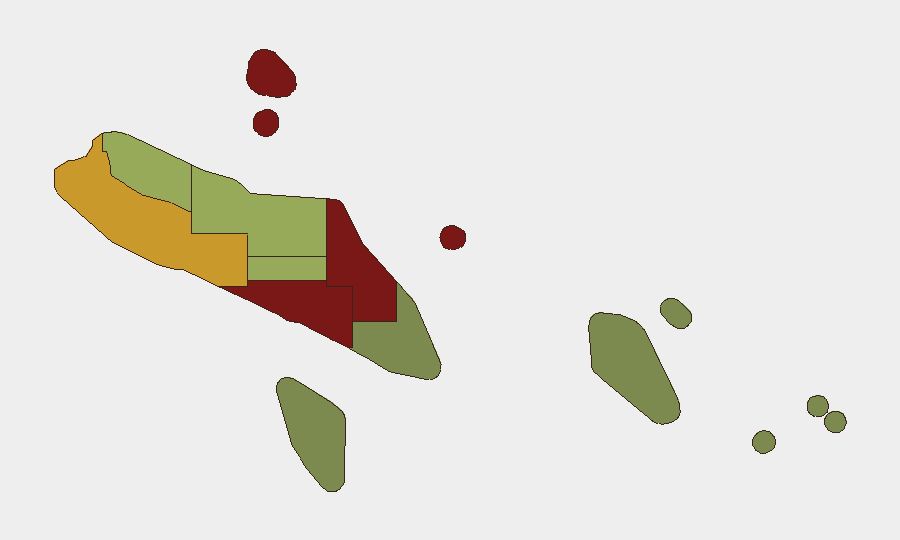
Situation Summary
Solomon Islands remains a baseline-risk environment characterized by urban crime concentration, political sensitivities, and legacy communal tensions, rather than acute instability or active conflict. No new security incidents or policy disruptions have been confirmed in the last 24–48 hours. The arrested cargo ship incident (22 June) does not yet indicate a broader maritime, customs, or port-security crisis. Risk posture should be informed by structural vulnerabilities (Honiara street crime, informal economy tensions) rather than an emerging acute trigger.
Key Developments
- 2026-06-22 · Honiara (Port Authority) — Cargo ship arrest by Solomon Islands authorities. Circumstances (customs violation, cargo irregularity, crew matter, or other) not yet clarified in available open reporting. No confirmation of wider port disruption, vessel seizure, or maritime embargo.
*Note: No additional credible, time-stamped security incidents specific to Solomon Islands have been identified in open sources within the last 24–48 hours. Absence of reported incidents does not imply absence of risk; rather, baseline threat posture should reflect known structural conditions (urban crime prevalence in Honiara and Guadalcanal, political fault lines, informal-sector tensions) and be refreshed as new intelligence emerges.*
Highest-Risk Areas
Honiara (risk 92) and Guadalcanal (88) drive the country's security footprint, driven by street crime, gang activity, and informal-settlement violence concentrated in the capital and peri-urban zones. Malaita (85) remains elevated due to historical inter-communal sensitivities and periodic political friction with national leadership. Western Province (72) shows secondary concern, likely linked to resource-extraction tensions and remote-area governance gaps. All other provinces fall below 60, indicating that risk is heavily urban and concentrated in the national capital region and immediate surroundings.
How GeoBit Would Assist
Teams with people or assets in Solomon Islands should deploy AOI (area-of-interest) monitoring on Honiara, Guadalcanal, and Malaita to capture street-level unrest, port disruptions, or political signaling in real time. OSINT fusion across local media (Solomon Star, SIBC), social platforms (X/Twitter, Telegram), and official government/police channels will provide early warning of crime spikes, infrastructure failures, or political crises before they affect operations. Network and actor analysis of informal leadership, business, and communal power brokers will help assess risk escalation and stakeholder sentiment in politically sensitive zones.
7-Day Outlook
Near-term trajectory is stable absent new triggering incidents. The cargo-ship incident should be monitored for follow-on port-authority actions or shipping-industry disruption, but no evidence of escalation exists. Baseline street-crime and political-sensitivity risks in Honiara and Guadalcanal remain operative; teams should maintain standard duty-of-care protocols (staff movement restriction, accommodation security, incident reporting). Routine monitoring is appropriate; heightened alert posture is not warranted at this time unless new intelligence confirms an acute deterioration.
Highest-Risk Areas — Ranked
| # | State / Region | Risk |
|---|---|---|
| 1 | Honiara | 92 |
| 2 | Guadalcanal | 88 |
| 3 | Malaita | 85 |
| 4 | Western | 72 |
| 5 | Choiseul | 58 |
| 6 | Isabel | 52 |
| 7 | Central Province | 48 |
| 8 | Makira-Ulawa | 38 |
| 9 | Rennell and Bellona | 22 |
| 10 | Temotu | 18 |
Sources
Previous Daily Briefs
A new Solomon Islands brief is written every day — each with its own risk map and downloadable CSV. Here's the last week; use the calendar to go further back.
📅 Browse every day by calendar →
Highlighted days have a brief. Tap a day for that day's map & analysis, or “csv” for that day's dataset ($5).