Situation Summary
South Korea remains a moderate-threat environment (global rank #141, composite score 6) with risk concentrated sharply in Seoul, which accounts for disproportionate threat density relative to the rest of the country. Recent security dynamics reflect a mix of diplomatic friction with North Korea, US–South Korea regulatory tensions over data-protection enforcement, and elevated insider-threat and cyber-risk exposure across critical e-commerce and logistics infrastructure. No large-scale physical security incidents, civil unrest, or terrorism events have been reported in the last 24–48 hours; the primary current threat surface is regulatory, data-security, and labor-relations risk stemming from enforcement actions against major domestic firms.
Key Developments
- Seoul, 11 June 2026 (ruling announced; reported 12–13 June): South Korea's Personal Information Protection Commission (PIPC) imposed a record 624.7 billion won (~$409M) fine on e-commerce giant Coupang over a 2025 data breach affecting 33–37.5 million users and illegal collection of online activity data from ~11 million users. Regulators attributed the breach to weak internal controls and failure to revoke a security authentication key, with a former Chinese national employee identified as the insider responsible.
- Seoul, 11–12 June 2026: Coupang Fulfillment Services received a separate 248 million won fine for unlawful personal-information collection, including maintenance of an employment-restriction list allegedly targeting journalists, raising reputational and labor-dispute risk within South Korea's logistics sector.
- National regulatory environment, 11–13 June 2026: PIPC statements emphasized that Coupang detected the breach only after a customer inquiry, well beyond legal notification timelines, reinforcing systemic compliance and internal-security gaps among major Korean firms and signaling tighter regulatory scrutiny ahead.
- Seoul–Washington relations, 12–13 June 2026: The Coupang penalties have become a point of friction in South Korea–US relations, with some Washington officials criticizing the fine's scale against the New York-listed company, adding political-economic risk to the regulatory environment and potential investor-confidence volatility.
- North Korea cross-border signals, 12–13 June 2026: Recent GEOBIT event signals reflect elevated North Korean administrative sanctions, military mobilization toward Russia, and bilateral disapproval statements directed at South Korea, indicating continued diplomatic tension and potential for heightened military posture in the DMZ region.
Highest-Risk Areas
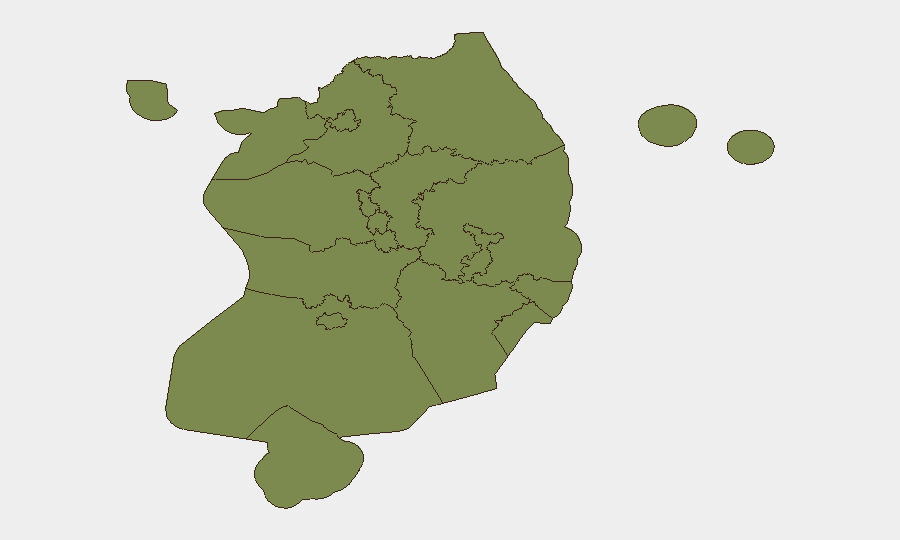
Seoul dominates the risk landscape with a composite score of 31.4—approximately 1.7× higher than North Chungcheong (18.9), the second-ranked region. This concentration reflects Seoul's role as the national capital, primary financial and technology hub, and target for diplomatic, cyber, regulatory, and insider-threat activity. North Chungcheong's elevated score likely reflects proximity to the DMZ and cross-border tensions with North Korea. Gyeonggi, Incheon, and other regions show substantially lower risk (1.4–3.4), indicating that national-level security challenges cluster in the capital and border-adjacent zones.
How GeoBit Would Assist
Corporate security teams should deploy AOI Monitoring & Early Warning focused on Seoul and North Chungcheong to track regulatory actions, labor disputes, and cross-border military signaling in near-real time. Intel Sweep and OSINT fusion capabilities enable continuous tracking of data-breach disclosures, PIPC enforcement trends, and US–South Korea regulatory friction to anticipate compliance and reputational risk. Network & Actor Analysis and entity extraction support identification of insider threats and foreign actors within supply chains and logistics operations similar to Coupang's exposure.
7-Day Outlook
Regulatory enforcement momentum is likely to continue, with PIPC and other authorities potentially expanding investigations into peer e-commerce and logistics firms, elevating corporate compliance risk across the sector. North Korea–South Korea diplomatic tension and US–South Korea regulatory friction are expected to remain elevated but stable absent new provocations or sanctions escalation. Cyber-risk and insider-threat awareness within South Korea's critical infrastructure will remain a priority for government and private-sector actors.
Highest-Risk Areas — Ranked
| # | State / Region | Risk |
|---|---|---|
| 1 | Seoul | 31.4 |
| 2 | North Chungcheong | 18.9 |
| 3 | Gyeonggi | 3.4 |
| 4 | Incheon | 2.2 |
| 5 | Gangwon State | 2.2 |
| 6 | South Jeolla | 2.2 |
| 7 | South Chungcheong | 2 |
| 8 | Busan | 1.8 |
| 9 | Jeju | 1.6 |
| 10 | Sejong | 1.4 |
| 11 | Jeonbuk State | 1.4 |
| 12 | Daejeon | 1.4 |
Sources
Previous Daily Briefs
A new South Korea brief is written every day — each with its own risk map and downloadable CSV. Here's the last week; use the calendar to go further back.
📅 Browse every day by calendar →
Highlighted days have a brief. Tap a day for that day's map & analysis, or “csv” for that day's dataset ($5).