Situation Summary
Sri Lanka remains at composite threat rank #85 globally with a score of 7, reflecting relatively low overall security risk but active governance and institutional tensions. Recent signals (12–13 June) point to internal political friction—including attorney complaints against state actors, police disapproval of the Inspector General, and investigative activity by ministers and the state itself—rather than imminent public security or civil unrest incidents. Open-source reporting over the past 24–48 hours shows no confirmed discrete security, crime, or infrastructure disruption events; the security environment appears calm at the national level, though sub-national variation is material. Cholera surveillance remains a secondary public-health concern.
Key Developments
- Attorney General complaint (13 June): Public statement filed against the state; details and location not yet specified in available sources. Reflects ongoing institutional oversight and potential accountability pressures.
- Government statement and internal demand (13 June): Government public statement and internal state-vs-state demand signals ongoing policy or constitutional disputes; specific substance and geographic nexus unclear from current reporting.
- Police–Inspector General dispute (12 June): Police disapproval of the Inspector General, coupled with ministerial investigation, indicates tension within security and justice institutions. No operational disruption or field-level incidents reported.
- Arrest/detention activity (12 June): Routine investigative detention noted; scale, location, and charges not yet detailed in open sources.
- Cholera monitoring (ongoing): Public-health surveillance continues; no outbreak declaration or mass casualty event reported in the past 48 hours.
Note: No independently confirmed discrete security incidents (attacks, major crime, civil unrest, infrastructure damage) have been documented in open English-language sources for 12–15 June 2026. Further granularity may require local police, diplomatic, or commercial risk feeds.
Highest-Risk Areas
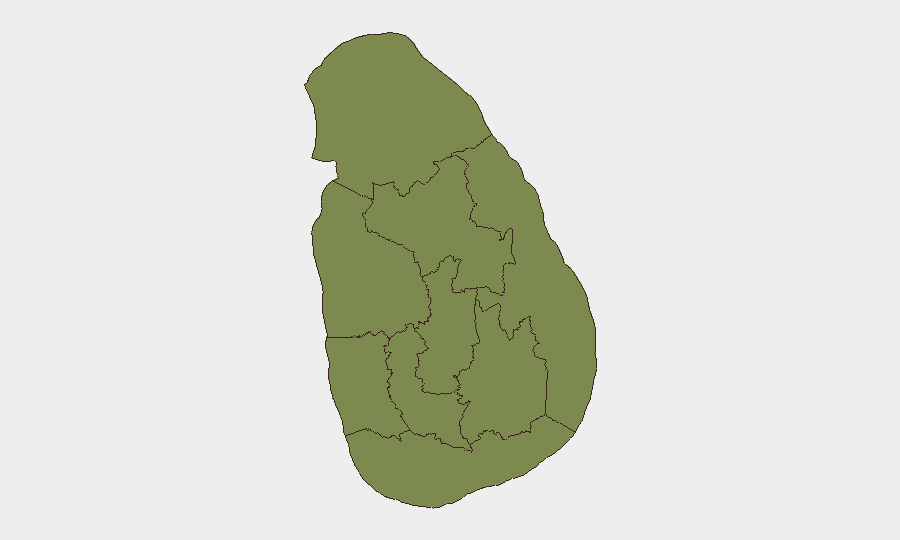
The Western Province (risk score 35) dominates the sub-national landscape and warrants priority focus; it encompasses the capital region and highest concentration of economic and political activity, where institutional tensions (attorney complaints, government disputes) are likely to surface. North Central Province (risk 25) ranks second and should be monitored for secondary political or administrative friction. The remaining seven provinces score below 13.3 and present substantially lower composite risk. Geographic concentration of risk in the Western Province suggests that corporate and duty-of-care concerns should prioritize asset and personnel security posture in and around the capital and major commercial centers, while upcountry operations face lower baseline institutional or civil-unrest risk.
How GeoBit Would Assist
A security team with people or assets in Sri Lanka would deploy persistent AOI (Area-of-Interest) Monitoring & Early Warning focused on Colombo and the Western Province to flag emerging protests, strikes, or government action in real time. Intel Sweep and multi-language OSINT fusion across local news, police statements, and government channels would surface lower-level incidents (robberies, civil disputes, transport disruptions) not visible in English-language open sources, enabling faster duty-of-care response. Network & Actor Analysis of Sri Lankan political and security actors would map fault lines in attorney–executive–police relations and predict escalation risk before public statement.
7-Day Outlook
Institutional tensions are likely to persist and may generate further public statements or investigative activity through mid-to-late June, but no imminent civil unrest or violence is signaled by current data. Security conditions are expected to remain stable for routine operations; however, personnel and asset managers should maintain situational awareness of attorney and police developments, as rapid institutional friction could affect visa, permit, or operational clearances. A resurgence of cholera cases or a significant public-health incident could alter the outlook.
Highest-Risk Areas — Ranked
| # | State / Region | Risk |
|---|---|---|
| 1 | Western Province | 35 |
| 2 | North Central Province | 25 |
| 3 | Uva Province | 13.3 |
| 4 | Northern Province | 5 |
| 5 | North Western Province | 5 |
| 6 | Central Province | 5 |
| 7 | Eastern Province | 5 |
| 8 | Sabaragamuwa Province | 5 |
| 9 | Southern Province | 5 |
Sources
Previous Daily Briefs
A new Sri Lanka brief is written every day — each with its own risk map and downloadable CSV. Here's the last week; use the calendar to go further back.
📅 Browse every day by calendar →
Highlighted days have a brief. Tap a day for that day's map & analysis, or “csv” for that day's dataset ($5).