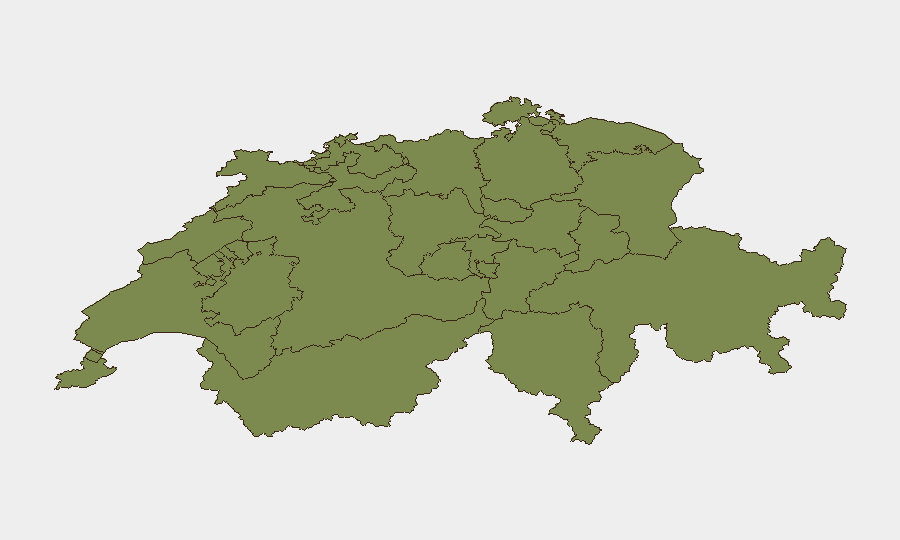
Situation Summary
Switzerland remains a low-threat environment with a composite threat score of 7 (global rank #125), supported by 48 tracked events and no confirmed security incidents, civil unrest, or infrastructure disruptions in the past 24–48 hours. Open-source reporting indicates normal operational conditions across all cantons. One U.S.–Iran diplomatic negotiation scheduled for Switzerland was rerouted to Doha due to external regional tensions, but this represents a scheduling change rather than a Switzerland-based security event.
Key Developments
- Diplomatic scheduling change (Switzerland, venue): Planned U.S.–Iran technical talks slated for Switzerland in late June were postponed and relocated to Doha following renewed military activity around the Strait of Hormuz. No Swiss territory, assets, or personnel were affected; the decision reflects external geopolitical dynamics.
- Unverified cyber claim (Switzerland, crypto sector): A social-media allegation of a "Swiss Crypto Investor" data leak circulated on June 29. Independent security assessment classified this as unverified with no confirmed breach of Swiss-based digital-asset platforms or infrastructure as of reporting time.
- Extreme weather (Basel, late June): Switzerland recorded an 80-year temperature high of 38°C in Basel. No associated civil unrest, crime escalation, or major infrastructure failures have been reported in the past 48 hours, though secondary health and transport risks warrant monitoring.
- No active conflict, protest, or criminal incidents reported: Multi-source open-source monitoring confirms absence of validated security events (attacks, arrests, civil disorder, or operational disruptions) inside Switzerland in the past 24–48 hours.
Highest-Risk Areas
Lucerne is the sole canton significantly elevated above baseline, with a composite risk score of 31.4—approximately 3.5 times higher than Geneva (8.9) and substantially above all other cantons (1.4–2.2). The drivers of Lucerne's elevated profile remain under assessment; teams with personnel or assets in the region should maintain standard duty-of-care monitoring. Geneva's secondary-tier risk (8.9) reflects its role as a diplomatic and international-organization hub, where diplomatic incidents, large gatherings, and transnational issues may present elevated exposure compared to canton averages. All remaining cantons register minimal risk.
How GeoBit Would Assist
Corporate security and risk teams operating in Switzerland may employ AOI Monitoring & Early Warning capabilities to establish persistent watch over Lucerne, Geneva, and other high-traffic zones (airports, international organizations, banking centers) with automated alerting on emerging incidents. Intel Sweep and multi-language OSINT fusion across news, social media, and open databases enable rapid corroboration of unverified claims (such as the crypto-sector allegation above) and early detection of protest, labor, or civil-disorder signals. Routing & Network Analysis supports alternative journey planning for personnel in or transiting Lucerne and Geneva, while Risk & Threat Assessment models can be refreshed as sub-national risk data evolves.
7-Day Outlook
Switzerland's threat trajectory remains stable. No imminent indicators of civil unrest, conflict escalation, or infrastructure disruption are evident in 7-day projection models. Continued monitoring of Lucerne's risk drivers and routine tracking of diplomatic activity in Geneva (venue for ongoing international negotiations) remain warranted. Extreme heat conditions may persist into early July; secondary impacts on transport and public health should be factored into operational planning.
Highest-Risk Areas — Ranked
| # | State / Region | Risk |
|---|---|---|
| 1 | Lucerne | 31.4 |
| 2 | Geneva | 8.9 |
| 3 | Aargau | 2.2 |
| 4 | Bern | 2.2 |
| 5 | Nidwalden | 2.2 |
| 6 | Grisons | 2.2 |
| 7 | Basel-City | 1.4 |
| 8 | Jura | 1.4 |
| 9 | Basel-Landschaft | 1.4 |
| 10 | Solothurn | 1.4 |
| 11 | Vaud | 1.4 |
| 12 | Neuchâtel | 1.4 |
Sources
Previous Daily Briefs
A new Switzerland brief is written every day — each with its own risk map and downloadable CSV. Here's the last week; use the calendar to go further back.
📅 Browse every day by calendar →
Highlighted days have a brief. Tap a day for that day's map & analysis, or “csv” for that day's dataset ($5).