Situation Summary
Tajikistan remains in a stable near-term security posture with no confirmed acute incidents in the past 24–48 hours. The country's composite threat score (7/100) reflects endemic but not acute risks: transnational organized crime, counterterrorism cooperation initiatives, and localized instability in mountainous border regions, particularly Gorno-Badakhshan. The absence of verifiable new events does not indicate reduced underlying vulnerabilities; rather, it reflects a period of baseline operations in which border tensions, smuggling networks, and regional geopolitical competition persist at managed levels.
Key Developments
No discrete security, civil-unrest, or travel-risk incidents have been independently confirmed in Tajikistan within the last 24–48 hours by open web sources, verified social-media accounts, or humanitarian/law-enforcement channels. Diplomatic activity remains visible (e.g., terrorism and transnational-crime cooperation meetings in Dushanbe in early June), but these are governance and capacity-building initiatives, not crisis responses. Organizations with personnel or assets in Tajikistan should treat this quiet window as a data gap rather than an all-clear: the underlying risk architecture—particularly in Gorno-Badakhshan and Khatlon—remains unchanged.
Highest-Risk Areas
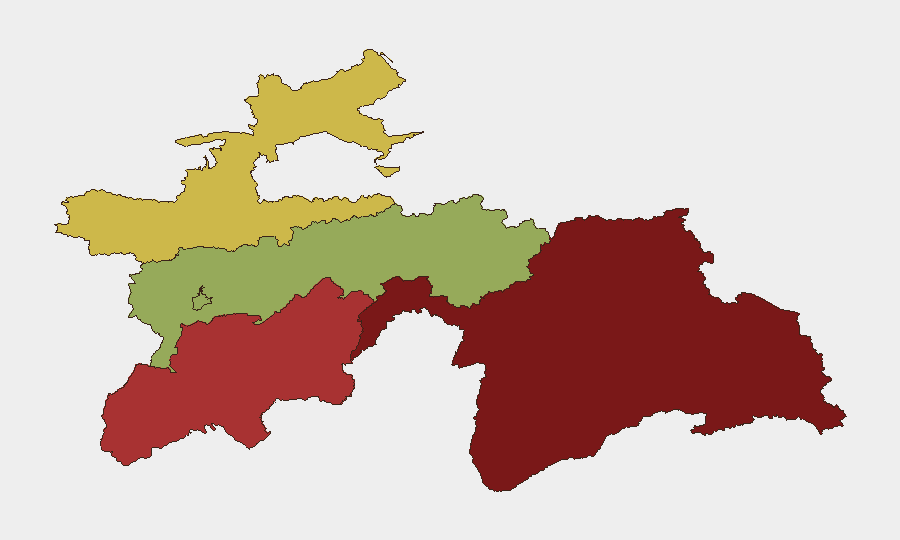
Gorno-Badakhshan Autonomous Region (GBAO, composite risk 92) drives the country's highest threat profile due to remote terrain, weak state presence, porous Afghan border, and historical militant transit and recruitment. Khatlon Region (risk 78) poses secondary risk via organized-crime networks, smuggling corridors, and historical flashpoints in lower-level border disputes with Afghanistan. Sughd Region (risk 65) and the capital Dushanbe (risk 42) carry lower but non-negligible vulnerability to transnational crime and occasional extremist recruitment. The geographic concentration of risk in the south and east (mountainous borders with Afghanistan) means most corporate and humanitarian operations in Dushanbe and northern Sughd face baseline rather than acute threat.
How GeoBit Would Assist
Security and risk teams operating in Tajikistan benefit from GeoBit's AOI Monitoring & Early Warning capability to establish persistent surveillance of Gorno-Badakhshan border crossings and smuggling nodes, surfacing activity changes in near-real time. OSINT Fusion & Corroboration (X/Telegram OSINT, multi-language search, entity extraction) detects emerging tensions, recruitment narratives, or organized-crime network shifts before they escalate to visible incidents. Routing & Network Analysis supports duty-of-care compliance by identifying alternative transportation corridors and safe travel windows, particularly for movement between Dushanbe and Sughd or into GBAO.
7-Day Outlook
No acute escalation is forecast for the next seven days. Baseline risks—smuggling, low-level border friction with Afghanistan, and militant transit through GBAO—will persist; diplomatic and counterterrorism cooperation initiatives suggest government attention to these drivers. Corporate and humanitarian personnel should maintain standard security protocols without heightened alert, while organizations dependent on cross-border or mountainous logistics should refresh contingency routing to account for seasonal and political weather in the region.
Highest-Risk Areas — Ranked
| # | State / Region | Risk |
|---|---|---|
| 1 | Gorno-Badakhshan Autonomous Region | 92 |
| 2 | Khatlon Region | 78 |
| 3 | Sughd Region | 65 |
| 4 | Districts of Republican Subordination | 58 |
| 5 | Dushanbe | 42 |
Sources
Previous Daily Briefs
A new Tajikistan brief is written every day — each with its own risk map and downloadable CSV. Here's the last week; use the calendar to go further back.
📅 Browse every day by calendar →
Highlighted days have a brief. Tap a day for that day's map & analysis, or “csv” for that day's dataset ($5).