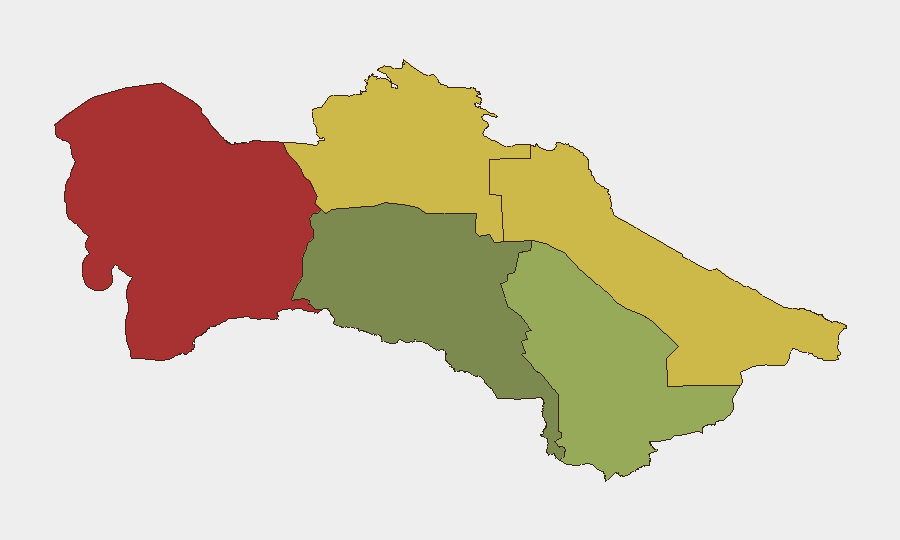
Situation Summary
Turkmenistan presents a stable security environment with no verified incidents or elevated threats recorded in the last 24–48 hours. Diplomatic and economic activity continue uninterrupted, including an official visit by Malaysia's Prime Minister and Turkmen participation in the Tashkent International Investment Forum. The country's composite threat score remains low (3/100), with no tracked security events in the current monitoring window.
Key Developments
- Ashgabat – 18–19 June 2026 – Official bilateral visit by Malaysian Prime Minister
Prime Minister Anwar Ibrahim is conducting a scheduled state visit at the invitation of Turkmenistan's president. No security incidents, protests, or disruptions have been reported in connection with the engagement.
- Tashkent, Uzbekistan (Turkmen delegation) – 16–18 June 2026 – Economic forum participation without incident
A Turkmen delegation participated in the Tashkent International Investment Forum (TIIF‑2026), discussing investment and food-security topics. No security disturbances affecting the delegation or cross-border travel routes have been documented.
- Country-wide – 17–18 June 2026 – No verified security incidents in 24–48-hour window
Comprehensive OSINT and open-source monitoring (news, official statements, social media) confirm the absence of protests, armed clashes, terror attacks, major crime, or infrastructure disruptions during this period.
Highest-Risk Areas
The Balkan Region (risk 78) and Lebap Region (risk 68) remain the country's highest-risk areas, reflecting their proximity to the Caspian Sea and the Uzbek–Turkmen border respectively, where smuggling networks, transnational crime, and irregular migration present persistent concerns. Dashoguz Region (risk 62) in the north also maintains elevated risk due to border volatility and porous controls with Uzbekistan and Kazakhstan. By contrast, Ashgabat City (risk 18) and central regions (Mary, Ahal) carry substantially lower risk, consistent with tighter state capacity and monitoring in the capital and core economic zones. No current events have altered this regional hierarchy.
How GeoBit Would Assist
Security teams should employ AOI (Area-of-Interest) Monitoring & Early Warning on the three highest-risk regions (Balkan, Lebap, Dashoguz) to detect emerging smuggling, trafficking, or border-instability signals in near-real time. Intel Sweep, X/Telegram OSINT, and multi-language search capabilities enable persistent tracking of civil-unrest, crime, and political-stability indicators across all regions, with automated alerting when thresholds are breached. Routing & Network Analysis supports duty-of-care teams in identifying safe travel corridors and alternative routes for personnel transiting high-risk zones, particularly near borders.
7-Day Outlook
No material changes to Turkmenistan's security posture are forecast for the next seven days. The completion of the Malaysian Prime Minister's visit and ongoing economic engagement with the region suggest continued normal diplomatic and commercial activity. Regional risks in Balkan, Lebap, and Dashoguz regions are expected to remain steady absent new border incidents or trafficking spikes.
Highest-Risk Areas — Ranked
| # | State / Region | Risk |
|---|---|---|
| 1 | Balkan Region | 78 |
| 2 | Lebap Region | 68 |
| 3 | Dashoguz Region | 62 |
| 4 | Mary Region | 42 |
| 5 | Ahal Region | 35 |
| 6 | Ashgabat City | 18 |
Sources
Previous Daily Briefs
A new Turkmenistan brief is written every day — each with its own risk map and downloadable CSV. Here's the last week; use the calendar to go further back.
📅 Browse every day by calendar →
Highlighted days have a brief. Tap a day for that day's map & analysis, or “csv” for that day's dataset ($5).