Situation Summary
The United Arab Emirates maintains a stable security environment with no verified incidents affecting domestic stability, traveler safety, or critical infrastructure reported in the last 24–48 hours. The national composite threat score remains low (10 globally); however, Dubai's sub-national risk score (31.3) significantly outpaces other emirates, reflecting its concentration of international business, tourism, and maritime activity. Regional geopolitical developments—particularly Iran–US diplomatic discussions and Strait of Hormuz dynamics—warrant monitoring for potential indirect spillover, though no current on-the-ground disruptions are evident.
Key Developments
- No verified security incidents reported in UAE territory (24–48h window). Live web research, location-tagged social media, and major regional outlets confirm no protests, clashes, infrastructure disruptions, or travel advisories in Abu Dhabi, Dubai, Sharjah, or other emirates.
- Regional geopolitical signals circulating without UAE-specific corroboration (ongoing). Unverified social-media content references Iran–US asset transfers and frozen-account discussions allegedly involving UAE financial channels; no Emirati official statements, banking alerts, or sanctions compliance notices independently confirm such activity or domestic impact.
- Strait of Hormuz and maritime-route commentary elevated in global discourse (background context since June 2026). While relevant to UAE maritime commerce and aviation corridors, no specific port closures, shipping disruptions, or flight-path changes have been reported in UAE airspace or territorial waters in the current 24–48h period.
- Routine aviation and lifestyle activity documented in major UAE population centers. Social monitoring from Al Ain (Abu Dhabi) and Dubai coastal zones shows normal commercial and leisure patterns; no security-related warnings or curfew announcements from local authorities.
- No change in official UAE threat posture or travel guidance. Emirati government channels and major international embassies in the UAE have not issued elevated alerts or restrictions during this reporting window.
Highest-Risk Areas
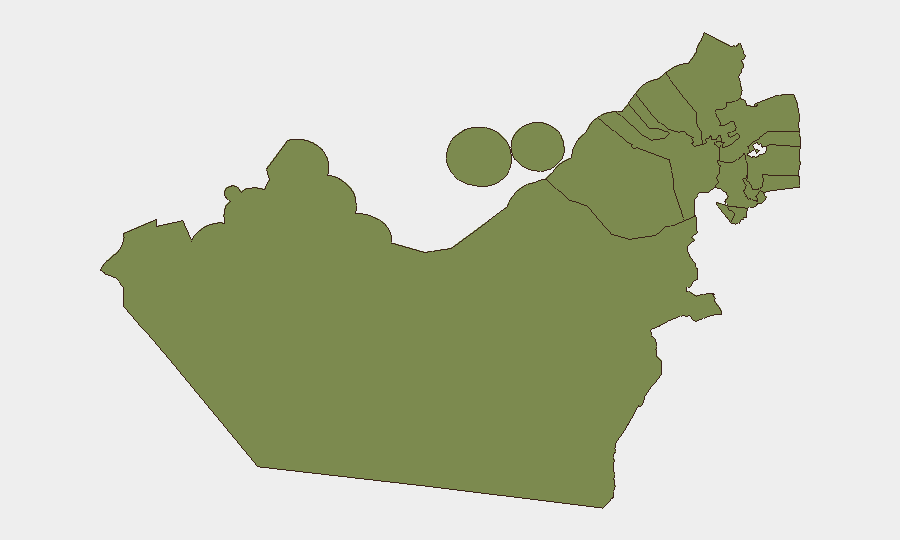
Dubai's risk score (31.3) reflects its status as a global financial and logistics hub, with dense maritime traffic, high-volume air transit, and significant expatriate and transient populations—factors that inherently elevate exposure to transnational crime, smuggling, and cyber threats targeting commercial infrastructure. Abu Dhabi Emirate's secondary risk level (3) corresponds to its role as the capital and energy center. The remaining five emirates (Sharjah, Ajman, Ras al-Khaimah, Fujairah, Umm al-Quwain) all carry minimal risk scores (1.3), reflecting lower population density, reduced international traffic, and limited strategic infrastructure concentration.
How GeoBit Would Assist
Security teams monitoring UAE personnel and assets should leverage AOI Monitoring & Early Warning for persistent, real-time surveillance of Dubai, Abu Dhabi, and key transit nodes (airport, seaports, border crossings) to detect emerging civil unrest, infrastructure incidents, or security enforcement changes. Multi-language OSINT (Intel Sweep, X/Telegram monitoring, YouTube intelligence) combined with network and actor analysis will track regional geopolitical spillover—particularly Iran–US developments and Strait of Hormuz implications for shipping and aviation routing—before they manifest as ground-level disruptions. Routing & Network Analysis can support contingency planning if regional escalation requires alternative travel or supply-chain paths.
7-Day Outlook
No near-term deterioration in UAE domestic security is anticipated based on current indicators. Continued monitoring of regional diplomatic and maritime developments is warranted; any substantive US–Iran escalation or Strait of Hormuz closure would pressure UAE shipping, aviation, and financial systems, but such scenarios remain speculative. Corporate teams should maintain standard duty-of-care protocols and use GeoBit's persistent monitoring to detect early warning signals before broad disruption occurs.
Highest-Risk Areas — Ranked
| # | State / Region | Risk |
|---|---|---|
| 1 | Dubai | 31.3 |
| 2 | Abu Dhabi Emirate | 3 |
| 3 | Sharjah Emirate | 1.3 |
| 4 | Ajman Emirate | 1.3 |
| 5 | Ras al-Khaimah | 1.3 |
| 6 | Fujairah Emirate | 1.3 |
| 7 | Umm al-Quwain | 1.3 |
Sources
Previous Daily Briefs
A new United Arab Emirates brief is written every day — each with its own risk map and downloadable CSV. Here's the last week; use the calendar to go further back.
📅 Browse every day by calendar →
Highlighted days have a brief. Tap a day for that day's map & analysis, or “csv” for that day's dataset ($5).