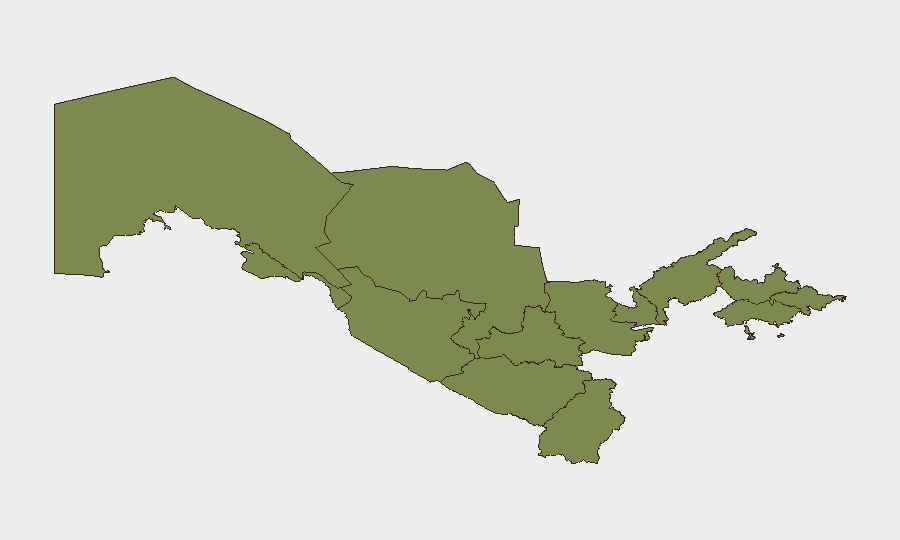
Situation Summary
Uzbekistan remains a stable, low-threat operating environment with a composite global threat ranking of #144. No acute security incidents, civil unrest, infrastructure disruptions, or travel-risk events have been reported in the past 24–48 hours. Current activity is dominated by economic and defense-sector policy announcements rather than security degradation, and the threat trajectory remains flat relative to baseline risk.
Key Developments
- Tashkent, 17 June 2026 – President Shavkat Mirziyoyev announced an expanded national AI strategy at the Tashkent International Investment Forum, including plans for a dedicated AI and data-center zone in Karakalpakstan and a 40% green energy target. This signals long-term digital-infrastructure investment but carries no immediate security implications.
- Tashkent, 17 June 2026 – VEON's Beeline Uzbekistan and DataVolt signed a memorandum of understanding for major data-center capacity at Tashkent IT Park (TAS-1), with exploration of a large expansion project to Bukhara. No operational disruptions or cyber incidents reported.
- National defense sector, within last 48 hours – Uzbekistan's Air Force Combat Command underwent structural consolidation of aviation and air-defense units. This is a routine modernization measure and does not indicate regional escalation or domestic instability.
- Karakalpakstan, strategic planning – Government announced creation of a dedicated AI and data-center development zone as part of broader ICT infrastructure expansion. No civil unrest or local opposition reported in connection with the initiative.
- Regional connectivity agenda, recent statement – President Mirziyoyev reiterated Uzbekistan's advocacy for the Trans-Afghan Railway as a key regional trade corridor. While Afghanistan itself carries elevated security risk, no domestic disruptions tied to this project have been reported inside Uzbekistan.
Highest-Risk Areas
Tashkent dominates the sub-national risk profile with a composite score of 31.4, substantially above all other regions (which register 1.4). This concentration reflects Tashkent's status as the capital, primary economic hub, and seat of government, making it the natural focal point for any political, security, or administrative tensions. All other 11 regions—including Fergana, Namangan, and Karakalpakstan, which historically experienced communal or political friction—are currently ranked equally low and show no recent indicators of elevated threat. The disparity underscores that risk in Uzbekistan is centralized and manageable.
How GeoBit Would Assist
Intel Sweep and multi-language OSINT across X, Telegram, and regional news sources provide continuous monitoring of Uzbekistan's political and security landscape, enabling early detection of protests, official statements, or instability signals. AOI monitoring with alerting on Tashkent and secondary urban centers would flag emerging civil unrest, infrastructure incidents, or security operations in real time. Network and actor analysis combined with regime-stability assessment help security teams track factional dynamics within government and security services, critical for duty-of-care planning in a centralized political system.
7-Day Outlook
No material deterioration in the Uzbek security environment is forecast over the next seven days. Ongoing defense modernization and infrastructure investment are consistent with long-term state policy and do not signal acute instability. Security teams should maintain baseline monitoring posture and expect continued focus on economic development announcements rather than conflict or unrest.
Highest-Risk Areas — Ranked
| # | State / Region | Risk |
|---|---|---|
| 1 | Tashkent | 31.4 |
| 2 | Qashqadaryo Region | 1.4 |
| 3 | Surxondaryo Region | 1.4 |
| 4 | Fergana Region | 1.4 |
| 5 | Republic of Karakalpakstan | 1.4 |
| 6 | Xorazm Region | 1.4 |
| 7 | Navoiy Region | 1.4 |
| 8 | Bukhara Region | 1.4 |
| 9 | Jizzakh Region | 1.4 |
| 10 | Tashkent Region | 1.4 |
| 11 | Namangan Region | 1.4 |
| 12 | Sirdaryo Region | 1.4 |
Sources
Previous Daily Briefs
A new Uzbekistan brief is written every day — each with its own risk map and downloadable CSV. Here's the last week; use the calendar to go further back.
📅 Browse every day by calendar →
Highlighted days have a brief. Tap a day for that day's map & analysis, or “csv” for that day's dataset ($5).