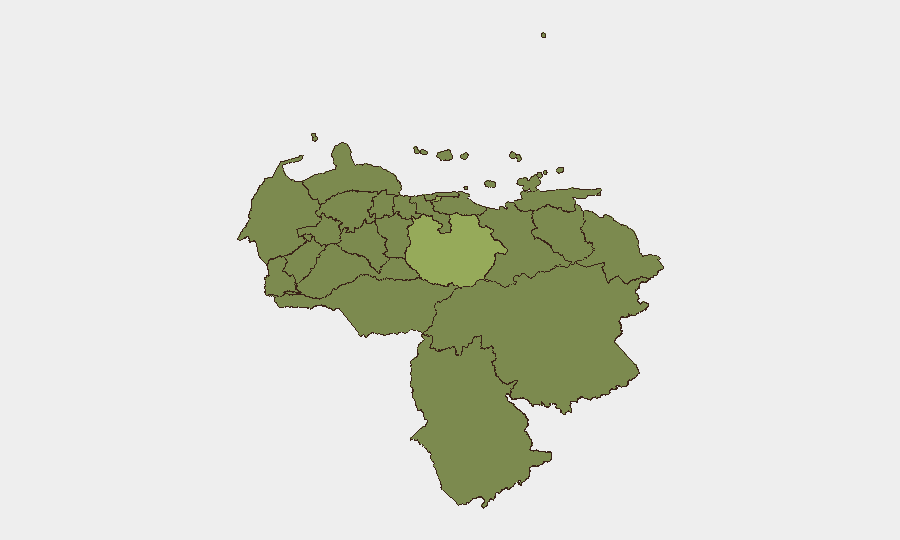
Situation Summary
Venezuela remains under acute political and institutional stress, with concurrent signals of prison unrest, labor action, parliamentary rejection of government measures, and corporate demands suggesting widespread dissatisfaction across state, security, and civilian sectors. The 72-point composite threat score and 253 tracked events place the country in the upper-middle risk band globally, driven primarily by governance instability and localized gang/prison violence rather than active armed conflict. Security conditions remain highly uneven by geography, with Guarico State and the Federal District dominating the risk profile, while travel, commerce, and expatriate safety continue to depend on real-time monitoring of transport corridors and urban flash-points.
Key Developments
The signal logs from 19–21 June 2026 show a compressed cycle of institutional friction and public dissent:
- Prison violence escalation (19 June, location unspecified): Physical assault incident reported within the Venezuelan prison system, followed by conventional military force deployment against prisoners—indicating either a riot, escape attempt, or disciplinary response. No casualty or facility details confirmed yet in public signals.
- Parliamentary rejection (19 June): Government measure formally rejected by parliament, suggesting fractured executive-legislative relations and potential policy gridlock on security or economic measures.
- Labor action (19 June): Workers' demonstration or strike registered, likely connected to wage/utility/fuel concerns endemic to the country since 2023.
- Multi-sector demands (19 June): Simultaneous demands raised by both corporate entities and citizens—possibly related to fuel allocation, power supply, or security provision.
- Military directive (20 June): Army issued a formal demand, nature unspecified; consistent with periodic force-posture statements or personnel calls.
- Prosecutor statement (20 June): Public statement from attorney general or chief prosecutor; possible signal of investigation, indictment, or policy clarification.
- Administrative statement (21 June, today): Latest signal from executive branch; context unclear from event taxonomy alone.
Critical limitation: Event signals do not include location specificity, injury/fatality counts, or direct causation chains. Without concurrent news wire, NGO, or on-ground reporting, these cannot be expanded into actionable threat bulletins.
Highest-Risk Areas
Guarico State (risk 56) and the Federal District (risk 43) together account for over one-third of the national composite score. Guarico's rural terrain and limited state presence have historically enabled gang activity and kidnapping; the Federal District encompasses Caracas, where prison overcrowding, organized crime, and political demonstrations concentrate. Carabobo (36.4) and Anzoategui (29.7) follow, both industrial/port regions vulnerable to labor unrest and cargo-related crime. Zulia, Vargas, and Barinas (each ~26–27) round out the critical tier. Expatriate and corporate assets should assume heightened risk in Caracas, Maracaibo (Zulia), and Valencia (Carabobo) corridors.
How GeoBit Would Assist
AOI Monitoring & Early Warning provides persistent watch over Caracas, key state capitals, and transit routes, triggering alerts on demonstrations, checkpoints, or violence clusters. Real-time OSINT Fusion (X/Telegram, local radio, news wires) disambiguates the event signals above and cross-checks claims against witness reports and NGO sources. Route & Network Analysis calculates alternative travel paths around active risk zones (e.g., avoiding Guarico if kidnapping spikes). Regime-Stability & Conflict Search tracks institutional fracture signals (parliament, military, prosecutor statements) to forecast escalation windows.
7-Day Outlook
Prison violence and labor unrest are likely to persist absent immediate wage or supply concessions. Parliamentary friction may intensify if the administration attempts security or fiscal decrees; watch for rollover into street protests. No indicators of imminent large-scale armed conflict, but localized gang violence and extortion risks remain high in Guarico and Caracas peripheries.
Highest-Risk Areas — Ranked
| # | State / Region | Risk |
|---|---|---|
| 1 | Guarico State | 56 |
| 2 | Federal District | 43 |
| 3 | Carabobo State | 36.4 |
| 4 | Anzoategui State | 29.7 |
| 5 | Zulia State | 26.9 |
| 6 | Vargas State | 26.9 |
| 7 | Barinas State | 26.4 |
| 8 | Apure State | 26.4 |
| 9 | Falcon State | 26 |
| 10 | Federal Dependencies | 26 |
| 11 | Nueva Esparta State | 26 |
| 12 | Aragua State | 26 |
Sources
Previous Daily Briefs
A new Venezuela brief is written every day — each with its own risk map and downloadable CSV. Here's the last week; use the calendar to go further back.
📅 Browse every day by calendar →
Highlighted days have a brief. Tap a day for that day's map & analysis, or “csv” for that day's dataset ($5).