Situation Summary
Yemen remains in a state of protracted civil conflict with composite threat score 69 (rank #27 globally), characterized by political fragmentation, Houthi cross-border capabilities, and acute humanitarian deterioration rather than active large-scale kinetic operations. Despite relative military calm, the country faces accelerating economic collapse, nationwide electricity blackfalls, and mass food insecurity now affecting nearly 60% of the population—conditions that elevate risks of localized unrest, crime, and service disruption. UK and UN advisories issued 19–20 June reaffirm unpredictable security conditions and warn that attacks could resume at short notice. An imminent large-scale prisoner release (1,600+ detainees) agreed this week may affect local security dynamics in coming weeks.
Key Developments
- Nationwide – 20 June 2026 – UK Foreign Office reaffirmed "no travel" advisory, citing unpredictable security conditions, limited consular capacity, and risk of resumed attacks at short notice.
- Aden and southern governorates – 19–20 June 2026 – Ongoing civil protests over prolonged electricity shortages amid extreme summer heat reported to UN Special Envoy; reflects civil-order strain and service-disruption risk affecting travel.
- Nationwide – 19 June 2026 – UN humanitarian briefing flagged sharp one-month jump in acute food insecurity (50% to 60% of population, >18 million people), raising likelihood of localized unrest and population movements.
- Nationwide / Red Sea–Gulf of Aden – mid-June 2026 – Yemen's internationally recognized government and UN Security Council reiterated warnings of ongoing Houthi cross-border and maritime threats; no new attacks reported but threat posture remains active.
- Nationwide – 19 June 2026 – UN Security Council confirmed agreement to release 1,600+ conflict-related detainees following 14 weeks of negotiations—largest prisoner release in conflict history; short-term impact on local security dynamics anticipated.
- Nationwide – 19 June 2026 – UN officials described Yemen as facing "intractable crisis" with prolonged blackouts (>24 hours), severe inflation, and stretched humanitarian response capacity.
Highest-Risk Areas
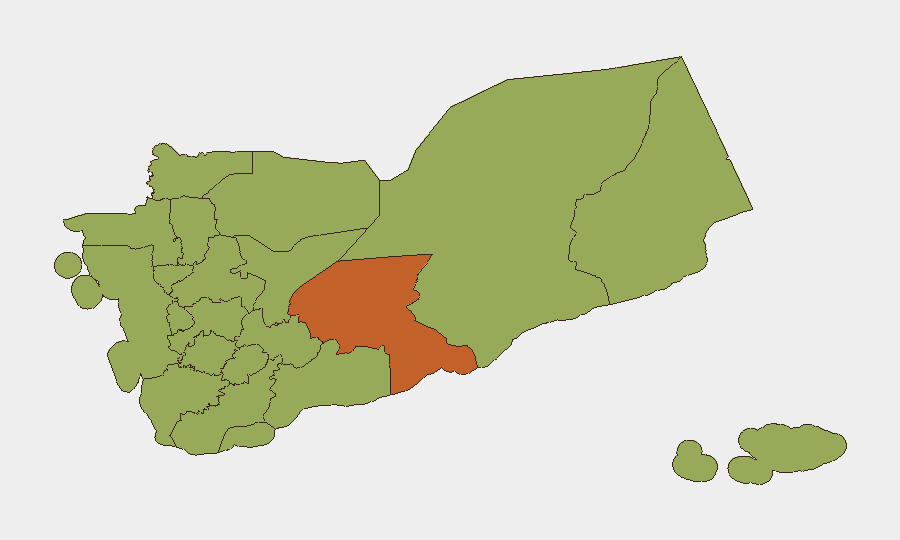
Amanat Al Asimah (Sana'a capital district, risk 78) and Shabwah Governorate (risk 74) remain the highest-risk sub-national zones, reflecting ongoing political fragmentation, armed-actor presence, and service collapse in the capital and eastern oil-producing regions. The remaining ten governorates cluster at moderate-to-high risk (48), indicating widespread instability rather than geographic concentration. Risk drivers across all zones are primarily civil-administrative rather than tactical: electricity and fuel shortages, humanitarian crisis, and limited government capacity create conditions for secondary crime, protest, and displacement rather than front-line combat. Coastal and port areas (including Aden) face additional risk from maritime threats and periodic civil unrest linked to economic deterioration.
How GeoBit Would Assist
Security teams with Yemen exposure should employ AOI Monitoring & Early Warning on high-risk governorates and key logistics nodes (ports, airports, supply routes) to detect emerging unrest or movement of armed actors; Humanitarian & NGO data feeds to track real-time food-security, health, and displacement trends that drive secondary risks; and Network & Actor Analysis to map detainee-release sites and monitor potential re-integration of armed actors into communities. Routing & Network Analysis supports safe-passage planning and identification of alternative supply or evacuation corridors in deteriorating conditions.
7-Day Outlook
Detainee-release negotiations entering implementation phase this week may trigger localized security adjustments around release sites and reintegration zones. Electricity and food crises will continue to drive civil unrest and opportunistic crime in major cities, particularly Aden. No imminent shift in overall conflict trajectory is anticipated; risk remains chronic and operationally diffuse rather than acute, but incident frequency and localized violence may increase if humanitarian conditions worsen or prisoner releases provoke factional tensions.
Highest-Risk Areas — Ranked
| # | State / Region | Risk |
|---|---|---|
| 1 | Amanat Al Asimah | 78 |
| 2 | Shabwah Governorate | 74 |
| 3 | Sa'dah Governorate | 48 |
| 4 | Hajjah Governorate | 48 |
| 5 | Al Mahwit Governorate | 48 |
| 6 | Al Hudaydah Governorate | 48 |
| 7 | 'Amran Governorate | 48 |
| 8 | Sana'a Governorate | 48 |
| 9 | Raymah Governorate | 48 |
| 10 | Dhamar Governorate | 48 |
| 11 | Ibb Governorate | 48 |
| 12 | Ta'izz Governorate | 48 |
Sources
Previous Daily Briefs
A new Yemen brief is written every day — each with its own risk map and downloadable CSV. Here's the last week; use the calendar to go further back.
📅 Browse every day by calendar →
Highlighted days have a brief. Tap a day for that day's map & analysis, or “csv” for that day's dataset ($5).