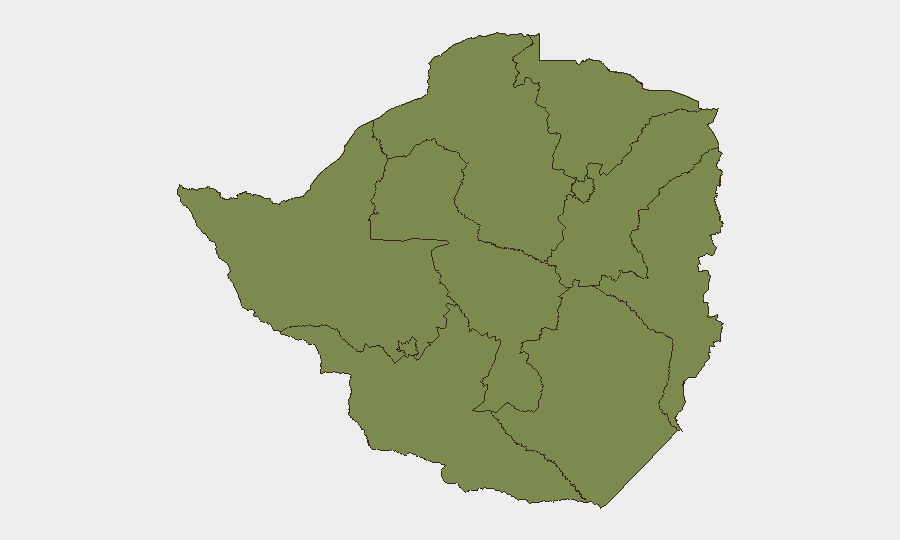
Situation Summary
Zimbabwe remains in the lower-risk global tier (#90 globally) but faces elevated political instability following constitutional amendments signed 7–8 July 2026 that fundamentally alter the presidential election cycle and transfer executive selection to Parliament. No acute security incidents, civil unrest, or infrastructure disruptions were corroborated in open-source reporting for 7–9 July 2026. The risk profile is driven by structural governance and economic uncertainty rather than active conflict or organized violence.
Key Developments
- Harare (national) – 7–8 July 2026 – Presidential election system abolished
President Emmerson Mnangagwa signed constitutional amendments eliminating direct presidential elections, postponing the next national vote from 2028 to 2030, extending presidential and parliamentary terms from five to seven years, and transferring presidential selection to Parliament. This elevates medium-term political-instability risk and potential for opposition mobilization.
- Harare (national) – 7 July 2026 – IMF staff-level agreement reached
The IMF confirmed a staff-level agreement on the first review of Zimbabwe's 10-month Staff-Monitored Program, signaling continued economic conditionality and structural reform requirements. This reflects ongoing macroeconomic stress but does not indicate a discrete security incident.
- New York – early July 2026 – UN Security Council candidacy launched
Zimbabwe officially opened its campaign for a non-permanent UN Security Council seat (2027–2028), a foreign-policy positioning move with limited immediate domestic security implication.
- No corroborated reports of protests, civil unrest, major crime, or travel disruptions were identified in credible open-source channels for the 48-hour window ending 9 July 2026.
Highest-Risk Areas
Harare dominates the sub-national risk profile (31.5 composite score), reflecting national-level political decision-making, capital-city administrative functions, and concentration of opposition and civil-society actors. Midlands Province (10.3) is the second-highest-risk zone but remains significantly lower in absolute threat. The remaining eight provinces cluster around 1.5–2.2, indicating that security risk is heavily concentrated in the capital and that geographically dispersed provincial risk is minimal. The constitutional shift will likely generate political activity in Harare and urban centers over the coming weeks.
How GeoBit Would Assist
Security teams should deploy AOI Monitoring & Early Warning on Harare, key opposition party headquarters, and major urban centers to detect early protest activity or civil-unrest signals before escalation. Intel Sweep and X/Twitter OSINT will track opposition rhetoric, civil-society statements, and security-sector communications for signs of mobilization around the 2030 election timeline. Regime-Stability Search and Network & Actor Analysis capabilities enable mapping of political actors, factional alignments, and institutional responses that could shape staffing, procurement, or operational access for corporate assets in the capital.
7-Day Outlook
The constitutional amendments will likely generate rhetorical opposition and civil-society criticism over the next 7–14 days, but acute street-level unrest remains unlikely absent triggering events (e.g., opposition party detention or economic shock). Harare will remain the primary focus for political activity; provincial and rural security posture is expected to remain stable. Duty-of-care teams should maintain baseline vigilance in the capital and monitor for any sudden closure of civic space or restrictions on movement and assembly.
Highest-Risk Areas — Ranked
| # | State / Region | Risk |
|---|---|---|
| 1 | Harare | 31.5 |
| 2 | Midlands Province | 10.3 |
| 3 | Manicaland Province | 2.2 |
| 4 | Mashonaland West Province | 1.5 |
| 5 | Matabeleland South Province | 1.5 |
| 6 | Masvingo Province | 1.5 |
| 7 | Matabeleland North Province | 1.5 |
| 8 | Bulawayo Province | 1.5 |
| 9 | Mashonaland Central Province | 1.5 |
| 10 | Mashonaland East Province | 1.5 |
Sources
Previous Daily Briefs
A new Zimbabwe brief is written every day — each with its own risk map and downloadable CSV. Here's the last week; use the calendar to go further back.
📅 Browse every day by calendar →
Highlighted days have a brief. Tap a day for that day's map & analysis, or “csv” for that day's dataset ($5).
Atlas — our AI intelligence desk — emails them this snapshot personally. Nothing else, no list.