Résumé de la Situation
Taïwan fait face à des tensions détroit surélevées suite à un ensemble de postures militaires chinoises et de rhétorique officielle les 17–18 juin 2026. Les signaux d'événement indiquent des déclarations de menace chinoises dirigées contre Taïwan, conjointement avec des rejets taïwanais et des contre-déclarations, ainsi qu'une activité d'enquête au sein des forces armées taïwanaises. Le score de menace composite de 13 place Taïwan dans la bande moyenne mondiale ; toutefois, la vélocité rapide des événements et les schémas de signalisation militaire justifient une surveillance étroite au cours des 48–72 prochaines heures.
Développements Clés
- 2026-06-18 · Rhétorique de Menace Détroit. La Chine et Taïwan ont échangé des déclarations de menace publiques et des messages de désapprobation le 18 juin. Pékin a émis au moins deux signaux de menace distincts dirigés contre Taïwan ; Taïwan a répondu par des déclarations publiques et un rejet des exigences. Aucun incident cinétique signalé, mais un cycle rhétorique d'escalade est actif.
- 2026-06-18 · Enquête des Forces Armées. Les forces armées taïwanaises ont lancé une enquête le 18 juin ; l'étendue et l'agence cible ne sont pas encore détaillées dans les rapports disponibles. Le timing concomitant avec les tensions détroit suggère une possible violation de sécurité, une préoccupation en matière de renseignement, ou une enquête interne liée à la préparation militaire.
- 2026-06-17 · Posture de Force Militaire Conventionnelle. Taïwan a déployé ou annoncé une capacité militaire conventionnelle le 17 juin en réaction apparente ou concomitante avec la signalisation détroit. Les détails de la plateforme, du lieu et de l'ampleur ne sont pas spécifiés dans les signaux actuels.
- 2026-06-18 · Friction Gouvernement–Travailleurs. Le gouvernement taïwanais a rejeté une exigence des travailleurs le 18 juin, suggérant une friction civile liée au travail ou à l'emploi sans rapport avec l'activité détroit. Impact de sécurité immédiate faible, mais peut signaler une pression interne plus large ou un stress économique.
- 2026-06-18 · Désapprobation Publique (Plusieurs Acteurs). Les publics taïwanais et chinois ont tous deux émis des déclarations de désapprobation le 18 juin, indiquant une polarisation des sentiments et une amplification sociale des tensions officielles.
Limitation des Données : Les emplacements détaillés des incidents, les unités militaires ou plateformes spécifiques, et la confirmation indépendante de l'ampleur restent indisponibles à partir de la vérification en source ouverte actuelle. La recherche Web menée le 19 juin n'a pas donné lieu à une corroboration indépendante ou à une granularité plus fine pour ces signaux.
Zones à Risque Maximal
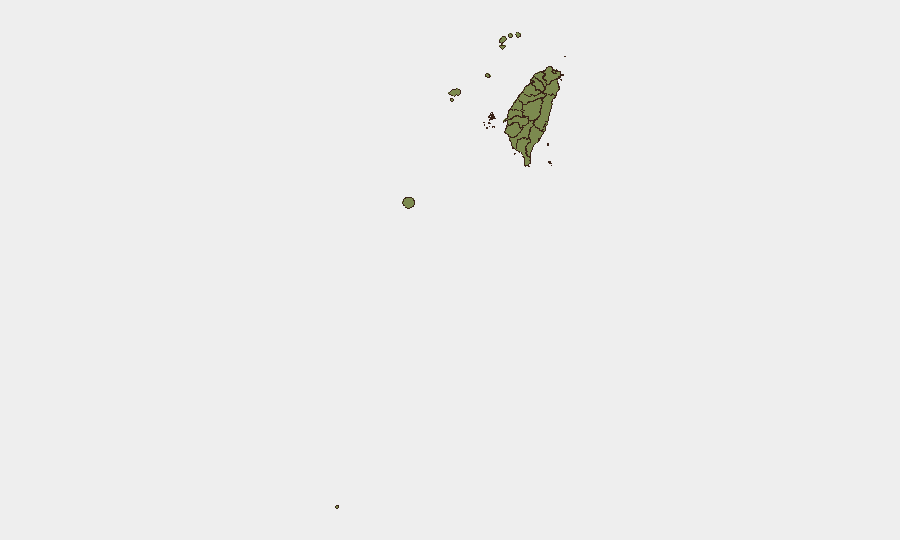
Tainan (risque 31,3) et le Comté de Nantou (risque 17,5) se classent sensiblement au-dessus de toutes les autres zones sous-nationales, suivis de Taipei (15,2). La concentration du risque à Tainan—une ville côtière du sud avec des infrastructures maritimes militaires et civiles—suggère une préoccupation accrue liée à l'activité navale, à la logistique ou au positionnement de la défense aérienne. L'élévation de Nantou peut refléter des installations militaires intérieures ou des nœuds de ressources stratégiques. Le risque à Taipei reflète l'exposition de la capitale aux messages politiques/militaires directs et aux activités cyber ou de renseignement potentielles. Toutes les autres régions se regroupent à 1,3, indiquant soit une exposition de base inférieure, soit un artefact de concentration de données.
Comment GeoBit Pourrait Assister
La Détection Complète du Renseignement et la Surveillance de Zone d'Intérêt sur Tainan, Penghu, Kinmen et le Canal de Bashi établiraient une détection d'événements persistante 24 heures sur 24 avec alertes automatisées sur les mouvements militaires, l'activité portuaire et les déclarations officielles. L'Analyse Satellite et d'Imagerie superposée avec le Suivi Maritime confirmerait les postures aériennes ou navales de l'APL près des îles extérieures et de la zone économique de Taïwan. L'Analyse de Réseau et d'Acteurs associée à la fusion OSINT multilingue (médias d'État chinois, ministère de la Défense taïwanais, canaux affiliés à l'APL) désambiguïserait la rhétorique de l'intention exploitable et ferait surface les signaux de coordination 12–48 heures avant l'escalade.
Perspective 7 Jours
La rhétorique détroit et la signalisation militaire devraient rester surélevées jusqu'au 24 juin, avec une possible désescalade si aucune nouvelle sonde cinétique ne se produit. Le risque d'escalade accidentelle via rencontre aérienne/maritime est modéré. Les équipes d'entreprise ayant du personnel ou des actifs à Tainan, Kinmen ou à proximité de zones militaires doivent confirmer les protocoles de devoir de diligence et maintenir des journaux de communication de 48 heures.
Zones les Plus à Risque — Classées
| # | État / Région | Risque |
|---|---|---|
| 1 | Tainan | 31.3 |
| 2 | Nantou County | 17.5 |
| 3 | Taipei | 15.2 |
| 4 | Kaohsiung | 1.3 |
| 5 | Pingtung County | 1.3 |
| 6 | Taitung County | 1.3 |
| 7 | Lienchiang County | 1.3 |
| 8 | Kinmen | 1.3 |
| 9 | Penghu | 1.3 |
| 10 | Changhua County | 1.3 |
| 11 | Miaoli County | 1.3 |
| 12 | Taichung | 1.3 |
Sources
Bulletins Quotidiens Précédents
Un nouveau bulletin Taiwan est publié chaque jour — chacun avec sa carte de risque et son CSV téléchargeable. Voici la dernière semaine ; utilisez le calendrier pour remonter plus loin.
📅 Browse every day by calendar →
Highlighted days have a brief. Tap a day for that day's map & analysis, or “csv” for that day's dataset ($5).