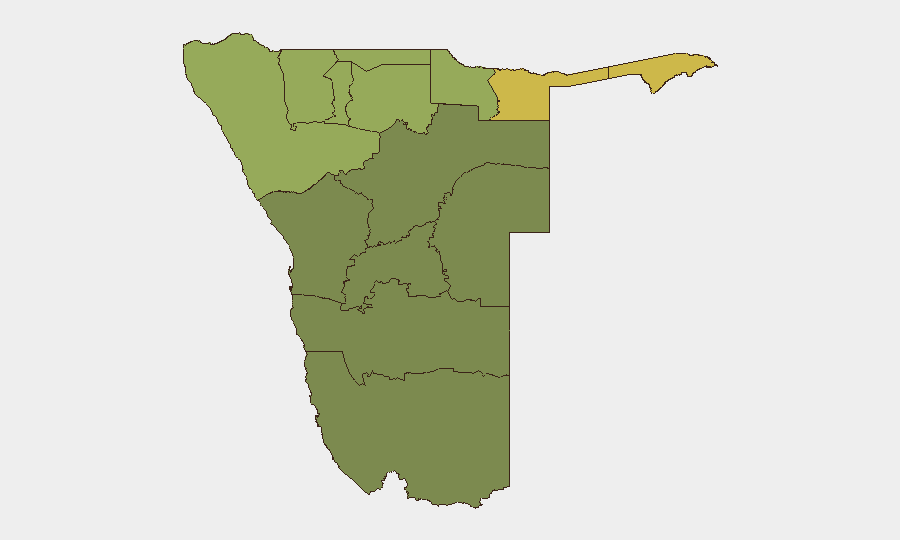
Situation Summary
Namibia remains a low-threat environment globally (ranked #185, composite score 2.1), with no tracked security events reported in the past 24 hours. However, a critical cybersecurity incident at Namibia Airports Company (NAC) has surfaced as the primary near-term risk, involving unauthorized access and a data-theft threat from the INC Ransomware Group. Northern border regions—particularly Zambezi, Kavango East, and Kavango West—carry elevated sub-national risk scores, though these do not currently translate to documented direct security incidents affecting corporate operations.
Key Developments
- Windhoek / Namibia Airports Company (6 March – ongoing) — NAC detected unauthorized access to network infrastructure and administrative accounts; containment was implemented with limited operational disruption, but the incident remains active.
- Windhoek / INC Ransomware Group threat — The group claimed to have exfiltrated financial records, HR data, customer information, and contact details; a data-publication countdown is active, creating time-sensitive reputational and regulatory risk for NAC and potentially downstream clients/partners.
- Otjiwarongo / Pattern confirmation — The same ransomware group previously targeted Otjiwarongo Municipality, indicating targeted interest in Namibian public-sector and critical-infrastructure entities.
- Nationwide / Cyber vulnerability baseline (Q4 2025) — Nam-CSIRT recorded 535,000+ cyber vulnerabilities and 195,661 cyber events between October and December 2025, establishing high background cyber risk across the operating environment.
- Nationwide / Active ransomware groups — Genesis and Benzona ransomware families are active in Namibia, employing encryption, data theft, and compressed payment deadlines; these represent near-term threat vectors for organizations with exposed network perimeters.
- Aviation sector / Operational continuity — NAC services have been restored and disruption was limited; however, the incident underscores critical-infrastructure vulnerability and may prompt enhanced security protocols at border and domestic checkpoints.
Highest-Risk Areas
Northern and northeastern regions drive Namibia's sub-national risk profile: Zambezi (68), Kavango East (62), and Kavango West (58) face the highest composite scores, likely reflecting cross-border movement, resource-access competition, and limited state capacity in remote areas. Kunene Region (52) and Oshikoto (48) continue the risk gradient. Central and western regions—Erongo (32), Hardap (28), Omaheke (25)—carry substantially lower risk. Southern Namibia and the capital region remain the most stable. Corporate assets in northern zones should apply heightened vetting for local staff, supply-chain partners, and travel routing.
How GeoBit Would Assist
Organizations should deploy AOI Monitoring & Early Warning on Namibia's northern border regions and critical infrastructure (airports, ports, telecoms) to detect emerging physical or cyber threats before they affect operations. Cyber-focused Search & Research and Intel Sweep capabilities enable real-time tracking of active ransomware groups (Genesis, Benzona, INC), vulnerability disclosures, and extortion threats targeting Namibian entities. Routing & Network Analysis can identify alternative supply and travel routes if northern or aviation-dependent corridors become constrained; this is operationally essential for firms with logistics or personnel movement dependencies.
7-Day Outlook
The NAC ransomware countdown and data-publication threat will remain the immediate focus; outcomes will likely include public disclosure of exfiltrated data (June–July timeframe) and potential cascading regulatory/reputational impact on customers and partners. Northern border regions may experience seasonal civil-movement or resource-competition incidents, but no major escalation is currently signaled. Cyber threat activity is expected to persist as baseline risk.
Highest-Risk Areas — Ranked
| # | State / Region | Risk |
|---|---|---|
| 1 | Zambezi | 68 |
| 2 | Kavango East | 62 |
| 3 | Kavango West | 58 |
| 4 | Kunene Region | 52 |
| 5 | Oshikoto | 48 |
| 6 | Ohangwena | 45 |
| 7 | Omusati | 42 |
| 8 | Oshana | 40 |
| 9 | Otjozondjupa | 35 |
| 10 | Erongo Region | 32 |
| 11 | Hardap | 28 |
| 12 | Omaheke | 25 |