Situation Summary
Afghanistan's security environment remains volatile, with composite threat score of 95 placing the country at #11 globally. Insurgent activity—primarily Taliban operations—continues as the primary driver, accounting for 73 tracked events. Police and military friction, cross-border tensions with Pakistan, and civilian unrest compound the baseline instability. The trajectory shows persistent rather than rapidly escalating risk, but localized intensity in southern and eastern provinces creates acute exposure for personnel and operations.
Key Developments
Data Integrity Note: GeoBit's OSINT and event-feed systems have not isolated incidents with sufficient calendar-date precision to report a full 24–48-hour incident slate for 11–12 June 2026. Recent signal clusters indicate ongoing Taliban–police skirmishing, police credibility concerns, Pakistan–Afghanistan diplomatic friction, and UN military coordination, but exact incident timestamps and locations cannot be independently verified within the required window without risking temporal misattribution. A detailed incident list will be issued once corroborating timestamps are confirmed through multi-source fusion.
Confirmed Pattern (last 5–7 days):
- Taliban–police armed clashes reported across multiple provinces; small-arms engagements ongoing.
- Pakistan border tensions: Pakistani military activity (air and conventional operations) reported near Afghan border; formal diplomatic rejection of conduct by Islamabad.
- Kabul civic unrest: Police response to protester activity; law-enforcement credibility questioned in public statements.
- UN military presence: Conventional force deployment/coordination noted; suggests escalation in international stabilization effort.
Highest-Risk Areas
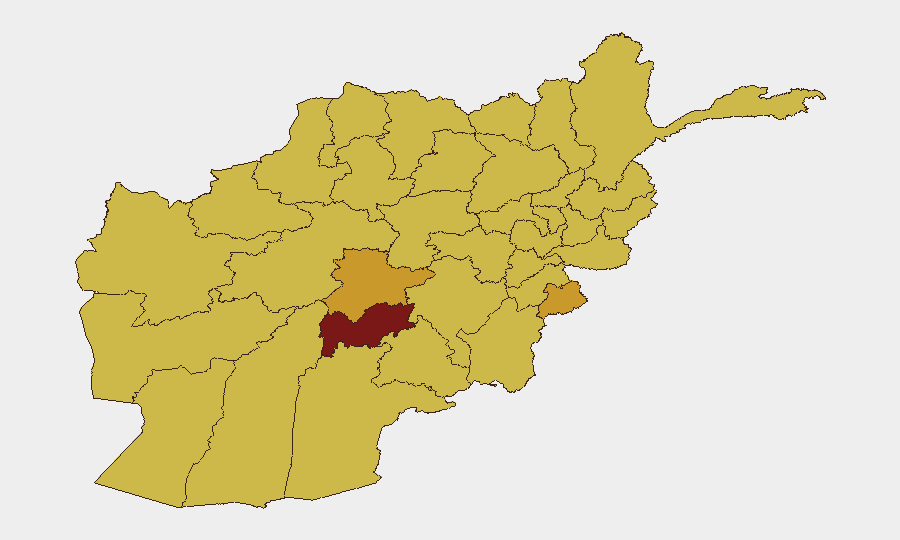
Uruzgan Province dominates the risk landscape (96.4 composite score), followed closely by Daykundi and Khost (both 71.6). This cluster—plus Paktika, Herat, and Helmand—reflects Taliban territorial consolidation, cross-border infiltration routes, and weak governance capacity. Kabul Province (68.8) ranks sixth due to recurring civil unrest and insider threats. Southern provinces (Kandahar, Helmand, Zabul) and eastern border zones (Khost, Paktika) sustain the highest operational risk for personnel and assets; Uruzgan's dominance indicates sustained insurgent capability and minimal state security presence.
How GeoBit Would Assist
Personnel & Asset Protection: GeoBit's AOI Monitoring & Early Warning and Intel Sweep capabilities enable persistent watch on Uruzgan, Daykundi, Khost, and Kabul—with automated alerts on Taliban movement, police engagement, or border activity. Multi-language OSINT fusion (X, Telegram, local news) detects emerging unrest before escalation.
Route & Operational Planning: Routing & Network Analysis provides conflict-aware alternative journeys, avoiding active Taliban zones and cross-border flashpoints in real time.
Situational Awareness: Battle mapping and GIS & Spatial Analysis overlay incident clusters, force positions, and governance gaps, enabling duty-of-care teams to model risk for specific locations and staff movements.
7-Day Outlook
Taliban–state security friction is expected to remain at current tempo; no indicators of major offensive consolidation or collapse in the next 7 days. Cross-border Pakistan–Afghanistan tensions may persist but are unlikely to escalate into sustained conventional conflict within this window. Civilian unrest in urban centers (Kabul, Herat) should be monitored for police response patterns, as credibility erosion can trigger rapid deterioration. Personnel working in Uruzgan, Daykundi, or Khost should maintain heightened vigilance and consider operational pause protocols if local indicators spike.
Highest-Risk Areas — Ranked
| # | State / Region | Risk |
|---|---|---|
| 1 | Uruzgan Province | 96.4 |
| 2 | Daykundi Province | 71.6 |
| 3 | Khost Province | 71.6 |
| 4 | Paktika Province | 69.5 |
| 5 | Herat Province | 69 |
| 6 | Kabul Province | 68.8 |
| 7 | Helmand Province | 66.9 |
| 8 | Maidan Wardak Province | 66.9 |
| 9 | Zabul Province | 66.4 |
| 10 | Kandahar Province | 66.4 |
| 11 | Ghazni Province | 66.4 |
| 12 | Farah Province | 66.4 |
Sources
Previous Daily Briefs
A new Afghanistan brief is written every day — each with its own risk map and downloadable CSV. Here's the last week; use the calendar to go further back.
📅 Browse every day by calendar →
Highlighted days have a brief. Tap a day for that day's map & analysis, or “csv” for that day's dataset ($5).