Situation Summary
Algeria remains a stable but chronic-risk environment. No major security incidents or civil disturbances have been independently confirmed in the last 24–48 hours; routine counterterrorism and border-security operations continue nationwide. Background risk remains elevated in southern and eastern border regions (Tebessa, Illizi, Tamanrasset) and in rural/mountainous northern areas outside major cities, driven by persistent terrorist cells, smuggling networks, and banditry. The security posture is stable but not improving.
Key Developments
- Nationwide counter-terrorism operations (mid-July, exact dates not specified within 19–20 July window). Algerian Armed Forces reported surrender of one armed militant in Bordj Badji Mokhtar; dismantling of a six-member cell linked to the MAK (Kabylie separatist movement) in Tizi Ouzou; and arrest of 38 suspected drug traffickers with seizure of ~1.2 tonnes of cannabis resin. These operations reflect ongoing pressure on terror and trafficking networks but do not constitute a single discrete incident.
- Border and Saharan counter-smuggling sweeps (mid-July, ongoing). Security forces arrested 282 illegal gold miners and seized equipment across southern wilayas (Tamanrasset, Bordj Badji Mokhtar, In Salah, In Guezzam, Djanet). Coast Guard intercepted 341 irregular maritime migrants; nationwide arrest total of 940 irregular migrants. Pattern indicates sustained but routine enforcement activity.
- Diplomatic messaging (21 July 2026). Multiple event signals indicate "reduce relations" statements between Algeria and Ambassador, and between Government and Algeria entities, alongside investigation activity. Specific incident details remain unclear from open sources; diplomatic friction is elevated but context is limited.
- Routine criminal activity in Algiers (ongoing pattern, no incident dated specifically to 19–20 July). Travel advisories highlight persistent robberies and violent crime at beaches and parks in Algiers (including Ben Aknoun Park), particularly after dark. No singular high-profile incident in the last 48 hours is documented, but the pattern remains active.
- Ministry operational bulletin (mid-July, date not explicitly confirmed within 19–20 July). Defence Ministry reported multi-domain security operations including counterterrorism, narcotics interdiction, and irregular migration enforcement. Bulletin characterized as "latest" assessment but lacks precise operational timestamps.
- No confirmed major terrorist attacks, armed clashes, or civil unrest (19–20 July 2026). All available open sources and risk trackers confirm absence of large-scale incidents in the strict 24–48 hour window. Assessment: situational baseline remains stable.
Highest-Risk Areas
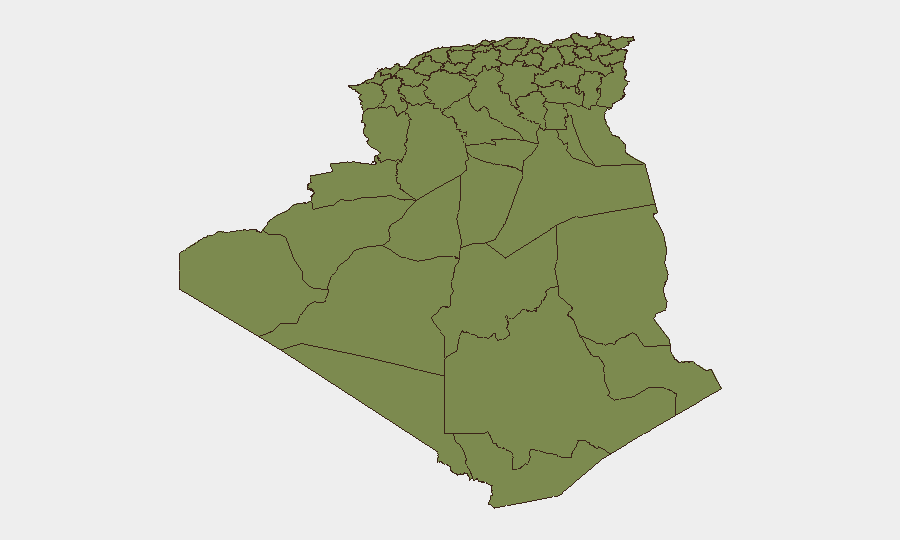
Mascara (risk 31.3) and Algiers (19.8) dominate the sub-national ranking and drive national composite threat score. Mascara's elevated risk reflects chronic instability in northwestern border and rural zones; Algiers combines terrorism risk in peripheral areas with urban street crime. Southern and eastern wilayas (In Salah, Bechar, Adrar, Bordj Badji Mokhtar, Ghardaia) maintain lower but persistent scores tied to remote terrain, porous borders with Mali, Niger, Libya, and Mauritania, and presence of trafficking and militant networks. Northern rural/mountainous areas outside major cities carry similar chronic risk despite lower formal ranking.
How GeoBit Would Assist
Duty-of-care teams should deploy AOI Monitoring & Early Warning to track Mascara, Algiers suburbs, and southern border zones for upticks in event frequency or type. OSINT Fusion (X/Twitter, Telegram, local media, radio SIGINT) paired with multi-language search and sentiment analysis will detect early signals of protest, security operations, or diplomatic friction before mainstream reporting. Routing & Network Analysis can support real-time journey planning for staff and assets, avoiding high-risk corridors and timing travel around known curfew or demonstration windows.
7-Day Outlook
No acute security trigger is evident for the next 7 days. Counterterrorism and border-enforcement operations will continue at routine tempo. Diplomatic friction (suggested by 21 July signals) warrants close monitoring for secondary effects on visa processing, embassy staffing, or travel restrictions. Criminal risk in Algiers and kidnapping/banditry risk in southern border zones remain unchanged baseline hazards.
Highest-Risk Areas — Ranked
| # | State / Region | Risk |
|---|---|---|
| 1 | Mascara | 31.3 |
| 2 | Algiers | 19.8 |
| 3 | In Salah | 5.9 |
| 4 | Bordj Bou Arreridj | 3.6 |
| 5 | Bechar | 1.3 |
| 6 | Beni Abbes | 1.3 |
| 7 | Adrar | 1.3 |
| 8 | Bordj Badji Mokhtar | 1.3 |
| 9 | El Bayadh | 1.3 |
| 10 | Ghardaia | 1.3 |
| 11 | Saïda | 1.3 |
| 12 | Boumerdes | 1.3 |
Sources
Previous Daily Briefs
A new Algeria brief is written every day — each with its own risk map and downloadable CSV. Here's the last week; use the calendar to go further back.
📅 Browse every day by calendar →
Highlighted days have a brief. Tap a day for that day's map & analysis, or “csv” for that day's dataset ($5).
Atlas — our AI intelligence desk — emails them this snapshot personally. Nothing else, no list.