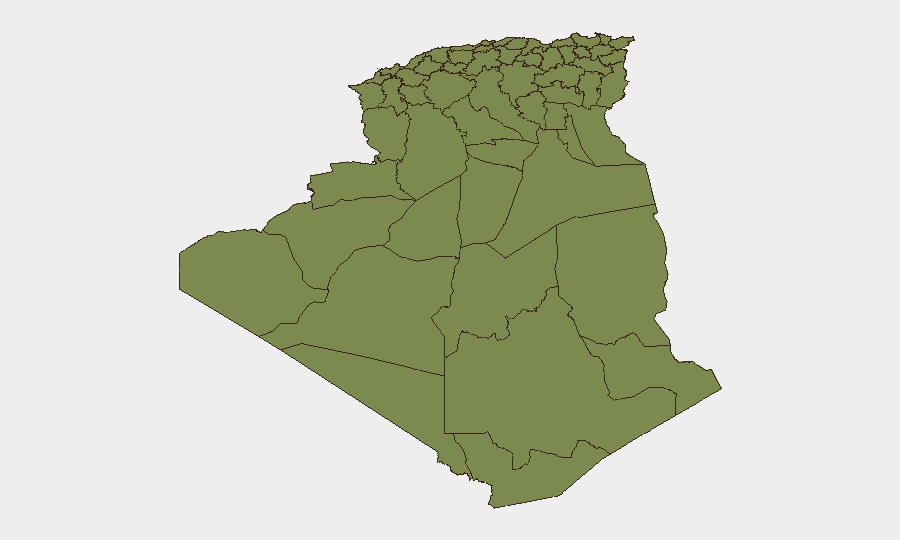
Situation Summary
Algeria remains a moderate-risk operating environment (composite threat score 21; rank #52 globally) with risk heavily concentrated in Algiers. The past 48 hours have been marked by a major urban infrastructure disaster, successful counter-narcotics operations, and widespread fire activity driven by extreme heat conditions. Recent diplomatic tensions and low electoral participation signal underlying political strain, but no current large-scale civil unrest or armed incidents are reported.
Key Developments
- Algiers (Bab El Oued) – Orphanage Fire – 22 July 2026
At least 11 killed and 19 injured in a fire at an orphanage overnight; suspected electrical cause (air conditioner spark). This represents a significant urban safety and infrastructure failure with mass-casualty implications for emergency response and civil order.
- Djelfa, Laghouat, Blida – Major Cocaine Seizure – 22 July 2026
Army (1st Military Region) and Customs dismantled a six-person trafficking network and seized approximately 133 kg of cocaine. Operation signals organized inland drug flows and active counter-narcotics enforcement across multiple provinces.
- Nationwide – Fire Crisis During Heat Wave – 21–22 July 2026
Civil Protection reported 154 fires in 24 hours (138 extinguished, 16 ongoing) across multiple wilayas under orange and red heat alerts. Guelma, Annaba, Skikda, and El Tarf at red-alert extreme heat; elevated risk to infrastructure, transport, and forested areas.
- National Road Network – Enhanced Vehicle Enforcement – 21–22 July 2026
Ministry of Public Works and National Gendarmerie deployed 124 mobile axle-load units nationwide to strengthen checks on overloaded trucks. Expected to increase traffic control operations and potential short-term travel delays at major enforcement points.
- Diplomatic Tensions – Franco-Algerian Relations – 21 July 2026
Multiple public statements and diplomatic signals of reduced relations between Algeria and France, with secondary tensions involving Spain and ambassadors. No armed escalation, but rising political rhetoric may affect business climate and expat security perception.
- Electoral Timeline – Constitutional Court Finalizes Results – 21 July 2026
Constitutional Court proclaimed final legislative election results (2 July vote, 21.24% turnout inside Algeria). Low participation noted domestically as a political-stability concern, though formalization reduces immediate institutional uncertainty.
- Data Protection Update – New Imagery Rules – 21–22 July 2026
National Authority for Personal Data Protection classified identifiable photos and videos as personal data under Law 18-07, restricting collection and public sharing. May affect documentation of security incidents and civil incidents by media and individuals.
Highest-Risk Areas
Algiers dominates the risk profile (31.4 composite score), accounting for the vast majority of tracked threat events. The capital's concentration of government, diplomatic, and commercial activity, combined with the recent orphanage fire and ongoing urban congestion, explains its elevated exposure. All other tracked wilayas (Bechar, Tizi Ouzou, Boumerdes, Ghardaia, and others) register similarly low residual risk (1.4 each), indicating risk is sharply localized rather than dispersed.
How GeoBit Would Assist
Security teams should deploy AOI Monitoring & Early Warning focused on Algiers and secondary cities to detect incidents (fires, civil unrest, infrastructure failures) in near-real time. Intel Sweep and OSINT fusion (X/Twitter, Telegram, local news feeds, multi-language search) provide continuous tracking of diplomatic signals, enforcement actions, and heat/fire alerts. Risk & Threat Assessment and routing/network analysis help optimize travel planning during periods of elevated fire activity and road enforcement.
7-Day Outlook
Extreme heat conditions are forecast to persist, sustaining elevated fire risk and potential transport disruptions through the week. Diplomatic tensions with France and Spain will likely continue as political rhetoric, but no imminent escalation to civil unrest or security incidents is signaled. Organizations should maintain heightened situational awareness in Algiers and monitor road conditions nationwide.
Highest-Risk Areas — Ranked
| # | State / Region | Risk |
|---|---|---|
| 1 | Algiers | 31.4 |
| 2 | Bechar | 1.4 |
| 3 | Beni Abbes | 1.4 |
| 4 | Adrar | 1.4 |
| 5 | Bordj Badji Mokhtar | 1.4 |
| 6 | El Bayadh | 1.4 |
| 7 | Ghardaia | 1.4 |
| 8 | Saïda | 1.4 |
| 9 | Boumerdes | 1.4 |
| 10 | Tizi Ouzou | 1.4 |
| 11 | Chlef | 1.4 |
| 12 | Relizane | 1.4 |
Sources
Previous Daily Briefs
A new Algeria brief is written every day — each with its own risk map and downloadable CSV. Here's the last week; use the calendar to go further back.
📅 Browse every day by calendar →
Highlighted days have a brief. Tap a day for that day's map & analysis, or “csv” for that day's dataset ($5).
Atlas — our AI intelligence desk — emails them this snapshot personally. Nothing else, no list.