Situation Summary
Argentina remains at moderate global threat rank (#51) with a composite score of 35, driven by a concentrated cluster of governance instability, inter-agency friction, and regional criminal activity. The past 24 hours have seen multiple signals of administrative and legislative discord, alongside isolated security incidents involving armed actors. The overall threat trajectory is one of localized volatility rather than systemic breakdown, but heightened political friction poses secondary risks to business continuity and staff safety.
Key Developments
GeoBit's event signals for 18–20 June indicate:
- Government & ministry-level disapproval actions (multiple, 2026-06-20): Administrative sanctions and public statements of disapproval directed at government and ministry actors suggest institutional friction over policy or personnel.
- Small arms engagement involving ministry personnel (2026-06-20, location TBD): An armed incident tagged to ministry actors warrants clarification on geography, casualty status, and operational context.
- Inter-state diplomatic friction (2026-06-20): A public statement between Argentina's Foreign Ministry and Colombia signals bilateral tension; concurrent Brazilian traveler statement suggests potential cross-border mobility impacts.
- Legislative response (2026-06-20): Parliamentary public statement indicates congressional engagement or response to one or more of the above incidents.
- Judicial-executive conflict (2026-06-20): Supreme Court rejection of an Argentina-related action reflects separation-of-powers tension.
- Brazilian investigation (2026-06-18): Brazil-initiated investigation (nature and subject unconfirmed) may have Argentine nexus, potentially involving trade, migration, or security cooperation.
- Industry demand action (2026-06-18): Unspecified sector-level demand, possibly labor, regulatory, or supply-chain related.
Note: Specific locations, casualty counts, and incident narratives are not yet available from open sources reviewed. Operational teams should supplement with real-time monitoring of local outlets and police channels.
Highest-Risk Areas
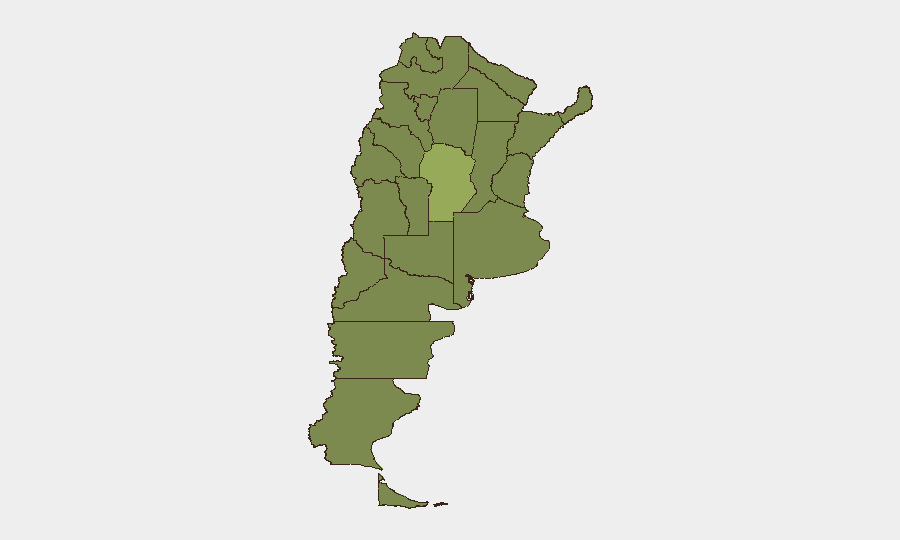
Córdoba Province dominates the sub-national risk ranking at 54.5—more than double the next-highest region—suggesting concentrated criminal or gang activity, organized crime supply routes, or localized instability. Buenos Aires Province (27.1) and the capital's Autonomous City (26.0) together represent the second tier, reflecting urban crime, trafficking, and protest risk in the country's economic and political core. San Juan, Neuquén, Misiones, and Santiago del Estero provinces cluster between 26–26.5, indicating either emerging criminal networks, labor unrest, or border-related vulnerability. Northern provinces (Salta, Jujuy) and southern zones (Mendoza, Río Negro, Chubut) remain elevated but lower-risk, suggesting secondary trafficking routes or regional labor disputes. Staff or logistics operating in Córdoba should apply heightened duty-of-care protocols; Buenos Aires concentrations (port, financial district, federal agencies) remain baseline-elevated for organized crime and protest impact.
How GeoBit Would Assist
Corporate security teams should deploy AOI Monitoring & Early Warning across Córdoba, Buenos Aires Province, and the capital city to capture emerging incidents (protest, traffic disruption, armed activity) in real time. OSINT Fusion & Corroboration (X/Twitter, local media, and Telegram channels in Spanish) would disambiguate the governance and ministry frictions evident in 20 June signals and clarify the small-arms incident's operational scope. Routing & Network Analysis can calculate safe transit corridors and alternative logistics pathways around highest-risk provinces, particularly ahead of any escalation in labor or inter-agency unrest.
7-Day Outlook
Political and administrative turbulence is likely to persist, with legislative and judicial actors responding to executive friction. If the ministry-level armed incident reflects deeper inter-agency conflict, secondary incidents are possible. No evidence of imminent nationwide destabilization; risk remains concentrated in Córdoba and Buenos Aires. Monitor diplomatic notes (Argentina–Colombia, Argentina–Brazil) for trade or border implications.
Highest-Risk Areas — Ranked
| # | State / Region | Risk |
|---|---|---|
| 1 | Córdoba | 54.5 |
| 2 | Buenos Aires Province | 27.1 |
| 3 | San Juan Province | 26.5 |
| 4 | Neuquén Province | 26.4 |
| 5 | Misiones | 26.4 |
| 6 | Santiago del Estero Province | 26.2 |
| 7 | Autonomous City of Buenos Aires | 26 |
| 8 | Salta Province | 25.3 |
| 9 | Jujuy Province | 25.1 |
| 10 | Mendoza Province | 25 |
| 11 | Río Negro Province | 25 |
| 12 | Chubut Province | 25 |
Sources
Previous Daily Briefs
A new Argentina brief is written every day — each with its own risk map and downloadable CSV. Here's the last week; use the calendar to go further back.
📅 Browse every day by calendar →
Highlighted days have a brief. Tap a day for that day's map & analysis, or “csv” for that day's dataset ($5).